HINTON AMPNER
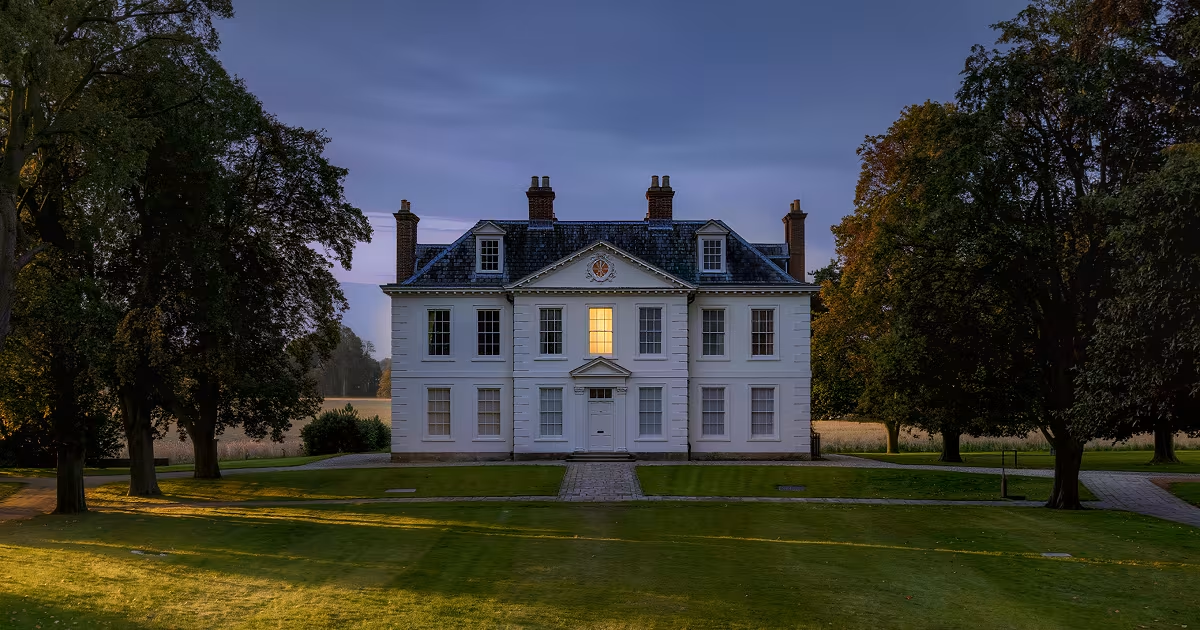
Hampshire parkland house exterior at dusk. No figures.
Illustration, not a period photograph.
Opening
In 1765 Mary Ricketts took a lease on Hinton Ampner in Hampshire and began to hear the house. Doors slammed. Footsteps walked rooms that should have been empty. A woman's murmur and a man's tread sat in the letters she wrote to her sister. Servants would not stay. The family left. Later tellers tied the nights to a murdered child and a guilty lord in the older house. Those names are later ivy. The letters are 1765-71 paper.
The building was pulled down in the 1790s and another house rose near the site. Demolition is not a verdict. It is what happened to the rooms. Harry Price and later ghost books kept Hinton as a Georgian type-case. Price did not sit there. Mrs Ricketts did.
The spine of the file is a tenant's letters and a house that was later pulled down. Hinton Ampner is a slammed door. It is not a named skeleton under the later pile.
Timeline
1765 the Ricketts household moves in. Noises thicken. Letters go to family.
1771 they give the house up. The lease story travels in manuscript.
1790s demolition. A later house takes the name.
Nineteenth and twentieth-century reprints make it a canon case. Those reprints are later life. The letters are first.
Hinton Ampner put slamming doors on a Ricketts household and later came down. Demolition is a last fact. Noise years before that are the file.
Key figures
Mary Ricketts owns the nights and the letters.
The servants who left own the household cost.
Later owners own the demolition, not the first slam.
Harry Price owns a later chapter, not a sitting.
Physical and documentary trail
On the paper, 1765-71 give you four hard objects and no grave the letters open.
One: Ricketts letters describing slams, treads, voices.
Two: servants leaving.
Three: the household quitting the lease.
Four: later demolition of the building. Mary Ricketts letters on Hinton Ampner, 1765-1771, are the originating tray.
There is no 1765 instrument. There is no inquest the letters settle. There is no house still standing as hers.
A named house and later demolition are the stay-behinds. Dated door paper would finish a year. A quiet that ends the script would finish the other door.
The doors slammed when no one stood at them.
Competing explanations
A haunted Georgian house. This is the later canon. It has letters. It has no body.
Old timber, wind, a household already strained. The mundane door. Has to carry weeks of named treads.
A story improved after demolition. Weak against letters written in the rooms.
Hybrid caution. A tenant wrote slams. The house came down. Morning had no inquest on a child the letters could prove.
Later life of the case
Price and the ghost canon. I keep those on the later-life shelf. The Ricketts letters stay first.
Finding
Mary Ricketts wrote from Hinton Ampner in the 1760s that doors slammed and feet walked empty rooms, and the household left. Believe the letters. A tenant does not invent servants walking out for a book that had not been printed.
What still will not resolve: a named living hand on the slams, or an inquest the letters can open. Either one would pin the house. The proving object is still those rooms, which were pulled down, held as timber or as guest by more than a later chapter.