BALLECHIN HOUSE
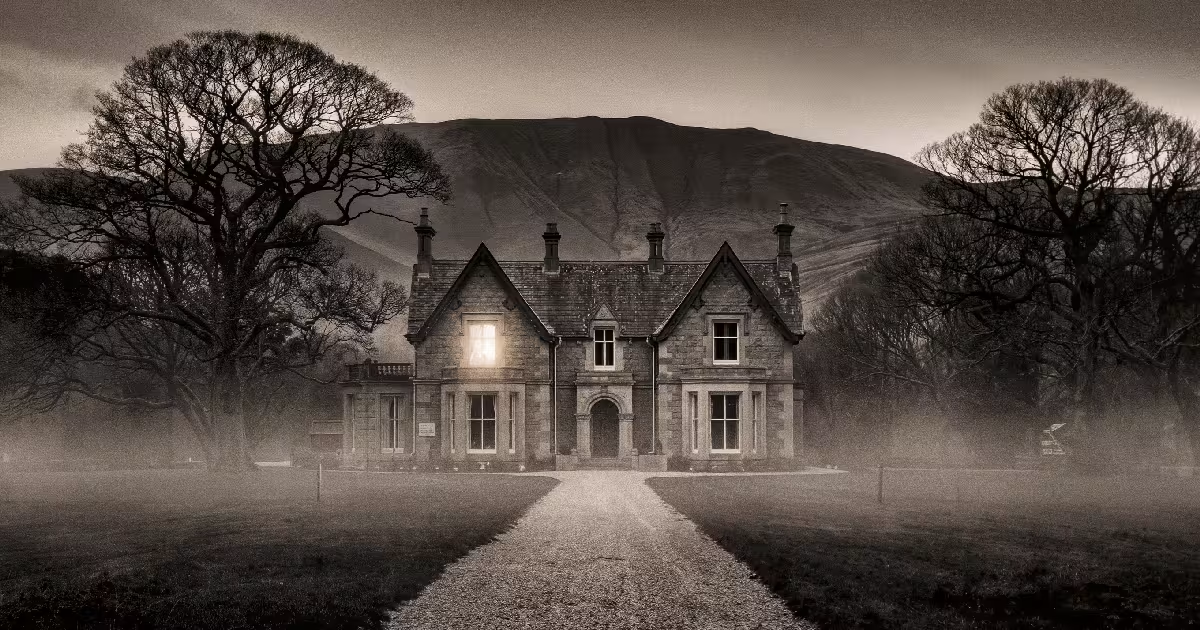
A grey stone country house with one lit window at the end of a long drive, in mist below the Perthshire hills.
Illustration, not a period photograph.
Opening
Ballechin House stood near Grandtully in Perthshire, in the Tay valley. In the 1890s it was said to be the most haunted house in Scotland: knocking, voices, footsteps, and the feeling of an invisible dog. In 1897 the Society for Psychical Research rented it for a formal investigation, and the result became a public quarrel in The Times that did more damage to the investigators than to the ghosts.
Timeline
1806. The house is built on the site of an older manor belonging to the Steuart family.
1834. Major Robert Steuart inherits it. After service in India he returns in 1850 and lives there with many dogs. He is said to have believed in reincarnation and to have said he would come back as a dog.
1876. The major dies. His nephew, John Skinner Steuart, inherits the house and, the story goes, has all the dogs shot so his uncle cannot return in one of them.
1870s to 1890s. Staff and guests report knocking, voices, footsteps and the brush of an unseen dog.
1896. A family that had rented the house for the shooting season leaves early, reportedly because of the disturbances.
1897. John Crichton-Stuart, the 3rd Marquess of Bute, rents Ballechin for an investigation on behalf of the Society for Psychical Research. Ada Goodrich Freer and Colonel Lemesurier Taylor lead it, inviting guests to stay and record what they hear.
June 1897. J. Callender Ross, one of the guests, writes to The Times that he found no evidence of anything supernatural and calls the investigation worthless. A long argument follows in the paper.
1899. Goodrich Freer and Bute publish The Alleged Haunting of B---- House, including her journal of the stay.
1963. After a fire, the house is demolished. Only servants’ quarters and outbuildings remain.
Key figures
Major Robert Steuart, whose dogs and beliefs are at the heart of the legend. John Skinner Steuart, his nephew. The Marquess of Bute, a wealthy patron of psychical research. Ada Goodrich Freer, the lead investigator. J. Callender Ross, the guest who went public. Frederic Myers, the Society’s leading figure, who later doubted there was anything supernormal there.
Physical and documentary trail
On the paper: the 1899 book and Goodrich Freer’s journal, the letters to The Times, and Society for Psychical Research papers. That is a good record for a Victorian haunting. What is weaker is the source behind the legend itself. The dog story and the shooting of the dogs come from later retellings and family gossip, not from records made when the major died.
Competing explanations
A genuine haunting. Several independent households reported similar noises over years, and the investigators and their guests heard knocks and voices themselves.
An old house and a primed audience. Ballechin was a large, draughty country house full of pipes, timbers and animals. Guests arrived knowing it was supposed to be haunted and were asked to listen for noises.
An unreliable investigation. The investigation’s leader later lost her standing. In the 1960s Trevor Hall showed that Goodrich Freer had misled the Society, copied material and invented parts of her own life, which throws doubt on her journal.
Later life of the case
The Ballechin quarrel helped make psychical research look foolish in the press and set the Society more cautious about publicity. The house became a staple of Scottish ghost books, often with the dogs as the main story.
Finding
People who lived at and visited Ballechin reported noises they couldn’t explain, and that part of the record is consistent. The investigation meant to settle it was flawed from the start and led by someone later shown to be unreliable, so it proves nothing either way. The famous story of the major and his dogs is the least documented part of the case.
What still will not resolve: what the households of the 1870s and 1890s heard, now that the house they heard it in is gone.