AMITYVILLE
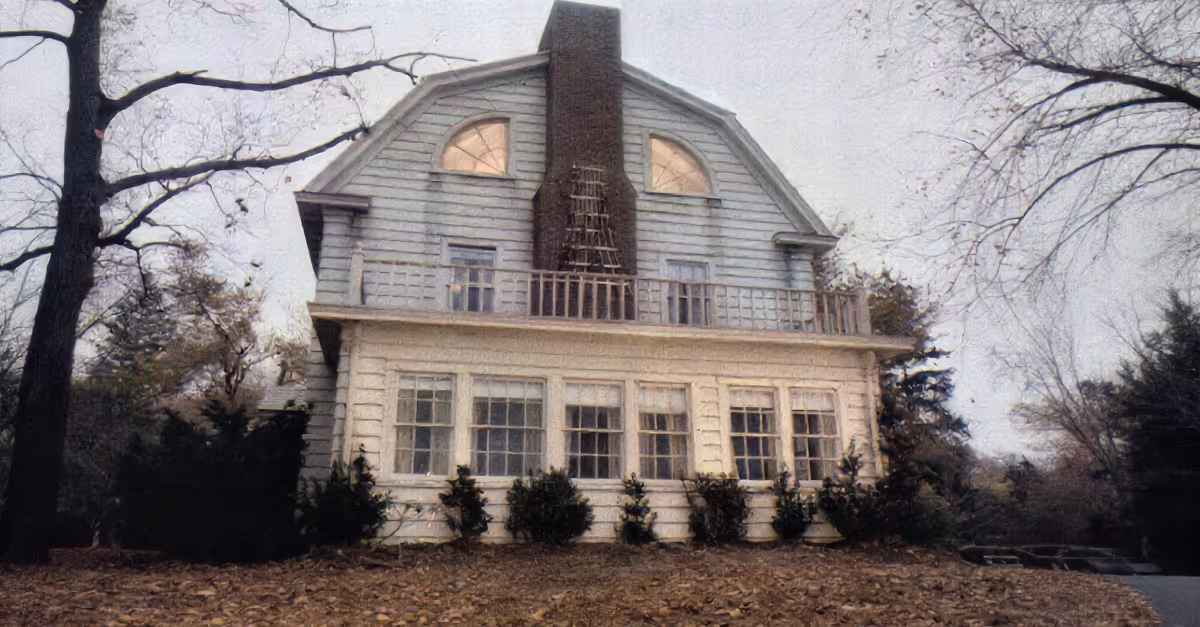
Dutch colonial house. Quarter-round windows in daylight, no figures.
Illustration, not a period photograph.
Opening
On 13 November 1974 Ronald DeFeo Jr. shot six members of his family at 112 Ocean Avenue, Amityville, Long Island. That is the criminal file. In December 1975 George and Kathy Lutz moved in with three children and left after twenty-eight days. They told Jay Anson a house that went wrong: flies, cold, a priest who could not bless, a voice that said get out. Anson's 1977 book and the 1979 film made the address a proper noun. DeFeo is not a ghost story. The twenty-eight days are the fight.
William Weber, DeFeo's lawyer, later said he and the Lutzes had cooked colour over wine. The Lutzes sued and were sued. Investigators who sat in the empty house after did not all hear what Anson sold. The murders remain verdicts. The haunting remains a product that will not sit still.
The spine of the file is six deaths and twenty-eight days. Amityville is a crime house that became a book. It is not a second inquest that undoes November 1974.
Timeline
13 November 1974 the DeFeo murders. Trial and conviction follow.
December 1975 the Lutz family move in. They leave after twenty-eight days.
1977 Anson's book. 1979 the film. Weber's later cooking claim and the lawsuits.
Every later American haunted-house list starts here. That list is later life. November and the twenty-eight days are first.
Key figures
The DeFeo family own the November night. Ronald owns the verdict.
George and Kathy Lutz own the twenty-eight days and the story they sold.
Jay Anson owns the book that named the rooms for the country.
William Weber owns the later claim that colour was mixed.
Physical and documentary trail
On the paper, 1974-77 give you four hard objects and no second inquest.
One: the 13 November 1974 murders and the criminal file.
Two: Lutz occupancy and departure, December 1975 to January 1976.
Three: Anson's 1977 book.
Four: Weber's later statement and the civil paper. People v. DeFeo, and Jay Anson, The Amityville Horror, 1977, are the two originating trays. Keep them separate.
There is no instrument log from the twenty-eight days that both camps accept. There is no undoing of the six deaths. There is no priest's contemporaneous diary everyone will sign as Anson wrote it.
We lasted twenty-eight days.
Competing explanations
A house still wrong after a massacre. This is Anson. It has twenty-eight days. It has Weber against the colour.
A crime house plus a book deal. This is the sceptical door. Has to carry why the Lutzes left at all.
A mix: real unease, invented flies. Possible. The murders do not need the flies.
Hybrid caution. Six people were shot in that house. A family then lasted four weeks and sold a book. Those are two files.
Later life of the case
Sequels and tourist vans. I keep those on the later-life shelf. November 1974 and the twenty-eight days stay first.
Finding
Ronald DeFeo killed six people at 112 Ocean Avenue in November 1974, and the Lutz family left that house after twenty-eight days and told Jay Anson what the rooms had done. Believe the murders. Believe that the Lutzes left. A Long Island crime does not invent itself for a paperback.
What still will not resolve: a contemporaneous log of the twenty-eight days that is not the book, or a page that makes Weber's cooking claim a signed recipe. Either one would pin the haunting. The proving object is still those days, held as fright or as deal by more than a film still.