THORNTON HEATH
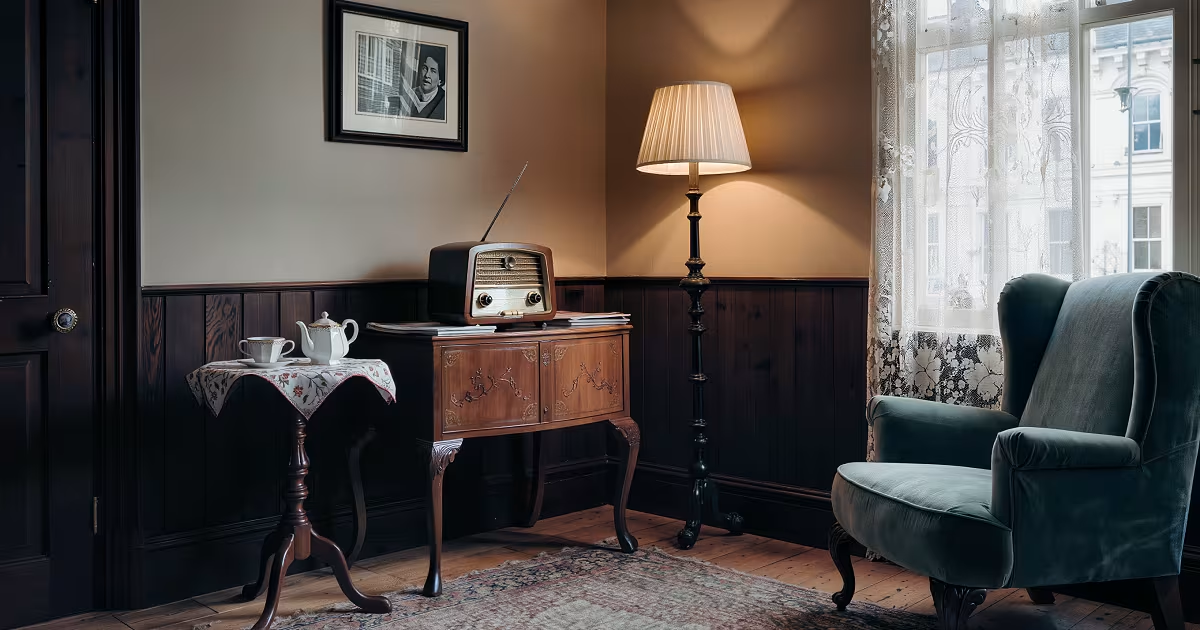
1930s London terrace interior. Sideboard, no people.
Illustration, not a period photograph.
Opening
In 1938 a house on Beverstone Road, Thornton Heath, Surrey, threw crockery. Nandor Fodor, then with the International Institute for Psychical Research, sat with the family of Mrs Forbes and wrote a case that moved from flying plates to a life history he treated as the engine. The papers liked the plates. Fodor liked the woman. The Institute split over how far a researcher should go into a living person's wounds. That split is part of the file.
Crockery cases are cheap in the 1930s press. This one stuck because Fodor published the sitting and then the quarrel. No plate from Beverstone Road sits in a lab chain. The house address is the object.
The spine of the file is flying china and a researcher who would not stay with china. Thornton Heath is Fodor's case. It is not a conviction that named a thrower.
Timeline
1938 the Forbes household reports objects in motion. Fodor arrives.
Sittings and notes. Press takes the crockery. Fodor's psychological reading hardens.
The Institute quarrel follows the paper. Fodor leaves that room.
Later poltergeist textbooks keep Beverstone Road. That textbook is later life. 1938 is first.
Thornton Heath on Beverstone Road sat in Fodor's crockery file. Household objects moving in the telling are the cheap grain. No charge closed the house as a known trick both camps signed.
Key figures
Mrs Forbes owns the house and the life Fodor put on the page.
The household owns the crockery.
Nandor Fodor owns the sitting notes and the quarrel.
The Institute owns the split.
Physical and documentary trail
On the paper, 1938 gives you four hard objects and no kept plate.
One: household accounts of moving crockery on Beverstone Road.
Two: Fodor's sittings and published case.
Three: contemporary press.
Four: the Institute split over method. Nandor Fodor's Thornton Heath case notes, 1938, are the originating tray.
There is no film of a plate in the air both camps accept. There is no conviction. There is no later instrument keep.
A named road and crockery events are the stay-behinds. A shown trick in the year would finish the other door.
The plates left the dresser when we were in the room.
Competing explanations
A poltergeist in a Surrey kitchen. This is the press. It has plates. It has no film.
A life that threw things when it could not speak. This is Fodor. It has a quarrel. It has no proof the plates needed a ghost.
A hoax for attention. Possible. The Institute still sat.
Hybrid caution. China flew in a written case. Morning had no plate in a lab.
Later life of the case
Fodor reprints and method fights. I keep those on the later-life shelf. Beverstone Road stays first.
Finding
The Forbes house on Beverstone Road spent 1938 with crockery in the air, and Nandor Fodor sat there and wrote it until his Institute split over the writing. Believe the kitchen as a kitchen that broke its own china. A researcher does not invent an address for a later theory.
What still will not resolve: a frame of a plate in flight, or a signed confession from a living hand. Either one would pin the dresser. The proving object is still that plate, held as throw or as event by more than a chapter on wounds.