SEAFORD POLTERGEIST
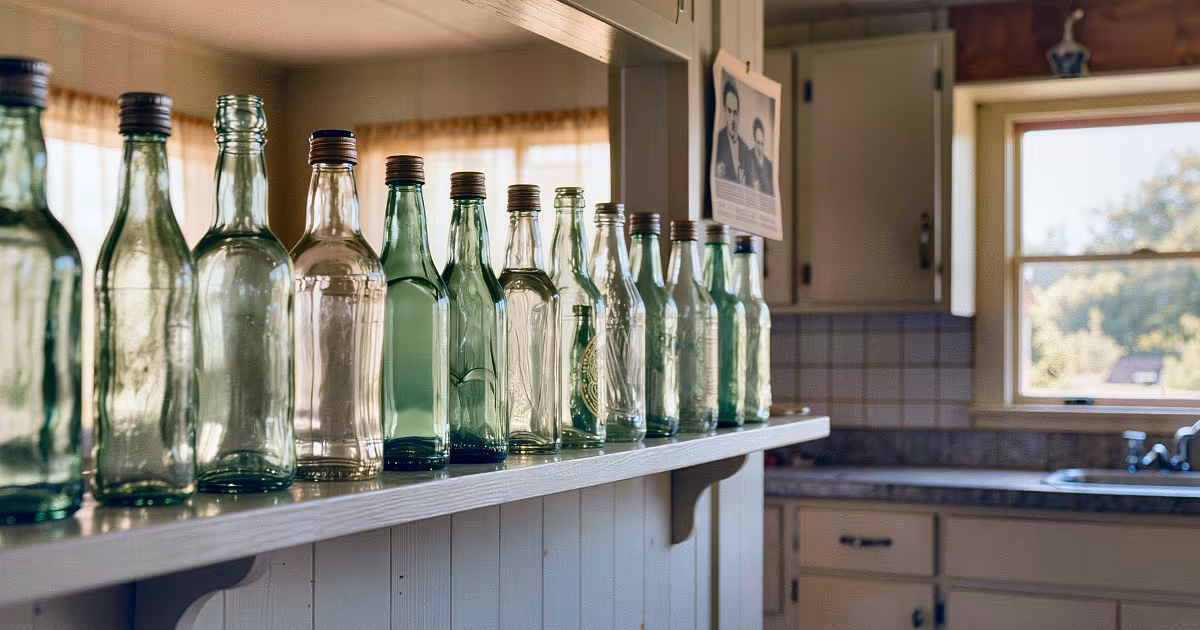
1950s suburban kitchen. Bottles on a shelf, no people.
Illustration, not a period photograph.
Opening
From 3 February 1958 the Herrmann house in Seaford, Long Island, logged bottles that popped their caps, then objects that moved. James Herrmann called the police. Patrolmen wrote sixty-seven events in a stretch of weeks. J. G. Pratt and William Roll from Duke sat with the family and a twelve-year-old son, Jimmy. The police did not name a ghost. They named a house they could not close as a prank they had caught.
Seaford became the American bottle case. Life magazine and the wires took it. Sceptics later pointed at a boy and a house that wanted company. Roll pointed at recurrent spontaneous psychokinesis and a child in the room. No bottle from those weeks sits in a lab as an exhibit with a chain from the dresser.
The spine of the file is a police log of popping bottles. Seaford is the Herrmann weeks. It is not a Duke demonstration everyone signed.
Timeline
3 February 1958 first pops. Police arrive. The log grows toward sixty-seven.
Pratt and Roll sit. Press arrives. The weeks run through March.
The house quiets. Later papers argue boy versus event.
Every later American poltergeist list keeps Seaford. That list is later life. The February log is first.
Key figures
James Herrmann owns the call to the police.
Jimmy Herrmann is the child in the room the theories need.
Seaford patrolmen own the count.
Pratt and Roll own the Duke look.
Physical and documentary trail
On the paper, February-March 1958 give you four hard objects and no kept bottle.
One: household reports of popping bottles and moving objects.
Two: police logs counting events, the sixty-seven figure.
Three: Pratt and Roll's sittings.
Four: contemporary press including Life. Seaford police logs of the Herrmann house, February 1958, are the originating tray.
There is no film both camps accept. There is no bottle in a museum chain. There is no confession the police filed as a close.
The bottles popped in rooms we were watching.
Competing explanations
A poltergeist counted by police. This is Roll. It has a log. It has no exhibit.
A boy and a house that liked an audience. The sceptical door. Has to carry patrolmen who would not close it as a joke they had caught.
Vibration, heat, cheap caps. Incomplete for objects that were not bottles.
Hybrid caution. A Long Island house filled a police log. Morning had no bottle in a case.
Later life of the case
RSPK textbooks and later boy-theories. I keep those on the later-life shelf. The February log stays first.
Finding
The Herrmann house in Seaford filled a police log with popping bottles in February 1958, and Duke people sat in the rooms without closing the weeks as a prank the patrol had caught. Believe the log. A Long Island officer does not invent sixty-seven lines for a magazine.
What still will not resolve: a bottle with a chain from that dresser, or a confession the police would have filed. Either one would pin the caps. The proving object is still those pops, held as trick or as event by more than a later theory about a boy.