FLATWOODS
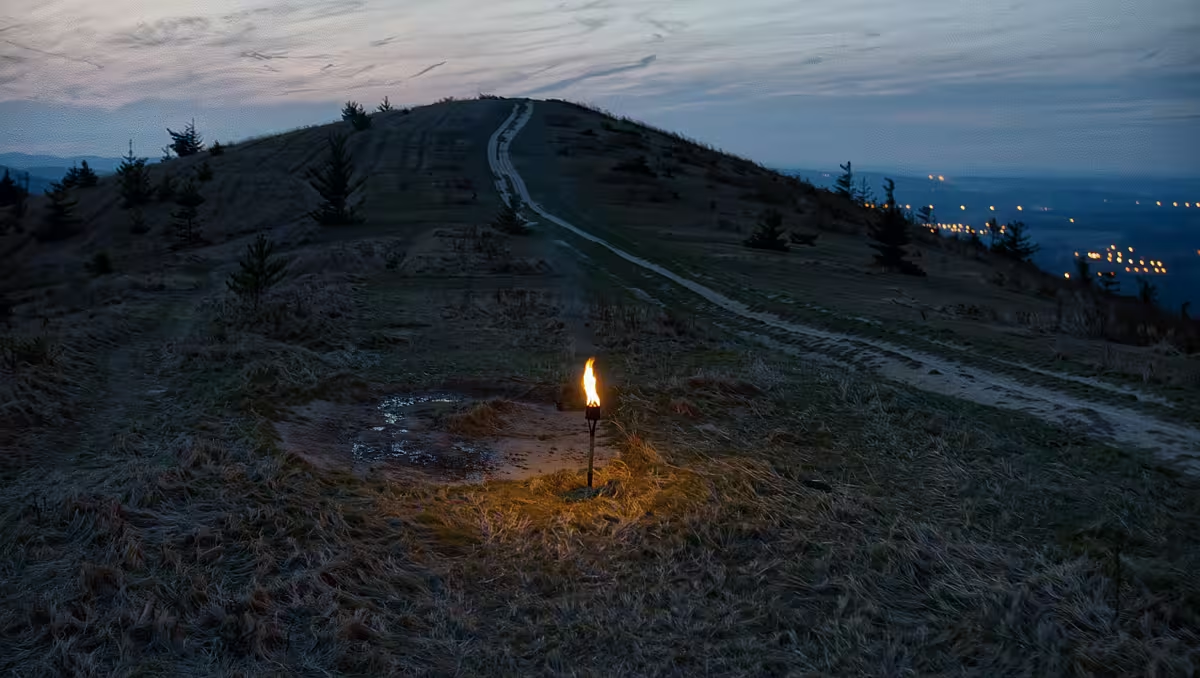
West Virginia knoll at dusk. Torchlight, no figure shown.
Illustration, not a period photograph.
Opening
At 7:15 p.m. on 12 September 1952, brothers Edward and Fred May and their friend Tommy Hyer, playing near Flatwoods Elementary School in Braxton County, West Virginia, watched a bright object cross the sky and appear to land on a nearby hillside farm belonging to G. Bailey Fisher. The boys fetched the May brothers' mother, Kathleen May, and a small group, including seventeen-year-old National Guardsman Eugene "Gene" Lemon, local boys Neil Nunley and Ronnie Shaver, and the family dog Rickie, climbed the hill to investigate. What they reported next, a towering, roughly ten-foot figure with a spade-shaped, glowing head and small claw-like hands, hovering in a pungent, eye-stinging mist, became one of the most enduring monster sightings in American folklore, and, unusually for a case this famous, one with a specific, well-argued mundane explanation that fits an impressive number of the reported details at once.
Timeline
12 September 1952, 7:15 p.m. The May brothers and Hyer see a bright object cross the sky and seem to descend onto the Fisher farm. Unknown to them at the time, a genuine meteor was independently observed crossing the sky that same evening over Maryland, Pennsylvania, and West Virginia, and was separately, mistakenly reported elsewhere as a flaming aircraft crash near Elk River.
Same evening, shortly after. The boys report the sighting to Kathleen May; the group, now including Lemon, Nunley, and Shaver, sets out toward the Fisher farm with a flashlight and the family dog.
Same evening, en route. Lemon's dog runs ahead out of sight, begins barking, then returns to the group with its tail between its legs, a detail witnesses recount as an early sign something had genuinely alarmed the animal.
Same evening, atop the hill, roughly a quarter mile from the house. The group sees a large, pulsating ball of fire or reddish glow about fifty feet off, and detects a pungent, metallic or sulfurous mist that stings their eyes and noses. Lemon shines his flashlight toward a nearby tree line and reports briefly illuminating a tall, dark figure with a glowing, spade-shaped head and small, claw-like hands extended in front of its body; accounts differ on whether the figure had visible arms at all. The group flees in fear.
Same evening, within the half hour. Kathleen May summons help; Braxton County Sheriff Robert Carr and Deputy Burnell Long arrive with weapons and flashlights, but by the time they reach the site, whatever had been there is gone, though the reported smell persists and a greasy residue is noted on the grass.
Following morning. The Braxton County Democrat runs a story on the sighting under a monster-themed headline, and the account spreads rapidly beyond the county, drawing sightseers and press attention within days.
Following days. Local resident Max Lockard later admits to having driven his truck around the site out of curiosity hoping to see something himself; some subsequent paranormal investigators, per skeptic Ryan Haupt's account, concluded tire tracks, oily residue, and small bits of rubbery material found at the site were left by the creature rather than by Lockard's own vehicle.
Same period. The case draws formal attention from the U.S. Air Force's UFO investigation initiative, Project Blue Book, as part of its broader review of contemporaneous sighting reports.
Later that year. Kathleen May travels to New York City to appear on the television program We the People; while there, artist Lee Steward commissions a sketch artist to produce the now-iconic drawing of the creature based directly on her description, an image that has since become the visual template for nearly all subsequent Flatwoods Monster depictions.
2000. Paranormal investigator and skeptic Joe Nickell conducts an on-the-ground investigation, visiting the site and interviewing surviving original witnesses, and proposes a specific, detailed conventional explanation covering nearly every reported element of the sighting at once.
Key figures
Kathleen May is the case's central adult witness and its most consequential describer, whose specific account of "small, claw-like hands" extending in front of the figure's body became the defining visual detail carried into the iconic sketch and nearly all subsequent popular depictions.
Lemon is the witness who actually shone the flashlight on the figure and reported the closest, if briefest, direct view, making his specific account central to the case despite the brevity of his actual observation under evident fear and darkness.
Sheriff Carr and Deputy Long represent the case's contemporaneous official response, arriving with weapons within roughly half an hour and finding no creature but noting the reported smell and residue still present, corroborating at least the sensory aftermath without themselves witnessing the figure.
Lockard is a minor but telling figure: his own admitted curious drive around the site appears to have generated at least some of the "physical evidence," tire tracks and residue, that later investigators attributed to the creature itself rather than to an ordinary curious local in his truck.
Nickell is the case's most consequential later investigator, whose specific, multi-part explanation directly engaging nearly every individual reported detail, shape, sound, coloring, hand position, represents an unusually thorough piece of after-the-fact conventional analysis for a folklore-level cryptid case.
Physical and documentary trail
On the paper, this file has contemporary 1952 newspaper coverage, a same-night sheriff's department response, formal Project Blue Book review, Kathleen May's own detailed television-era description preserved in the commissioned sketch, and, much later, Nickell's detailed on-site investigative writeup directly addressing the specific claimed physical evidence.
The claimed physical evidence itself, tire tracks, oily residue, small bits of rubbery material, has a specific, documented mundane origin per Lockard's own admission of having driven around the site out of personal curiosity, a detail some contemporaneous paranormal investigators either missed or discounted in favor of attributing the same tracks to the creature.
One of the boys peed his pants... their dog ran with his tail between his legs.
Competing explanations
A startled barn owl perched on a tree limb, with a meteor accounting for the initial sky sighting and airplane navigation beacons accounting for the pulsating red glow. This is Nickell's proposed explanation, and its strength lies in the specificity of its fit: a barn owl's pale, heart-shaped facial disc and dark eye sockets can present an eerie, mask-like appearance in flashlight beam at close range; a perched owl's silhouette, wings folded or half-raised, can suggest a tall, roughly humanoid shape with an oddly shaped "head"; underbrush beneath the tree limb could account for the reported pleated, skirt-like lower body; and a barn owl's hiss and screech, along with its startled, gliding flight when disturbed, matches witnesses' description of the sound and apparent forward gliding movement reasonably well. The reported claw-like hands extending in front of the body also match the appearance of owl talons gripping a branch when viewed from below in poor light.
Mass excitement and imagination compounding a real but far more mundane triggering event (the genuine meteor, seen across three states that same evening). This reading treats the creature sighting itself as a real-time misperception under genuine fear and darkness rather than fabrication, consistent with witnesses' own visible distress noted by contemporaries at the time.
A genuine unidentified creature associated with a crashed craft. This remains the reading favored by the town's own enduring tourism identity and by believers in the broader case, resting on the consistency of description across several witnesses, though the barn owl explanation's specific point-by-point fit with nearly every individual detail makes this reading harder to sustain as the more economical account.
Later life of the case
Flatwoods has embraced the creature, now often nicknamed "Braxxie," as a genuine local tourist identity, with a dedicated museum, commemorative art including a monster-themed chair, and a steady stream of visitors drawn by the story regardless of its likely mundane origin. Nickell's barn owl explanation, and his separate, similar identification of the Mothman sighting in nearby Point Pleasant as also likely misidentified owl activity, connects two of West Virginia's most famous cryptid legends through a shared, specific, and well-argued conventional mechanism.
Finding
A group of frightened children, a teenage National Guardsman, and a concerned mother encountered something in the dark that genuinely terrified them, on a night when a real meteor was independently observed crossing three states. The specific physical evidence later attributed to the creature has a documented mundane origin in one curious local resident's own admitted drive around the site, and the creature's described appearance, sound, and movement match a startled barn owl's known characteristics in unusually specific, point-by-point detail.
What still will not resolve: absolute confirmation that a barn owl, rather than some other cause, was specifically present at that exact spot that exact night, since no owl was itself recovered or independently confirmed at the scene. Given how well the explanation fits nearly every individual reported detail at once, though, this stays one of the more convincingly, if not completely, resolved cryptid cases in the file.