BEAST OF GEVAUDAN
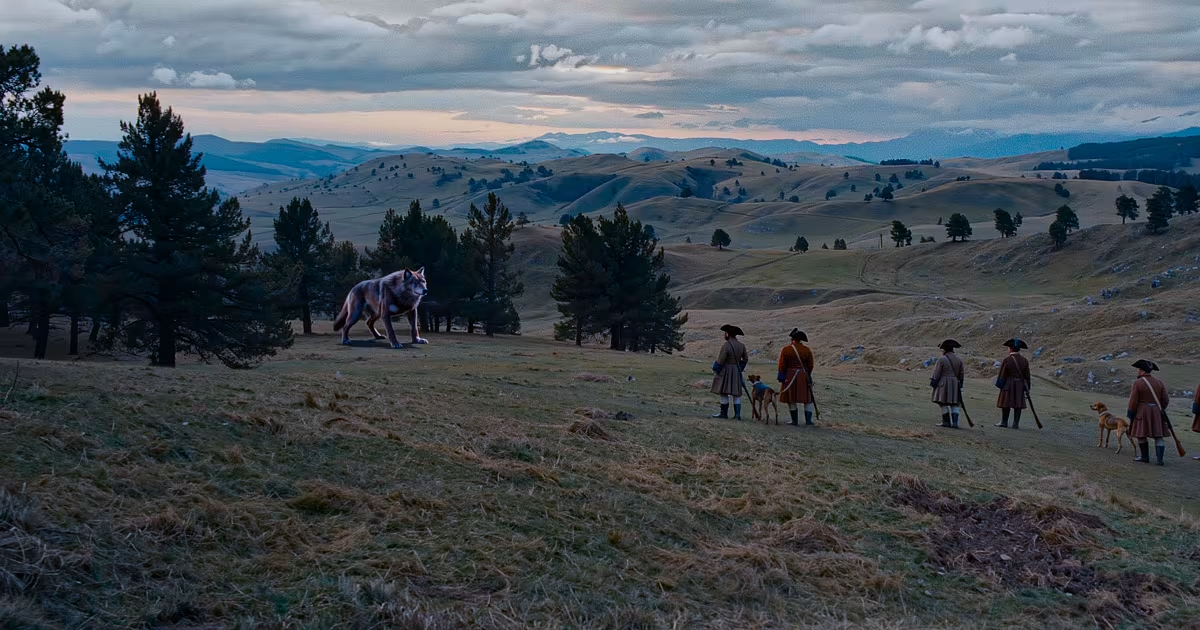
18th-century Margeride hillside. Hunters and a large wolf-like animal.
Illustration, not a period photograph.
Opening
From June 1764 to June 1767 the Margeride in Gevaudan buried people taken by an animal the country named a beast. Women and children on paths and in pastures were the usual dead. Descriptions ran from a great wolf to something red-grey with a monstrous head. Louis XV put money and huntsmen on the hills. The papers in Paris printed the body count as if it were a war.
Francois Antoine, the king's arquebus bearer, killed a large wolf at Les Chazes in September 1765 and sent it to Versailles. He wrote that the tracks were a great wolf's tracks. The killings did not stop. In June 1767 Jean Chastel shot another large animal under the Marquis d'Apcher. After that the parish lists go quiet.
The spine of the file is a royal hunt that declared the wolf dead twice. Gevaudan is a stack of burial records and two carcasses. It is not a living beast in a cage.
Timeline
June-October 1764. First killings in the Margeride. Local captains and the dragoon Duhamel fail to end it. Boys who fight the animal off with sticks get a royal reward.
1765. D'Enneval father and son, wolfers from Normandy, take the brief and do not finish it. In June the king sends Antoine. On 21 September Antoine's shot drops the Wolf of Chazes. The skin goes to court. Antoine kills a mate and young. Paris treats the case as closed.
Winter 1765 into 1767. New dead in the same hills. Court attention cools. Local hunts continue under d'Apcher.
19 June 1767. Chastel kills a large animal. Descriptions of that body are a strange wolf, not a farm dog. The attacks cease. What Chastel shot was buried or lost as a specimen. Versailles already had Antoine's wolf.
Key figures
The dead of Gevaudan are the first layer. Parish registers, not engravings, are their paper. Women and children on foot are the pattern.
Louis XV is the state. Reward, dragoons, Antoine. He wanted a wolf he could hang on a wall. He got one, then news that the hills were not done.
Francois Antoine is the official closer of 1765. His letter that the print is a wolf's print is the scientific sentence of that year. The 1766-67 burials contradict the close without naming his carcass a fraud.
Jean Chastel is the local last shot. Later romance made him a hero with a blessed ball. The 1767 fact is a hunter and a stop in the killing.
Physical and documentary trail
On the paper, 1764-1767 give you four hard objects and no living beast.
One: the parish death trail in the Margeride across three seasons, clustered on isolated walkers.
Two: royal orders, rewards, and the succession of huntsmen, Duhamel to d'Enneval to Antoine.
Three: Antoine's Wolf of Chazes, shot 21 September 1765, sent to Versailles, and his note that the tracks matched a great wolf.
Four: Chastel's June 1767 animal and the stop in the burial lists after that date. Francois Antoine correspondence from the Gevaudan hunt, 1765, is the official identification of the first carcass.
There is no clean mounted type-specimen both camps accept. There is no court drawing from life. There is no second species named in a 1765 cabinet label.
The traces found offer no difference with the foot of a great wolf.
Competing explanations
Wolves, more than one. This reading takes Antoine at his word and treats Chastel as the last of a pair or a pack. It fits tracks and court taxidermy. It has to live with witnesses who kept saying the head was wrong.
A single unusual animal. Hyena, escaped exotic, wolfdog. Offered then and now. No keeper's book has been produced that parks such an animal in the Margeride in 1764.
Human killer wearing the scare. Rare in the serious paper. The bite pattern and the rural winter do more work for an animal than for a man in a skin.
Hybrid caution. People were killed. Wolves were shot. The hills went quiet after the second carcass. The engravings of a monster are not a third body.
Later life of the case
Prints, novels, and werewolf film keep a demon on the ridge. I keep those on the later-life shelf. The burial lists and the two official shots stay first.
Finding
The Margeride buried people for three years because an animal was taking them off paths and out of pastures. Women and children, mostly. Paris printed it like a war. Believe the parish lists. Antoine shot a great wolf and said the tracks were a wolf's. The killings went on. Chastel shot another and the lists went quiet. Something real was eating that country.
What still will not resolve: a specimen both camps will accept as the killer, with a skull a naturalist can still measure. Versailles had Antoine's wolf. The hills had more dead after it. The proving object is the 1767 animal, intact enough to settle whether Gevaudan died of wolves or of one wrong thing.