CHUPACABRA
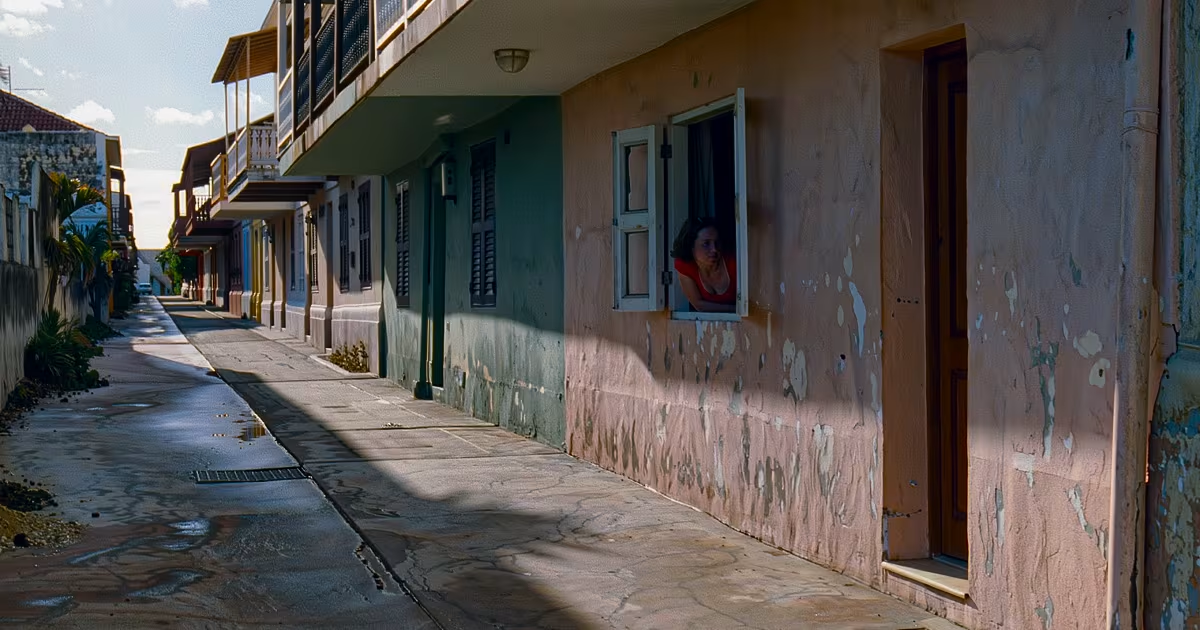
Canovanas street in the afternoon. No figure.
Illustration, not a period photograph.
Opening
In 1995 Puerto Rico gave a name to a thing that was killing goats and leaving puncture stories in the hills: chupacabras, goat-sucker. Madelyne Tolentino in Canovanas described a biped with spines. Farmers described dead animals and two holes. A cartoon and a radio ecology did the rest. The name travelled faster than any hide. By the time Florida and Mexico used it, the creature had already become a type that could mean a dog with mange or a biped in a backyard.
Puerto Rico had already had a strange 1970s. 1995 is the naming year, not the first dead goat. The word stuck to carcasses. It is not a specimen in a San Juan jar.
The spine of the file is a 1995 name and a set of farm kills. Chupacabra is Canovanas talk that went worldwide. It is not a kept sucker on a slab.
Timeline
Early 1995. Reports of exsanguinated small livestock in Puerto Rico thicken. August-November the Canovanas descriptions and the name hit radio and print. Tolentino's figure is the one illustrators like: eyes, spines, a hop.
1996 onward the word leaves the island. Mainland cases are mostly canids with mange under a lab. Puerto Rico keeps a thinner stream of biped talk.
No year produces a type specimen the Department of Agriculture will tag as a new animal. The name outlives the first farms.
Every later sucker story borrows 1995. That borrow is later life. The naming summer is first.
Key figures
Madelyne Tolentino owns the biped description that became a drawing.
Farmers with dead goats own the carcasses and the two-hole sentence.
Puerto Rican radio and press own the name that travelled.
Later mainland vets own the mange dogs that inherited the word.
Physical and documentary trail
On the paper, 1995 gives you four hard objects and no type specimen.
One: farm reports of dead goats and other small stock in Puerto Rico.
Two: Tolentino's biped description from Canovanas.
Three: the naming in island press and radio.
Four: later mainland carcasses filed under the same word. Puerto Rico press and farm reports on the 1995 chupacabras wave, are the originating tray.
There is no hide from Canovanas the lab kept as a new species. There is no photograph of the biped that a zoologist will sign. There is no second island with a matching specimen.
It had spikes down its back and it left the goats empty.
Competing explanations
An unknown predator on the island. This is the 1995 farm reading. It has carcasses. It has no type specimen.
Dogs, dogs with mange, and a name that ran ahead of the body. The later lab door. Has to carry the biped drawings.
A media animal born on the radio. Possible. The first dead goats still sat in yards.
Hybrid caution. Puerto Rico named a sucker in 1995. The world borrowed the word. The jar stayed empty.
Later life of the case
Mainland mange dogs and television hunts. I keep those on the later-life shelf. The 1995 name stays first.
Finding
Puerto Rico spent 1995 burying goats and naming a chupacabras, and Canovanas put a biped with spines into the drawings. Believe the farms. A dead goat is not a cartoon until someone draws it.
What still will not resolve: a specimen from that island year, or a photograph of the biped a zoologist will sign. Either one would pin the name to an animal. The proving object is still that animal, held in a jar with a 1995 tag.