BARGUEST
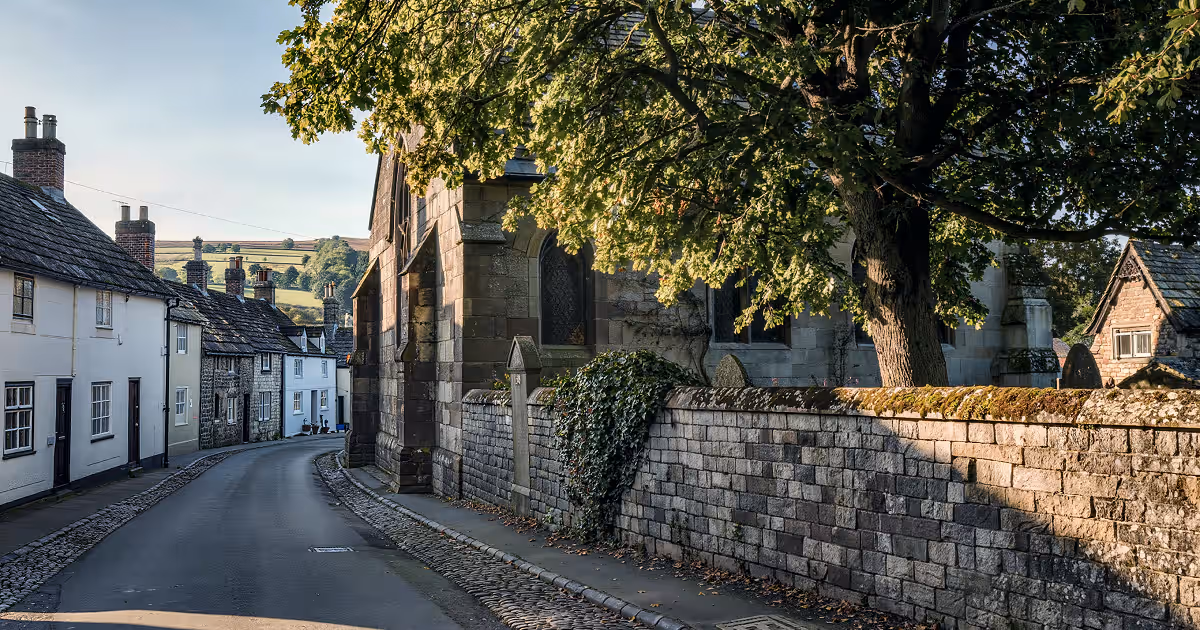
Yorkshire lane night. Churchyard wall, no dog.
Illustration, not a period photograph.
Opening
Yorkshire people used barguest for a black dog at a gate, a churchyard, or a lonely lane, the way other counties used shuck or padfoot. It is a night word. It is a warning word. Collectors wrote it into books in the nineteenth century and did not bring a hide home to Leeds. Known dogs walk those same lanes in daylight.
The books are real. The lanes are real. The missing specimen is real. What went wrong in the thin version of this card was treating those three facts as a shrug instead of telling them as a county story people actually told.
The spine of the file is a Yorkshire lane and no hide in Leeds. Barguest is talk. It is not a type in a drawer.
Timeline
Older Yorkshire speech keeps barguest at the edge of villages: a large dark dog, a gate, a person on the way home. The telling is local. It does not need a museum to start.
Nineteenth-century collectors print the name beside other northern hounds. They are doing inventory. They are not producing a body.
Later county lists reprint the word. No type series follows. Leeds does not open a case as that dog.
The lanes keep the name. The drawer stays empty. Both of those facts belong on the page at full length.
Key figures
Lane people own the first use of the word. They are the ones who needed a name for a night at a gate.
Folklore collectors own the printed lists. They saved the word and they did not finish it.
Known dogs own the ordinary door. A black shape at a gate can be a neighbour's animal.
Leeds desks own the missing hide. That absence is part of the public record, not a hole in the writing.
Physical and documentary trail
On the paper, the name gives you four hard objects and no type.
One: barguest as Yorkshire black-dog talk.
Two: gates, churchyards, and lanes as the usual stage.
Three: collected notes in later folklore books.
Four: no specimen. Yorkshire barguest talk as collected, is the circulating public record.
There is no hide. There is no photograph a lab will sign. There is no later type series.
The name walks the lane. Leeds has no hide.
Competing explanations
An unknown hound. This is the name as people used it. It has lanes. It has no hide.
Known dogs, weather, and a fright at a gate. The ordinary door. It has to carry why the word stuck for so long.
A later myth hung on Yorkshire. Weak against older talk that was already using the name before the reprint lists.
Hybrid caution. A lane has a word. A museum has no dog.
Later life of the case
Later black-dog lists. I keep those on the later-life shelf. The missing hide stays first.
Finding
Yorkshire people used barguest for a black dog at a gate, and they used it long enough that collectors wrote it down. Believe the talk as talk. A lane does not invent a night only for a later book.
What still will not resolve: a hide with a chain, or a photograph a lab will sign. Either one would pin the name. The proving object is still that dog on a lane, held as known or as other by more than a collection entry.