BLACK SHUCK
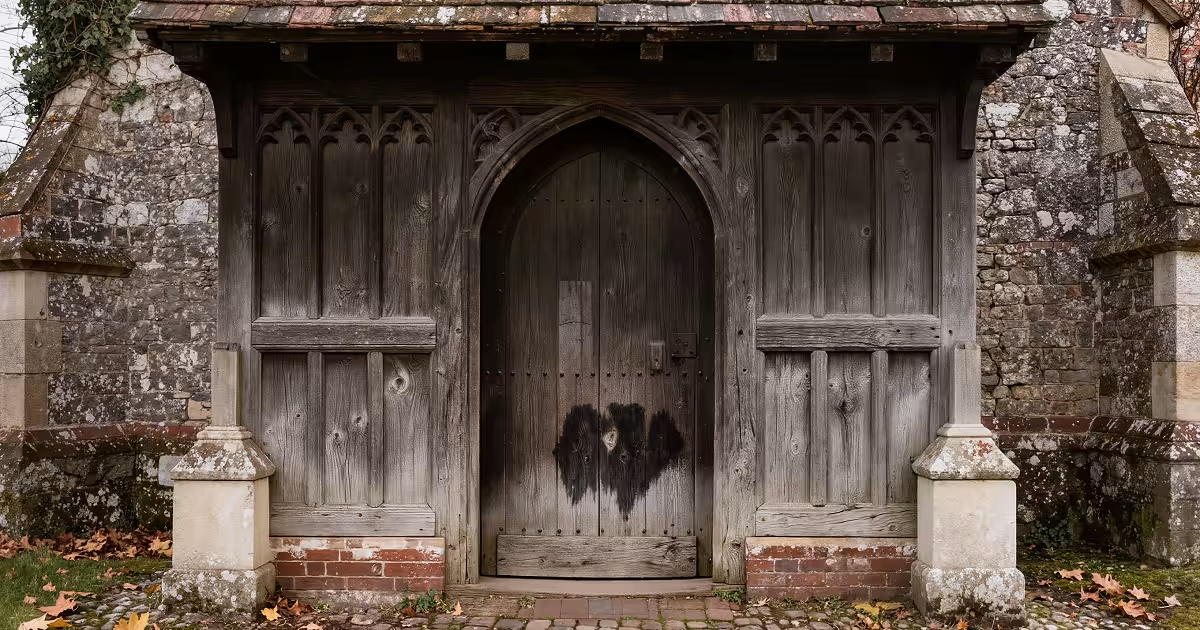
An old wooden church door marked with black scorch marks.
Illustration, not a period photograph.

Opening
On Sunday 4 August 1577, a violent storm hit two Suffolk churches during morning service, St Mary's in Bungay and Holy Trinity in Blythburgh. At Bungay, according to a pamphlet printed that year, a black dog ran through the congregation and killed two people kneeling at prayer. At Blythburgh the steeple crashed through the roof and killed a man and a boy. Blythburgh's north door still has black marks locals call the devil's fingerprints. The pamphlet made Black Shuck, the black dog of East Anglian folklore, into a named event.
Timeline
4 August 1577, morningA severe thunderstorm strikes Bungay and Blythburgh, about twelve miles apart. Both churches are damaged. Deaths are reported at both.
1577Abraham Fleming, a London writer and clergyman, publishes A Straunge and Terrible Wunder, describing a black dog that appeared in the lightning at Bungay and killed worshippers. He treats it as a warning from God.
Following centuriesBlack Shuck stories spread along the Norfolk and Suffolk coast: a huge black dog, sometimes one-eyed, seen on roads and churchyards, whose appearance warns of death.
2014Archaeologists at Leiston Abbey, Suffolk, uncover the skeleton of a very large dog in a shallow grave. Newspapers tie it to Black Shuck. No firm link is shown.
Key figures
Abraham Fleming wrote the only contemporary account of the dog. He wasn't there. He wrote from reports in London, in a genre of religious pamphlets that read disasters as divine messages.
The churchwardens of Bungay and Blythburgh are the local record keepers. Local records of the storm deal with damage and burials. The dog is not known from any source independent of Fleming.
Physical and documentary trail
What exists: Fleming's 1577 pamphlet and the churches themselves. The Blythburgh door marks are real and visible. They look like burn or lightning scorch marks, which fits a church hit in a thunderstorm.
The dog appears only in the pamphlet.
A Straunge and Terrible Wunder wrought very late in the parish church of Bongay.
Things you might not know
- The name may mean "demon". "Shuck" probably comes from the Old English scucca, a devil or fiend.
- It was called Black Shuck only in 1850. The first printed use of the name came in Notes and Queries that year.
- At Bungay it wrung two necks. Fleming's pamphlet says the dog broke the necks of two people kneeling at prayer.
- At Blythburgh the steeple fell in. The dog was blamed for killing a man and a boy there as the spire crashed through the roof.
- Locals call the door marks the devil's fingerprints. They are on the north door of Blythburgh church.
- It roams four counties. Stories come from Norfolk, Suffolk, Essex and the Cambridgeshire Fens, with the dog anything from a large hound to the size of a horse.
Competing explanations
A lightning strike, turned into a sermon. Ball lightning or a direct strike inside a crowded church could kill people, scorch wood, and leave witnesses describing a dark shape moving fast. Fleming then shaped the event to fit a moral.
An older folklore figure attached to a real storm. The black dog was already part of East Anglian belief. Fleming or his sources may have borrowed the local legend to explain the deaths.
A real animal. A frightened dog running through a church during a storm isn't impossible. It wouldn't account for the deaths.
Later life of the case
Bungay puts a black dog with lightning on its town sign and weather vane. Black Shuck turns up in fiction, music, and local tourism, and in countless ghost-dog sightings along the coast, most of them with no date or name attached.
Finding
A real storm on 4 August 1577 damaged two churches and killed several people. The scorch marks at Blythburgh are consistent with that. The dog comes from one moralizing pamphlet written at a distance, and it's best read as local legend used to explain a disaster.
What still will not resolve: whether anyone in Bungay described a dog before Fleming's pamphlet did.
Evidence signature
4/9 Solid
- Witnesses
- one person, or a tradition
- Instruments
- photo, film or physical traces
- Paper
- official records at the time
How well documented the case is, not whether it's true. A strong record can still have an ordinary answer, and a thin one can still be real.
You decide · BLACK SHUCK
What do you think happened?
One vote per case, anonymous. You'll see how other readers voted once you've voted.