WENDIGO
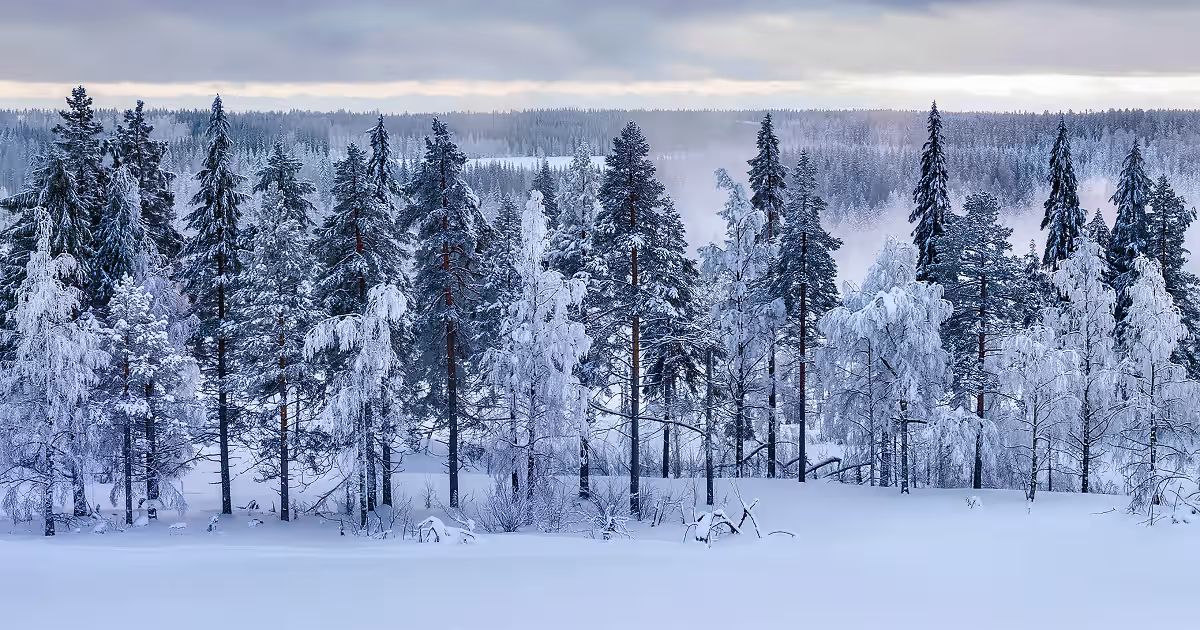
Snow-laden spruce and pine in a northern forest in deep winter.
Illustration, not a period photograph.

Opening
The wendigo, known by various related names across Algonquian-speaking peoples including the Ojibwe, Cree, and Innu, is a figure from genuine, living oral tradition, most commonly understood as a spirit or state of being associated with insatiable hunger, greed, and the specific horror of cannibalism, particularly as a real danger during the extreme famine conditions of Subarctic Canadian winters.
It is not a cryptid in the sense the rest of this archive generally uses that word, a physical creature with a claimed range, a body, and a hoped-for specimen. This report will not draw a map or propose a hunting method, because doing so would misrepresent what the wendigo actually is within the traditions that hold it: a teaching about a specific human danger, not a species.
Timeline
Traditional and ongoing. Among Algonquian peoples, wendigo teachings describe a transformation, sometimes framed as possession, sometimes as a consequence of the act of cannibalism itself, that turns a person into a being defined entirely by insatiable, self-consuming hunger, a being that, crucially, can never be satisfied no matter how much it consumes, since its own body is said to grow proportionally with each meal.
Documented historical application: the specific case of Jack Fiddler. Fiddler, a respected Oji-Cree spiritual leader and healer among the Sandy Lake First Nation in northern Ontario, was known within his own community for his stated ability to identify and, when necessary, kill people who had become wendigo, a role understood within his community's own framework as a form of protective healing rather than murder.
Early 1907Fiddler, then in his late sixties, and his brother Joseph are arrested by the North-West Mounted Police for the killing of a woman, Wahsakapeequay, Joseph's daughter-in-law, whom they believed had become a wendigo and posed a genuine danger to the community. Fiddler reportedly stated he had killed or assisted in killing as many as fourteen people believed to have undergone this transformation across his lifetime, each within the context of his own community's traditional practice rather than as isolated individual violence.
1907-1908The case proceeds through the Canadian legal system, a genuine, documented collision between Canadian criminal law and Indigenous spiritual and legal tradition. On 30 September 1907 Jack Fiddler slips away during a walk outside his place of custody at Norway House and takes his own life. Joseph is convicted and sentenced to death; appeals win his release, but the order arrives in 1909, three days after he has died in custody.
Ongoing scholarly and legal interestThe Fiddler case remains cited in Canadian legal and anthropological literature specifically as a documented instance of Indigenous spiritual practice colliding directly with settler colonial law, a real historical event with named individuals, court records, and a specific chain of consequence rather than a folkloric anecdote.
Separately, in clinical and anthropological literature. Researchers have described a specific psychological phenomenon sometimes termed "Windigo psychosis," referring to reported cases of individuals, generally under conditions of extreme isolation and starvation, developing an intense, culturally shaped fear of becoming a cannibal themselves or of others around them undergoing that transformation. The existence, prevalence, and even the validity of this proposed clinical category remain genuinely disputed among anthropologists and psychiatrists, with some researchers arguing it reflects real documented cases and others arguing the category itself may partly be a product of outside ethnographic interpretation rather than a phenomenon Indigenous communities themselves would necessarily frame in identical clinical terms.
20th century onwardNon-Indigenous popular culture, horror fiction, film, and later internet cryptid culture increasingly adopt "wendigo" as a generic monster label, frequently stripped of its specific cultural, spiritual, and moral context and refashioned into a physical creature with claimed antlers, a specific range, and the trappings of a conventional cryptozoological subject, a development this report specifically declines to treat as continuous with or equivalent to the actual living tradition it borrows its name from.
Key figures
Fiddler is the case's central, specifically documented historical figure, a real person whose actions, whatever judgment one reaches about them, took place within a genuine, internally coherent traditional framework his own community understood and, by most accounts, largely supported at the time.
Wahsakapeequay is the documented victim in the Fiddler case, and her specific fate sits at the genuinely difficult center of this history: a real death, understood by the community involved as the killing of something that was no longer fully a person, and understood by the arriving colonial legal system as a straightforward homicide.
The North-West Mounted Police and the Canadian legal system represent the case's point of direct, documented collision between two entirely different frameworks for understanding the same event, a collision with real, dated legal consequences rather than an abstract cultural comparison.
Later popular culture producers, horror filmmakers, video game designers, and internet cryptid-list compilers, are the figures most responsible for the modern, decontextualized "wendigo" most people outside Algonquian communities now encounter first, a version this report treats as a distinct phenomenon from the tradition it borrows its name from rather than as an accurate continuation of it.
Physical and documentary trail
The case has a genuine, extensively documented historical legal case, the Fiddler prosecution, with named individuals, court records, and a confirmed chain of events, alongside a substantial body of ethnographic and anthropological literature discussing the wendigo concept within its actual cultural context.
What this report does not have, and will not manufacture, is any physical evidence framework of the kind the rest of this archive applies to claimed cryptids, no specimen, no track, no photograph, because the wendigo as understood within the traditions that hold it was never a physical animal awaiting discovery in the first place.
Things you might not know
- The word comes from Cree and Ojibwe. English borrowed it from wīhtikōw and wiindigoo; a version, "Whitego", appears in English as early as 1714.
- A novella fixed the spelling. Algernon Blackwood's 1910 story The Wendigo popularised the form used today.
- Jesuits wrote about it in 1661. The Jesuit Relations describe men seized by a craving for human flesh that was neither madness nor frenzy as they understood it.
- Another case ended on the gallows. In 1878 the Plains Cree trapper Swift Runner killed and ate members of his family during a famine, and was executed at Fort Saskatchewan.
- "Wendigo psychosis" is disputed. Scholars in the 1980s argued over whether it was a real condition, with Lou Marano calling it a confusion between insider and outsider views.
- It is also a metaphor. Writers have used the wendigo to describe colonial greed and consumption that can never be satisfied.
Competing explanations
A genuine spiritual and moral teaching about the real, historically documented dangers of famine, isolation, and the specific horror of cannibalism during Subarctic winters, functioning within its own communities as both explanation and warning, exactly as the Fiddler case's own internal logic reflects.
A real, if contested, psychological phenomenon specific to conditions of extreme isolation and starvation, per the clinical "Windigo psychosis" literature, a reading some researchers accept and others specifically challenge as reflecting outside ethnographic framing more than a phenomenon the affected communities would necessarily describe in the same clinical terms.
A modern, non-Indigenous horror and cryptozoology invention, borrowing the name and a handful of surface details from the genuine tradition while discarding its actual moral and spiritual content, the version this report specifically declines to validate as continuous with or equivalent to the real thing.
Later life of the case
The wendigo's transformation into a generic horror-fiction and cryptid-list monster over the past century represents one of the more thorough examples of a living Indigenous spiritual tradition being commercially repurposed with much of its actual cultural and moral substance removed. The Fiddler case remains the closest thing to a documented, dated historical event this subject offers, and it deserves to be read on its own genuinely difficult terms rather than folded into a broader "creature feature" catalogue.
Finding
The wendigo is a real, living element of Algonquian spiritual and moral tradition, most directly documented through the specific, dated 1907 legal case of Jack Fiddler, a real person who killed a real person within a framework his own community understood and largely supported. This report will not extend that tradition into a claimed physical creature with a range or a hunting method, because doing so would misrepresent rather than document what the wendigo actually is.
What still will not resolve, and what this report does not treat as an open case to be solved: the genuinely contested academic question of how much clinical validity the "Windigo psychosis" category deserves, and the harder, ongoing question of how a real Indigenous spiritual tradition should be discussed at all by an archive built primarily around Western-style cryptid and paranormal cataloguing. This entry is a limit, not a hunt.
Evidence signature
6/9 Solid
- Witnesses
- several people
- Instruments
- photo, film or physical traces
- Paper
- formal investigation, court or declassified file
How well documented the case is, not whether it's true. A strong record can still have an ordinary answer, and a thin one can still be real.
You decide · WENDIGO
What do you think happened?
One vote per case, anonymous. You'll see how other readers voted once you've voted.