RANCH HAND
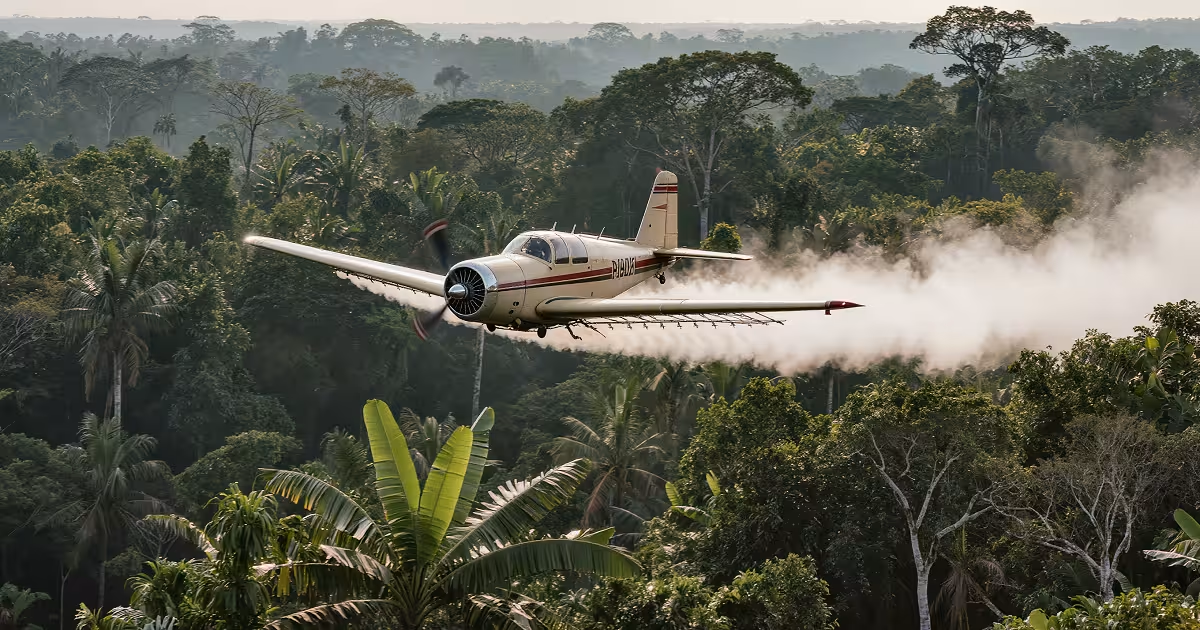
1960s spray aircraft over jungle. No insignia readable.
Illustration, not a period photograph.
Opening
Ranch Hand was the U.S. Air Force herbicide program in Vietnam and neighbouring country, running from 1962 into 1971. C-123s sprayed forest and crops to deny cover and food. Agent Orange is the name the later file kept for the most used mix. Dioxin sat in that mix as a contaminant the later medical paper would not let go. The runs stopped. The trees and the people did not reset with the last sortie.
This card is a flown program and a later health argument. It is not a manual. Official sortie counts and later VA and Vietnamese paper are the tray.
The spine of the file is years of spray and a stop. Ranch Hand is 1962-71. It is not a rumour that no aircraft flew.
Timeline
1962 first operational herbicide runs. Escalation through the mid-1960s.
Agent Orange as the volume mix. Other colours in the same shop.
1971 the runs end under political and scientific weather.
Later VA, NAS and Vietnamese health paper is later life that still points at the sorties. The sorties are first.
Volume is why Orange outlived the other colours in public. Dioxin is why the medical paper would not follow the last sortie into silence. Ranch Hand crews were a small shop doing a large landscape.
Key figures
Ranch Hand crews own the flown hours.
MACV and Washington own the aim: deny cover and crops.
Vietnamese and American bodies own the later medical file.
The later reviews own dioxin as the word that would not leave.
Physical and documentary trail
On the paper, 1962-71 give you four hard objects and no empty hangar.
One: Ranch Hand as a named spray program.
Two: sortie and gallon figures in official counts.
Three: the 1971 stop.
Four: later health reviews. U.S. Air Force Ranch Hand records, 1962-1971, are the official tray.
There is no page that makes the aircraft a myth. There is no reset of the land with the last sortie. There is no single court that ended the medical argument.
Sortie counts and the 1971 stop are the stay-behinds. A medical close both sides would sign would finish the argument. The hours already finish the program as flown.
The mission was to deny cover and crops from the air.
Competing explanations
A chemical war on a landscape and a people. This is the hard reading. It has sorties. It has later illness paper.
A defoliation tool that went wider than the briefing. Also in the record. Volume is still volume.
Exaggerated medical claims. The later fight. Does not un-fly the C-123s.
Hybrid caution. Aircraft sprayed for years. The runs stopped. The argument did not.
Later life of the case
VA tables and later memorials. I keep those on the later-life shelf. The sorties stay first.
Finding
Ranch Hand flew herbicide over Vietnam for a decade and stopped in 1971, and later health paper would not let the mix go. Believe the sorties. An air force does not invent C-123 hours for a later pamphlet.
What still will not resolve: a complete medical close both governments would sign, or a page that makes the gallons smaller than the counts. Either one would finish the argument. The proving object is still those counts, held against bodies, not against a slogan.