OPERATION PBSUCCESS
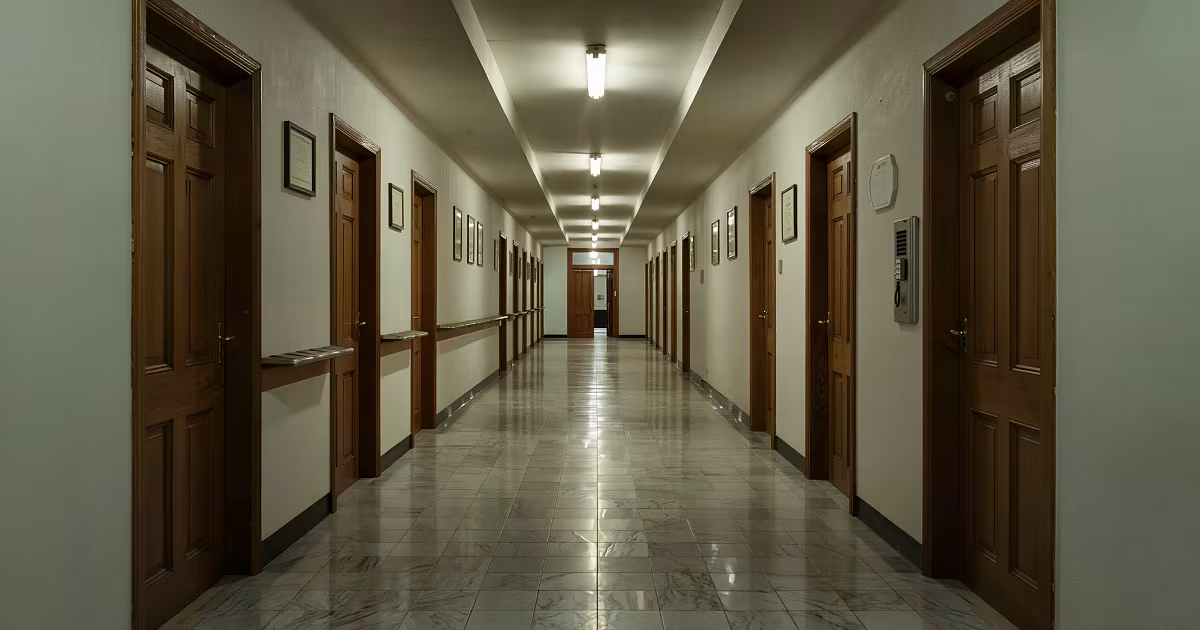
A long, quiet corridor of wooden doors in a 1950s government building.
Illustration, not a period photograph.

Archive / Conspiracy / BOT313-0166
CON-1954ConspiracyADMITTED
THE CIA'S COUP IN GUATEMALA
Fig. 01 A long, quiet corridor of wooden doors in a 1950s government building. Illustration, not a period photograph.
Opening
In June 1954, Guatemala's elected president, Jacobo Árbenz, resigned after a CIA operation codenamed PBSUCCESS. His government had passed a land reform that took uncultivated land from large estates, including hundreds of thousands of acres held by the American-owned United Fruit Company, and paid for it at the value the owners had declared for tax.
The invasion force was small, about 480 men under Colonel Carlos Castillo Armas. What made it work was a fake rebel radio station, a few bombing runs and a campaign of rumour that convinced Guatemala's army it faced far more. The CIA's own history of the operation was declassified in 1997.
Timeline
1951Árbenz takes office after winning the 1950 election.
June 1952Decree 900, the agrarian reform law, is passed. It expropriates uncultivated land from the largest holdings, and owners are paid in government bonds based on the land's 1952 tax declarations. Of nearly 350,000 private holdings, 1,710 are affected.
1952An earlier CIA plan, PBFORTUNE, is approved under President Truman and quickly aborted.
1953The government expropriates about 200,000 acres of United Fruit land. The company had kept most of its roughly 550,000 acres uncultivated. In August, President Eisenhower authorises PBSUCCESS, with a budget of $2.7 million for psychological warfare and political action.
1 May 1954The Voice of Liberation radio begins broadcasting, claiming to come from rebels in the Guatemalan jungle.
15 May 1954The Swedish freighter Alfhem delivers Czechoslovak arms to Puerto Barrios. Washington presents it as proof of Soviet influence.
18 June 1954Castillo Armas crosses from Honduras. CIA-supplied planes bomb targets including Guatemala City.
27 June 1954Árbenz resigns after his army commanders refuse to fight. Castillo Armas becomes president in early July.
Key figures
Jacobo Árbenz was the reforming president who fell. He went into exile and died in Mexico City in 1971.
Carlos Castillo Armas led the invasion force and took power. He was assassinated by a member of his presidential guard in 1957.
John Peurifoy, United States ambassador from October 1953, led the State Department side. He told Washington that if Árbenz was not a communist, he would certainly do until one came along.
David Atlee Phillips ran the Voice of Liberation broadcasts, working under E. Howard Hunt, who later became one of the Watergate burglars.
United Fruit lobbied hard in Washington, and its ties to the Eisenhower administration have been studied ever since.
Physical and documentary trail
What survives: the CIA's internal history by staff historian Nicholas Cullather, written in the early 1990s and declassified in 1997; the operational records released with it, including lists of Guatemalans to be eliminated and the Agency's first known assassination manual; State Department cables; and the land reform records. A full accounting of what was spent is not public, and estimates of the total run from $5 million to $7 million.
Things you might not know
- The jungle radio was in Miami. Voice of Liberation programmes were recorded in Florida and transmitted from a mobile unit while claiming to broadcast from inside Guatemala.
- Compensation was set by United Fruit's own tax returns. The company had declared its land at low values for tax, and the bonds were based on those figures.
- The CIA bombed a British ship. On 27 June a CIA-supplied plane bombed the cargo ship SS Springfjord at Puerto San José. The CIA paid $1 million in compensation.
- Che Guevara was in the city. The young Argentine doctor was living in Guatemala City during the coup and left for Mexico afterwards.
- The kill lists were drafted early. CIA officers compiled a list of communists the new government would want to eliminate immediately as early as 1952. The final plans named more than 58 people.
- Guatemala apologised to Árbenz. In 2011 President Álvaro Colom formally apologised to the Árbenz family for the coup.
Competing explanations
A coup for United Fruit. The company lost land, lobbied Washington and had friends in the administration. This reading explains why Guatemala was on the agenda at all.
A Cold War operation. The CIA's own history puts most weight on fear of communist influence, pointing to the communist party's role in Árbenz's coalition and the Alfhem arms. This reading explains why the operation was approved and funded at the top.
A Guatemalan army decision. The invasion never defeated the army. Árbenz fell because his officers would not fight, partly because the radio and the bombing persuaded them that the United States would intervene directly if they did. This reading does not remove the CIA, but it explains how a small force won.
Later life of the case
Guatemala's later civil war, from 1960 to 1996, killed around 200,000 people, and many historians trace its roots to 1954. The operation became a model for later CIA planning in Latin America, including the Bay of Pigs, which used several of the same officers.
Finding
The CIA planned, funded and directed the operation that drove Árbenz from office, and its own history says so. What remains argued is motive: the documents show both United Fruit's lobbying and a genuine Cold War fear, and they do not let either one be set aside.
What still will not resolve: the complete spending record, and the number of Árbenz supporters executed after the coup, where estimates run from hundreds to five thousand.
Evidence signature
5/9 Solid
- Witnesses
- several people
- Instruments
- nothing on record
- Paper
- formal investigation, court or declassified file
How well documented the case is, not whether it's true. A strong record can still have an ordinary answer, and a thin one can still be real.
You decide · OPERATION PBSUCCESS
What do you think happened?
One vote per case, anonymous. You'll see how other readers voted once you've voted.