POISONED HALLOWEEN CANDY
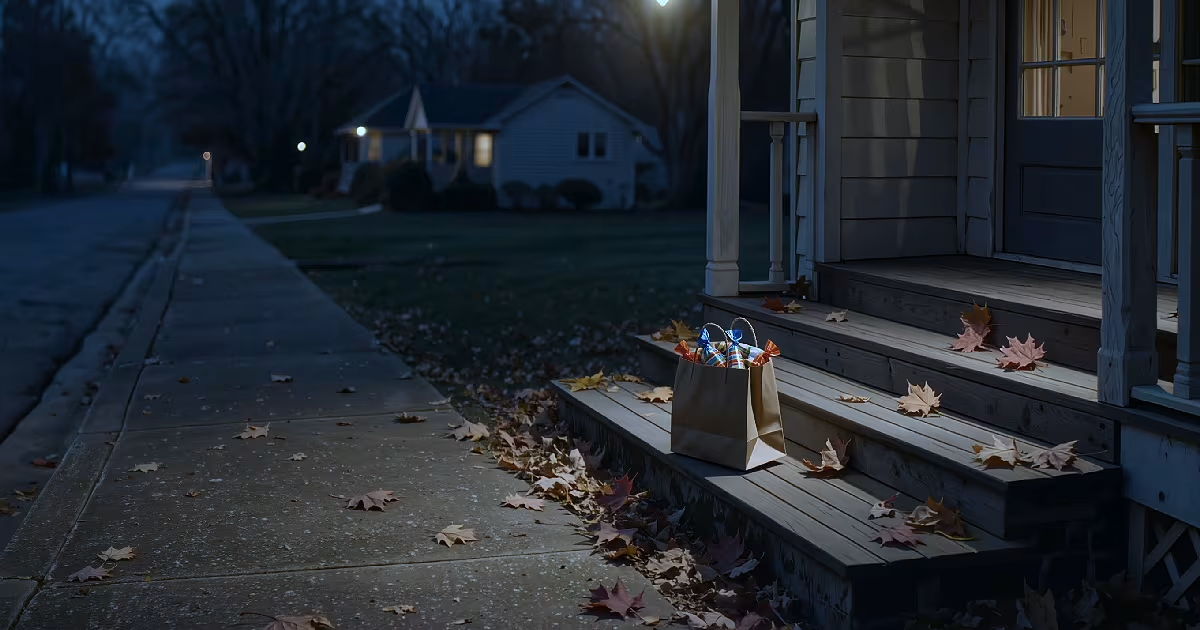
A paper trick-or-treat bag of sweets on a porch step at night.
Illustration, not a photograph.

Opening
For more than fifty years, American parents have checked their children's Halloween bags for poisoned sweets and razor blades in apples, fearing a stranger who hands out death at the door. Some hospitals have offered to X-ray candy. The fear is real. The stranger, as far as the record shows, is not.
The case that fixed the fear in place happened on Halloween night 1974 in Pasadena, Texas, where eight-year-old Timothy O'Bryan died after eating a Pixy Stix laced with cyanide. It was not a stranger who killed him. It was his father.
Timeline
1959In California, a dentist named William Shyne hands out candy-coated laxative pills to trick-or-treaters and is charged.
1964On Long Island, a woman annoyed by older trick-or-treaters gives out packets containing steel wool, dog biscuits and ant poison buttons, labelled "poison". No one is hurt. She pleads guilty to endangering children.
1970Near Detroit, a five-year-old boy dies of heroin poisoning. His family first says the drug was sprinkled on his Halloween candy. Investigators find it came from his uncle's stash. The same year the New York Times warns that Halloween treats may bring children "more horror than happiness".
31 October 1974Ronald Clark O'Bryan takes his son Timothy, his daughter Elizabeth and other neighbourhood children trick-or-treating in Pasadena, Texas. Afterwards he hands out five Pixy Stix he says came from a house where no one answered. Timothy eats one before bed and dies within the hour. His contained enough potassium cyanide to kill two adults.
5 November 1974O'Bryan is arrested. He had taken out life insurance on both of his children in the months before, and he called the insurer the morning after Timothy died.
3 June 1975A Houston jury convicts him of capital murder after 46 minutes and sentences him to death.
1982After the Chicago Tylenol murders in late September, reports of tampered Halloween candy reach a peak.
31 March 1984O'Bryan is executed at Huntsville, Texas.
1985Sociologist Joel Best of the University of Delaware publishes his study of newspaper reports of Halloween poisonings since 1958.
Key figures
Timothy O'Bryan was eight years old. He is the child at the centre of this story, and he should be remembered as more than a warning label.
Ronald Clark O'Bryan was an optician and a church deacon, more than $100,000 in debt, who had held 21 jobs in ten years. The press called him "the Candy Man". He tried to hide behind the very fear his crime would make permanent: the stranger with the poisoned sweets.
Joel Best is the researcher who went looking for the stranger. In the reports he collected from 1958 onward he found fewer than 90 possible cases of tampering, none of them a random attack on children by a stranger. The child deaths first blamed on strangers turned out to have other causes.
Physical and documentary trail
For the O'Bryan case the record is complete: the recovered candy (four of the five Pixy Stix were found before other children ate them), the insurance policies, a witness at a Houston chemical supply company who said O'Bryan had asked about buying cyanide, the trial record and the appeals. For the wider fear, the trail is Best's newspaper survey and the later cases that fell apart on investigation: a 1978 death in Flint, Michigan, where tests found no poison, a 1990 death in Santa Monica from a heart condition, and a 2001 death in Vancouver from an infection.
What the record does not contain is a single confirmed case of a child killed by poisoned Halloween candy from a stranger.
Things you might not know
- The cyanide was nearly bought by the pound. According to the trial evidence, O'Bryan asked a chemical supplier about cyanide and left when told the minimum order was five pounds.
- One child couldn't open it. The staples O'Bryan had used to reseal a Pixy Stix were too tight for one of the other children, which may have saved their life.
- His sister was given one too. Timothy's younger sister Elizabeth, aged five, received a poisoned Pixy Stix. She did not eat it.
- The jury needed 46 minutes. Sentencing took 71.
- One execution date fell on Halloween. He was due to die on 31 October 1982 before a court delay.
- Some harm has been real. In 2000 a man in Minneapolis put needles in candy bars, and one teenager was slightly hurt. The fear is not built on nothing, just on far less than people think.
Competing explanations
A real but rare danger. Tampering has happened, from Shyne's laxatives to the needles in 2000, and checking a child's bag costs nothing.
An urban legend that one murder made permanent. Best's reading. The random poisoner has not been found in decades of reporting, but the fear grew anyway, fed by real crimes of other kinds and by the O'Bryan case, which looked like the legend come true even though the killer was the child's father.
Later life of the case
O'Bryan is still called "the man who killed Halloween". Fear of tampered candy shaped how a generation trick-or-treated, from community parties to hospital X-ray offers, and the warning resurfaces every October.
Finding
The stranger with the poisoned sweets is, on all the evidence gathered since 1958, a legend. The worst real Halloween poisoning was done by a father to his own son for insurance money, and it happened in the middle of a fear that he hoped would cover it.
What still will not resolve: why the story of the random poisoner has outlived every investigation, when the real danger it points to, in the one case that matters, was at home. Rest in peace, Timothy. 🕯️
Evidence signature
7/9 Strong
- Witnesses
- several people
- Instruments
- radar or measured data
- Paper
- formal investigation, court or declassified file
How well documented the case is, not whether it's true. A strong record can still have an ordinary answer, and a thin one can still be real.
You decide · POISONED HALLOWEEN CANDY
What do you think happened?
One vote per case, anonymous. You'll see how other readers voted once you've voted.