FLANNAN ISLES
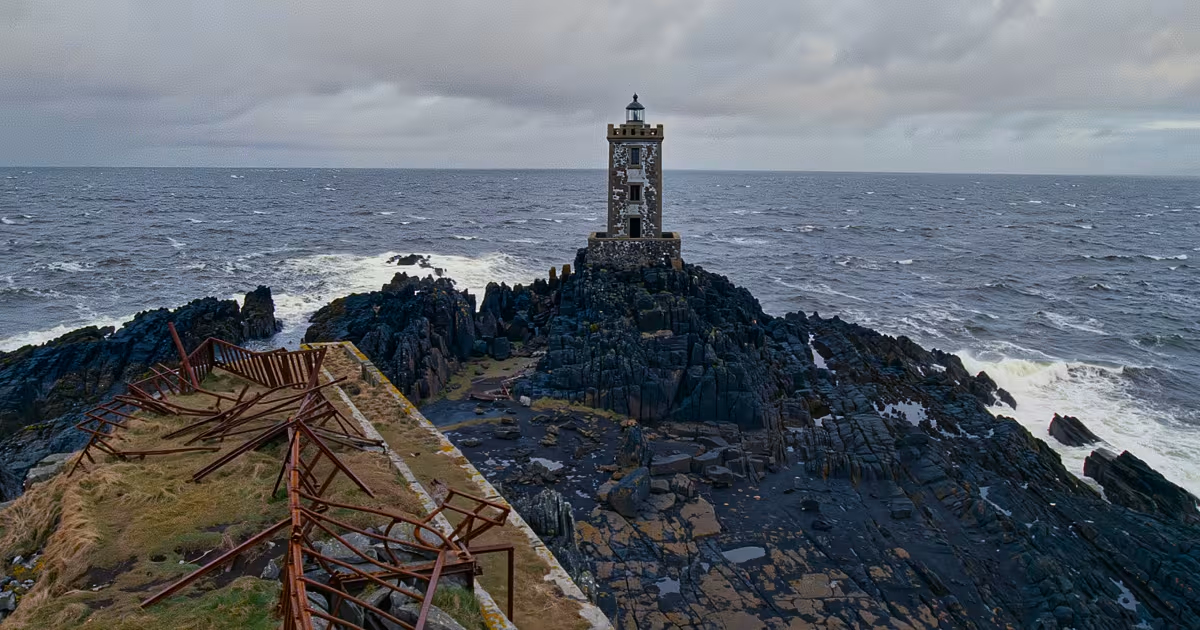
Eilean Mòr lighthouse. Winter sea on the west landing.
Illustration, not a period photograph.
Opening
On 15 December 1900 the steamer Archtor, bound for Leith, noted that the Flannan light on Eilean Mor was dark in dirty weather. The tender Hesperus could not sail on time. She reached the rock at noon on 26 December. James Ducat, Thomas Marshall and Donald McArthur were not there. The light had been left. A clock had stopped. Oilskins hung in a way that made Superintendent Robert Muirhead think two men had gone down to the west landing and the third had followed in shirtsleeves.
Muirhead walked the damage. A box of ropes in a crevice a hundred and ten feet up had been torn. Turf was ripped from cliff that high. He wrote that an extra large sea had come up the rock and taken them while they tried to secure gear. The logbook stories about prayer and God is over all arrived later and do not sit in the Board's paper.
The spine of the file is three keepers and a dark lantern. Flannan is a landing that ate its men. It is not a found boat with their names on the thwarts.
Timeline
15 December 1900. Passing ships find the light out. That is the first official wrongness.
20-26 December. Weather holds Hesperus. On the 26th the relief lands. No answer to the horn. Empty kitchen, untouched beds in one telling, oilskins that do not match three men dressed for a gale.
29 December and after. Muirhead's inspection and report to the Northern Lighthouse Board. He puts them on duty through dinner on the 15th, then on the west face after a box.
The fourth man, on shore rotation, is not among the missing. No bodies come off the rock. Later magazines invent a last log line. Dash and the Board treat that line as folklore.
Key figures
James Ducat, Thomas Marshall and Donald McArthur are the three. Ducat was principal. McArthur was the occasional, the man Muirhead thought went out last without his coat.
Robert Muirhead is the official reader. His report is why the case is not only a poem. He had been on the rock before. He knew what the west landing could do.
The crew of Hesperus and the Archtor log are the first outside eyes. They establish darkness, not a monster.
The Northern Lighthouse Board owns the rules that said the light should not have been left. Breach is in the file. It is not an explanation by itself.
Physical and documentary trail
On the paper, December 1900 gives you four hard objects and no bodies.
One: the Archtor note and other passing reports that the light was out on the 15th.
Two: the empty station as found on the 26th, with clothing that Muirhead read as two men dressed for the landing and one who was not.
Three: storm damage on the west face, including the smashed rope box far above ordinary water.
Four: Robert Muirhead's report to the Northern Lighthouse Board, December 1900, which puts an extra large sea on three men securing gear.
There is no photograph of the wave. There is no recovered oilskin from the water. The dramatic last log is not a 1900 Board document.
An extra large sea had rushed up the face of the rock, had gone above them, and coming down with immense force, had swept them completely away.
Competing explanations
A wave on the west landing. Muirhead's reading. It fits the box, the height of the damage, and the missing three. It asks the sea to climb higher than comfort allows, which the Atlantic can do.
One man lost, two gone after him. Possible. Still a sea.
Something other than weather. Later fiction. No Board paper supports a visitor.
Hybrid caution. The light went out. Three men did not meet the tender. The west face had been hit hard.
Later life of the case
Wilfrid Wilson Gibson's poem and a century of vanishing-keeper films. I keep "God is over all" on the later-life shelf. Muirhead and the dark lantern stay first.
Finding
Three keepers were gone from Eilean Mor when Hesperus landed on 26 December 1900, the light had been dark since the 15th, and Muirhead wrote that a sea on the west landing had taken them off the rock. Believe the empty station. A lighthouse board does not invent three missing men.
What still will not resolve: a body from that water, or a 1900 log page that is actually the Board's and not a later story. Either one would pin the hour they left the kitchen. The proving object is still one of the three, brought off the Atlantic with a name on him.