SPRINGFIELD THREE
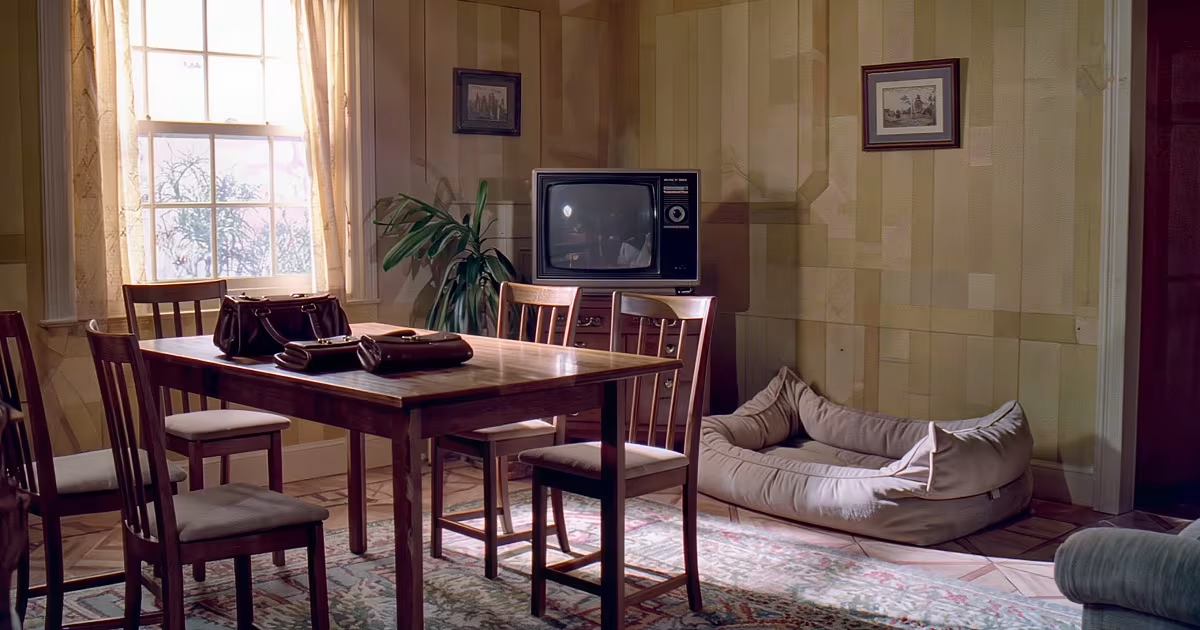
A dining table with three handbags and a small dog bed.
Illustration, not a period photograph.

Opening
On 7 June 1992, in Springfield, Missouri, Janelle Kirby and her boyfriend Mike Henson let themselves into 1717 East Delmar Street and found it empty. Sherrill Levitt, 47, her 19-year-old daughter Suzie Streeter, and Suzie's friend Stacy McCall, 18, were gone. Their purses, keys and cars were still there.
There was no sign of forced entry or a struggle, the beds looked slept in, and Suzie's Yorkshire terrier was agitated but unharmed. The only physical irregularity was a broken porch light globe. More than three decades later, despite named suspects, a lost voice message and national attention, none of the three women has been found.
Timeline
6 June 1992Suzie Streeter and Stacy McCall graduate from Kickapoo High School. Levitt watches the ceremony at the Hammons Student Center on the Southwest Missouri State University campus, then turns down an invitation to dinner with the Kirby family.
Same eveningStreeter and McCall go to graduation parties instead of the school's alcohol-free overnight lock-in. They first plan to stay at Janelle Kirby's house, ahead of a trip to a Branson waterpark the next day. Stacy calls her mother at about 10:30 p.m., the last time they speak.
About 11:15 p.mLevitt is on the phone with a friend about painting and varnishing an armoire in her bedroom. It is the last confirmed contact with her.
7 June 1992, about 2:00 to 2:15 a.mStreeter and McCall are last seen leaving their final party of the night and heading to the Delmar Street house to sleep. Their purses, cigarettes, makeup and other belongings, found inside later, show that they arrived.
Between about 3 and 7 a.m., investigators' estimated windowAll three women disappear from the house without leaving any confirmed trace of what happened.
Later that morningKirby has called the house without an answer. When Streeter and McCall fail to show for the trip, which friends say was unlike them, she and Henson go over and find the house empty. Henson sweeps the broken porch-light glass off the step because Kirby is barefoot, an act police later said may have destroyed evidence. While they are there, Kirby answers a call from an unidentified man who makes sexual innuendos and hangs up.
That eveningJanis McCall, Stacy's mother, comes to the house. While checking the answering machine she hears what she calls a strange message. It is erased, as messages on many 1990s machines were once played. Police later said they were very interested in it and believed it may have held a clue. About ten other people pass through the house that evening.
Following monthsThe case draws local and then national attention and, over the decades, thousands of leads without a confirmed break. In 1993 investigators search 40 acres in Webster County under a warrant naming the three women.
April 1995Robert Craig Cox, who had lived across the street from the Levitt home in 1992 and had been questioned early in the investigation, is arrested near Dallas for a November 1994 armed robbery of a tanning salon in Decatur, Texas. He is sentenced to 30 years. Cox had been convicted in Florida in 1988 of the 1978 murder of Sharon Zellers, a conviction the Florida Supreme Court overturned a year later.
1996KY3 investigative reporter Dennis Graves interviews Cox in a Texas prison. Cox says on camera that he knows the women are dead and that this is not a theory, then declines to elaborate. A Greene County grand jury convened that year hears the subpoenaed interview. It disbands in January 1997 without issuing any indictment.
1997Cox tells other journalists that the women were murdered and buried and will never be found, and says he will reveal what happened only after his mother dies. No investigator on the case has treated his claims as credible, and he has never been charged in connection with the disappearance.
Over the yearsOther people surface as persons of interest without any charge in this case. Gerald Carnahan, a Springfield businessman, was later convicted in a separate case of a 1985 killing, 25 years after it happened. Dustin Recla, Streeter's ex-boyfriend, and Michael Clay and Joseph Riedel had been charged over a February 1992 mausoleum vandalism in which gold teeth were taken from a corpse; Streeter gave police a statement, and Recla reportedly told police he wanted her dead because of it. Accounts say Recla and Clay cooperated and were ruled out. Steven Garrison, a career criminal, approached investigators in 1993 claiming to have information to trade and is alleged to have boasted at a party about killing the women and burying their bodies.
June 1997A bench for the three women is dedicated in the Victim's Memorial Garden in Phelps Grove Park.
2007A local crime writer brings in an engineer to scan the south parking garage at Cox Hospital with ground-penetrating radar, after a tip that the bodies lie in its foundations. He reports three anomalies. Police call the tip not credible, note that construction of the garage began in September 1993, and decline to dig.
OngoingSpringfield police still list the case as open. Janis McCall has given interviews for decades and has said she will never declare Stacy dead until she knows for certain.
Key figures
Levitt, Streeter and McCall are the subjects of the case. Their last confirmed activities were ordinary: a phone call about an armoire, a graduation party, a waterpark trip planned for the next day.
Cox is the most persistent person of interest. His repeated on-camera claims of certain knowledge came with no confession and no checkable detail, and no investigator has ever treated them as credible. That is worth stating plainly, given how much attention they still get. In 1992 he told police he had been at church with his girlfriend the morning after the disappearance; she later recanted and said Cox had asked her to say it. His parents confirmed that he was at their home the night before.
Recla, Clay and Riedel are a documented thread with a possible motive, given Recla's reported statement about Streeter and the vandalism case. It has never produced a charge.
Garrison is the source of the most direct confession-like claim, an alleged boast rather than a formal statement to police. Like the other leads, it has produced no charge.
Janelle Kirby is the witness to the women's plans that night, and the first person to find the house empty. Her account shows how quickly and completely their disappearance broke from normal behaviour.
Physical and documentary trail
The record has a documented evidence-handling failure in the erased message, the swept-up porch glass, several named persons of interest with links to the victims or the street, Cox's recorded 1996 interview, and a grand jury review that produced no indictment.
What it lacks is any physical trace of the women themselves: no bodies, no crime scene beyond the house, and no forensic evidence tying any named person to the disappearance. Unverified claims of remains circulate online from time to time. No reliable report of a discovery exists as of this writing.
I just know that they are dead. That's not my theory. I just know that. There's no doubt about that.
Things you might not know
- The bulb survived. On the porch, the glass shade was shattered but the light bulb itself was intact.
- The dog was called Cinnamon. The Yorkshire terrier was the only living thing left in the house, and was agitated when Kirby arrived.
- The prank calls predate the disappearance. Streeter had complained about prank calls at the house since moving in with her mother that spring. Police did not think the strange message on the machine was connected to them.
- The garage came later. The Cox Hospital parking garage that radar flagged in 2007 was not built until construction started in September 1993, more than a year after the women vanished.
- More than 5,000 tips. That is the count of leads police have received, with no confirmed break.
- The case has been on national TV for decades. It has featured on 48 Hours, America's Most Wanted, Investigation Discovery's Disappeared (2011) and People Magazine Investigates (2019).
Competing explanations
A home invasion or abduction by one person or a small group known to the victims. The total absence of forced entry or a struggle argues for an entry that was invited or at least not resisted, and fits the Recla thread.
Involvement by Cox, given that he lived across the street and has repeatedly claimed to know the women are dead. No physical evidence or charge has ever connected him to the case despite decades of attention.
An opportunistic crime by a stranger. That would explain why no suspect with a motive has ever been confirmed, though it sits awkwardly with the lack of forced entry.
A case left unresolved partly by early investigative failures, chief among them the erased message, which several retrospective accounts flag as a lost opportunity.
Later life of the case
The Springfield Three remains one of the most sustained true-crime subjects in American cold-case history, with podcasts, including Anne Roderique-Jones's from 2021, television specials and anniversary coverage. The near-absence of physical evidence leaves room for competing theories without confirming any of them. Cox's periodic statements have kept his name attached to the case for nearly thirty years, despite investigators' consistent view that they lack credibility.
Finding
Three women vanished from one house with no forced entry, no struggle and no trace ever recovered, and a voice message that might have helped was erased on the first day. Several named people have surfaced as persons of interest, each with some documented link or claim, and none has been charged.
What still will not resolve: where the three women are, and whether Cox's claim to know they are dead is anything more than a claim. Until either changes, the Springfield Three is what the Springfield Police Department still calls it: an open case.
Evidence signature
6/9 Solid
- Witnesses
- several people
- Instruments
- photo, film or physical traces
- Paper
- formal investigation, court or declassified file
How well documented the case is, not whether it's true. A strong record can still have an ordinary answer, and a thin one can still be real.
You decide · SPRINGFIELD THREE
What do you think happened?
One vote per case, anonymous. You'll see how other readers voted once you've voted.