STARCHILD SKULL
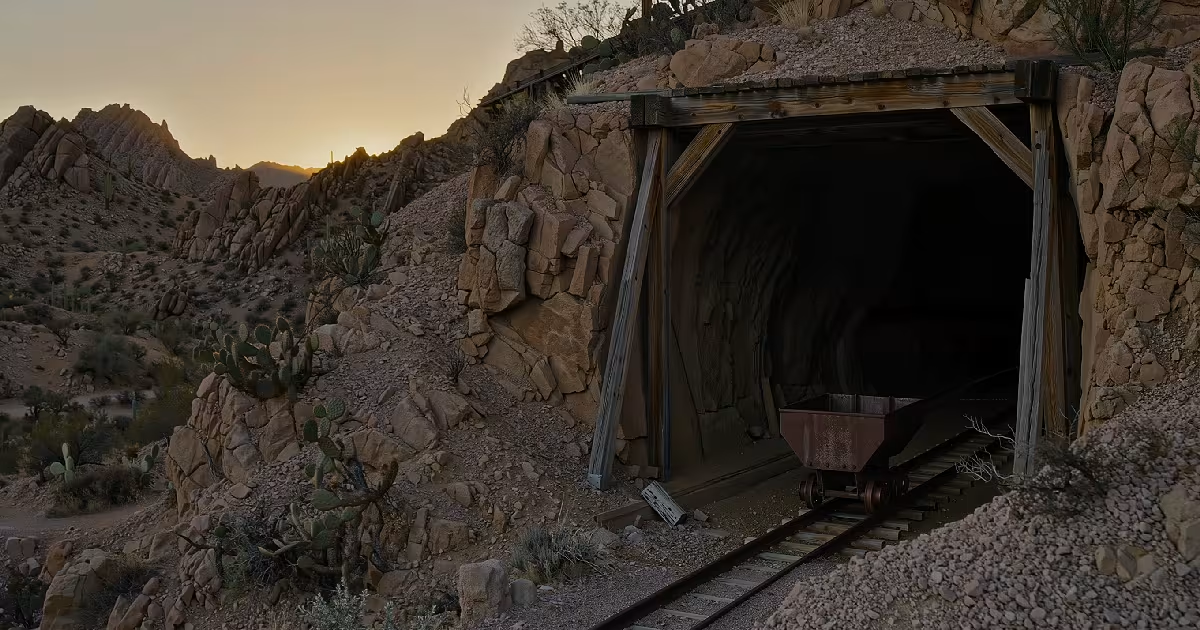
An old mine tunnel entrance in dry hills at dusk.
Illustration, not a photograph.

Opening
The Starchild skull is a child's cranium with a strangely broad, flattened shape and a brain case larger than an average adult's. According to the story that came with it, it was found around 1930 in a mine tunnel in Mexico, beside an ordinary human skeleton. From 1999 the researcher and author Lloyd Pye promoted it as the skull of a hybrid, half human and half extraterrestrial. DNA testing showed a human boy with a human mother, and the leading medical explanation is a condition that has been recognised for centuries.
Timeline
About 1930According to the account passed down with the skull, it is found in a mine tunnel roughly 100 miles southwest of Chihuahua, Mexico, alongside a normal adult skeleton lying face up.
February 1999Ray and Melanie Young of El Paso, Texas, who have the skull, give it to Lloyd Pye for investigation. Pye names it the Starchild and begins the Starchild Project.
1999A DNA test by the BOLD laboratory in Vancouver finds standard X and Y chromosomes, which would make the child a human male. Pye treats the result as contamination.
2003Trace Genetics recovers mitochondrial DNA. The child belongs to haplogroup C and the adult woman found with him to haplogroup A. Both are Native American lineages, and the result shows the woman was not his mother.
2010Pye's project announces that fragments of the skull's nuclear DNA have "no significant similarity" to any known DNA. Geneticists respond that an unmatched fragment means only that the sequence is not yet in a database, not that it is alien.
Key figures
Lloyd Pye, an author on hidden history and human origins, made the skull his life's work and argued it was a hybrid.
Ray and Melanie Young owned the skull and brought it to Pye.
The neurologist Steven Novella, among others, argued that the skull shows the signs of congenital hydrocephalus, and called the 1999 DNA result "conclusive evidence" that the child was a human male.
Physical and documentary trail
The skull itself survives, along with a fragment of upper jaw found with it. A dentist who examined the jaw estimated the child was four and a half to five years old. The cranium holds about 1,600 cubic centimetres, around 200 more than an average adult brain, which is consistent with fluid pressing the skull outwards. What is missing is any record of the original find beyond the story that came with it: no documented excavation, no location more precise than a mine tunnel, and no record of the adult skeleton since.
Things you might not know
- It came with a companion. The skull was said to have been found with an adult skeleton, and the 2003 test showed the two were not mother and child.
- The child was about five. The tooth evidence in the jaw fragment points to a young child, not an adult with an oddly shaped head.
- It is bigger inside than an adult's. A child's skull larger than a grown man's is exactly what hydrocephalus can produce.
- Both DNA lineages are Native American. Haplogroups A and C are both common among indigenous peoples of the Americas.
Competing explanations
A human child with a medical condition. The DNA shows a human male with a human mother, and the shape matches hydrocephalus, in which fluid builds up in the brain and expands a young child's soft skull. Other congenital conditions have also been suggested.
A human and extraterrestrial hybrid. Pye's position, resting on the skull's unusual shape and on unmatched DNA fragments. The tests that did produce clear results all point to a human child.
Later life of the case
The Starchild remains a fixture of ancient-alien television and conventions. It sits alongside the elongated Paracas skulls as a case where an unusual skull was read as evidence of visitors, while the medical explanation sat in plain sight.
Finding
The Starchild was a human boy, about five years old, who most likely died of congenital hydrocephalus. The DNA, the jaw and the skull's own proportions all point the same way. The hybrid claim depends on setting aside the tests that gave clear answers in favour of those that gave unclear ones.
What still will not resolve: who he was and where he really came from, since the story of the mine tunnel has never been documented beyond the people who passed the skull on.
Evidence signature
5/9 Solid
- Witnesses
- nothing on record
- Instruments
- radar or measured data
- Paper
- formal investigation, court or declassified file
How well documented the case is, not whether it's true. A strong record can still have an ordinary answer, and a thin one can still be real.
You decide · STARCHILD SKULL
What do you think happened?
One vote per case, anonymous. You'll see how other readers voted once you've voted.