ATACAMA SKELETON
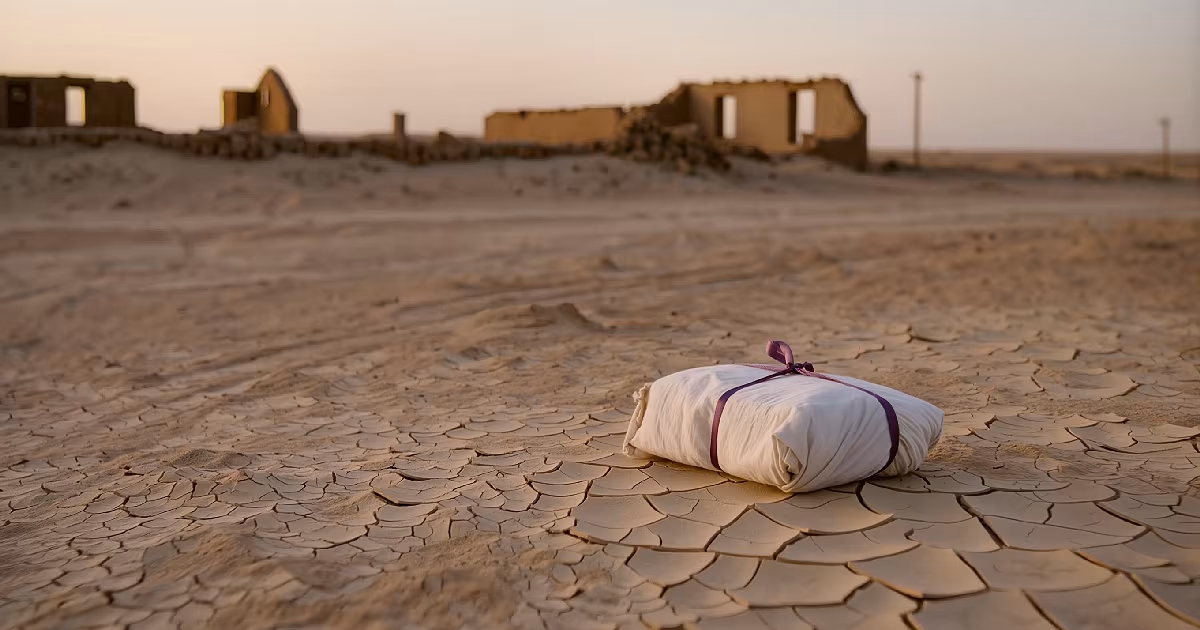
A small cloth bundle tied with a ribbon on desert sand.
Illustration, not a photograph.

Opening
In 2003, a man named Oscar Muñoz found a tiny skeleton, about 15 centimetres long, wrapped in white cloth and tied with a purple ribbon, near La Noria, an abandoned nitrate-mining settlement in Chile's Atacama Desert. With its long, pointed skull and small body, it was soon being called an alien. It was sold, taken to Spain, and in 2013 presented in a UFO documentary as possible evidence of extraterrestrial life.
Five years later, a full genome study showed what had always been the likeliest answer: she was a human child, a girl of Chilean descent. The question that remains is not what she was, but how she was treated.
Timeline
2003Muñoz finds the remains near La Noria and sells them for about 30,000 Chilean pesos. They pass through private hands, leave Chile, and are acquired by the Spanish businessman Ramón Navia-Osorio.
2013The documentary Sirius, produced by Steven Greer, presents the skeleton, now called "Ata," as a possible extraterrestrial. It features preliminary DNA work by the Stanford immunologist Garry Nolan, which finds no evidence of an extraterrestrial origin.
March 2018Nolan, Atul Butte and colleagues publish a whole-genome study in Genome Research. They conclude that Ata is human and female, with the mix of Native American and European ancestry expected in the region, and report variants in seven genes linked to bone growth and skeletal disorders.
2018An international team led by the bioarchaeologist Siân Halcrow replies that the skeleton is simply a premature human foetus, that they "find no evidence for any of the skeletal anomalies claimed," and that the study raised serious ethical problems. Chilean authorities look into whether the remains were taken out of the country illegally.
Key figures
Oscar Muñoz found the remains. Ramón Navia-Osorio came to own them. Steven Greer brought them to a mass audience in Sirius.
Garry Nolan led the genetic work that ruled out an alien origin, and later supported returning Ata to Chile.
Siân Halcrow and her colleagues challenged both the medical conclusions and the ethics of studying human remains of uncertain origin.
Physical and documentary trail
The genome study is peer-reviewed and public, and so is the critique of it. They agree on the main point: Ata was human. They disagree on whether she had a rare bone disorder or was a premature foetus whose small size and skull shape are normal for that stage. The 2018 paper's estimate that her bones looked six to eight years old was one of the points the critics rejected. What is missing is any record of where she was buried, by whom, and when.
Things you might not know
- She was wrapped with care. The bundle was tied with a purple ribbon, the kind of detail that points to a burial, not a discovery in the open.
- The DNA said Chilean. Her genome showed ancestry typical of people living in that part of Chile.
- The journal changed its rules. After the criticism, Genome Research said its ethics standards had not covered specimens of uncertain origin and that it would review them.
- The scientists backed going home. Nolan and Butte said they supported returning the remains to Chile.
Competing explanations
A human child. The genome settles it. The open question is medical: a rare skeletal condition, as the 2018 study argued, or a premature foetus, as Halcrow's team argued.
A non-human being. The claim made in Sirius. The genetic work its own makers commissioned found no support for it.
Later life of the case
Ata became a lesson in two directions: for UFO researchers, in how quickly an unusual body becomes an alien one, and for scientists, in the duty owed to human remains whatever their origin. She belongs with the other bodies offered as alien in this archive, including the Nazca mummies and the Roswell Slides.
Finding
Ata was a human girl from Chile. Her story was never really a mystery about aliens; it was a story about a child's remains being taken from where she was laid, sold, and shown to the world as something she was not.
What still will not resolve: who she was, and where she was meant to rest. Rest in peace, Ata. 🕯️
Evidence signature
6/9 Solid
- Witnesses
- nothing on record
- Instruments
- more than one sensor agrees
- Paper
- formal investigation, court or declassified file
How well documented the case is, not whether it's true. A strong record can still have an ordinary answer, and a thin one can still be real.
You decide · ATACAMA SKELETON
What do you think happened?
One vote per case, anonymous. You'll see how other readers voted once you've voted.