PASCAGOULA
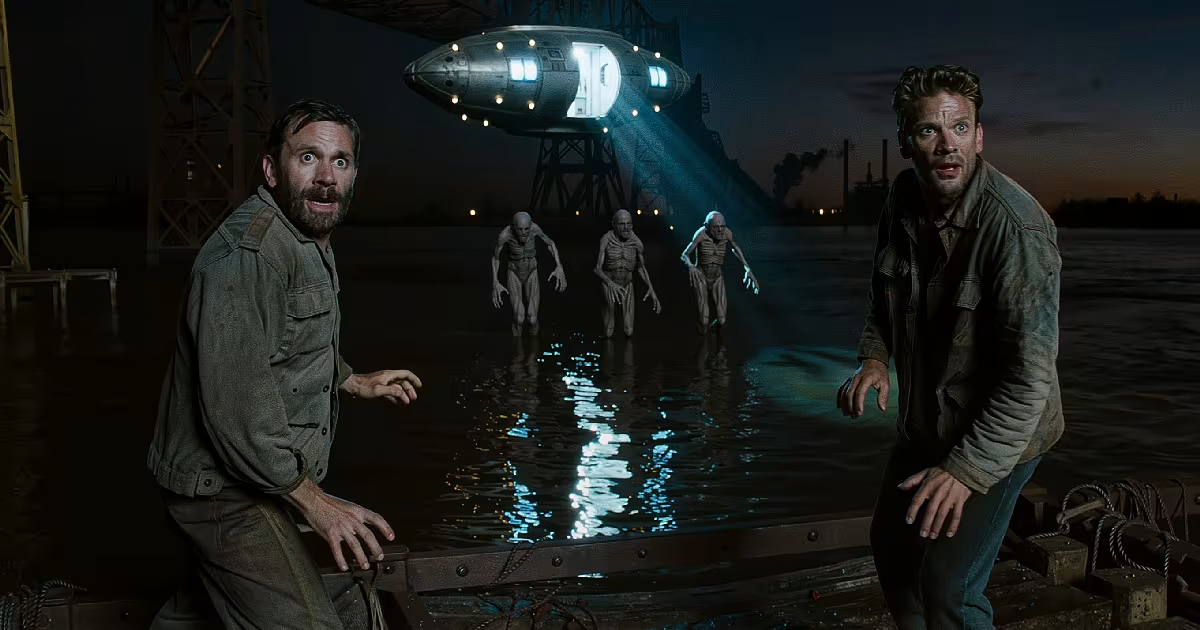
Pascagoula pier encounter.
Illustration, not a period photograph.
Opening
On the night of 11 October 1973 two shipyard men fishing on the west bank of the Pascagoula River in Mississippi left the water and drove to the Jackson County sheriff's office. Charles Hickson was forty-two. Calvin Parker was nineteen. They said an oval craft had come down, three wrinkled figures with pincer hands had floated them aboard, and they had been examined and returned.
Sheriff Fred Diamond and Captain Glenn Ryder listened, smelled whiskey on Hickson that Hickson said came after the river, and left a recorder running when they stepped out. The tape caught Parker in raw fear and Hickson telling him the story would not change. The next day the wires had it. Keesler Air Force Base checked them for radiation and found none.
The spine of the file is that same-night paper: a voluntary report, a hidden recorder, and two men who did not use the empty room to drop the tale. Pascagoula is an abduction claim with a police tape from the first hours. It is not a recovered craft.
Timeline
11 October 1973, evening. Hickson and Parker fish near the old Shaupeter Shipyard. They describe a whirring, blue lights, an oval object some thirty to forty feet across. Three beings, grey and wrinkled, elephant-skin in Hickson's later phrase, with crab-like hands, take them off the bank. Hickson stays conscious for an examination. Parker says he freezes and blacks out. They are returned to the pier.
About 23:00. They reach the sheriff's office after first thinking of the paper and of Keesler. Diamond and Ryder take statements. They are skeptical of a prank. They leave the men alone with a recorder. Parker does not sound like a man polishing a joke. Hickson says he does not expect to be believed.
12 October. Local press, then national. J. Allen Hynek and James Harder arrive in the following days. Hypnosis sessions begin. Keesler finds no radiation. A New Orleans polygraph examiner later writes that Hickson believes he saw a ship, was taken aboard, and saw three creatures. Belief on a chart is not a hull on a dock.
The 1973 southern flap is already running. Other lights are in the regional paper that week. They do not put a second named fisherman on that pier at that hour.
Key figures
Charles Hickson is the older voice and the one who stays in public. He repeats the story for the rest of his life. His 11 October statement and the hidden tape are the first layer. Later books and stage appearances are later.
Calvin Parker is the younger voice and the one the deputies hear coming apart in the empty room. He avoids the circuit for years, then returns as an adult with more detail. The 1973 tape is still his strongest exhibit because he did not know it was running.
Fred Diamond and Glenn Ryder are the official first readers. Diamond tells the press he believes them, then later tightens that to believing that Hickson believes it. That tightening is honest. Ryder's first skepticism is also in the paper. The tape is their doing.
Hynek and Harder are the incoming specialists. They add weight and method. They do not add a photograph from the river.
Physical and documentary trail
On the paper, 11-12 October 1973 give you four hard objects and no ship.
One: the men's same-night statements at the Jackson County sheriff's office. The story is already complete in outline: oval craft, three figures, examination, return.
Two: the hidden recording made when Diamond and Ryder left the room. Parker on arms that would not move, on passing out, on not wanting to stay in the chair. Hickson on a story nobody will believe. That tape is why the hoax reading has always had to work uphill.
Three: Keesler's negative radiation check on 12 October, and the later polygraph opinion that Hickson believed his own account. Clean skin is not proof of a craft. A passed chart is not a second witness on the pier.
Four: contemporary press and the sheriff's first public line that he believed the men. Jackson County sheriff's office interview and hidden recording, 11 October 1973, is the core packet. Everything after is enlargement.
There is no photograph of the oval over the river. There is no second fisherman. There is no fragment from the bank.
I don't expect anybody to believe it. It's just unbelievable.
Competing explanations
Abduction by a craft. This is the men's account. It has same-night consistency and a tape that does not sound rehearsed. It has no physical remainder on the pier.
Hoax. Two men invent a southern-flap story for reasons that never quite settle. The hidden tape is the problem for this reading. People can lie. They do not usually lie like Parker on that reel when they think no one is listening.
Misperception plus shock. Lights on the river, a scare, a story that hardens in the car on the way to town. This reading can take the fear as real and the beings as a shape fear took. It has to live with Hickson's detail and Parker's freeze as something other than a hull.
Hybrid caution. Two men reported a taking the same night and did not drop it in a wired room. The river did not give up a machine.
Later life of the case
Hickson stays on the circuit. Parker writes later and adds texture the 1973 tape does not carry. Television returns to the pier. Anniversary pieces from the Sun Herald keep Diamond's first belief and his later precision in view.
I keep the later books and the added figures on the later-life shelf. I do not treat them as incoming 11 October field notes. The sheriff's tape stays first.
Finding
Charles Hickson and Calvin Parker were fishing the Pascagoula river when something took them off the bank and put them under a light they could not fight. They sat in the sheriff's office still wrecked. A hidden microphone caught two men who did not know they were being tested, and they did not drop the story. Believe the bank. The night happened to them the way they said it did.
What still will not resolve: a second witness on the water, or a mark on the skin a doctor logged that night that was not just fear. The tape proves they were not performing for the deputy. It does not put the machine back on the river.