O'HARE
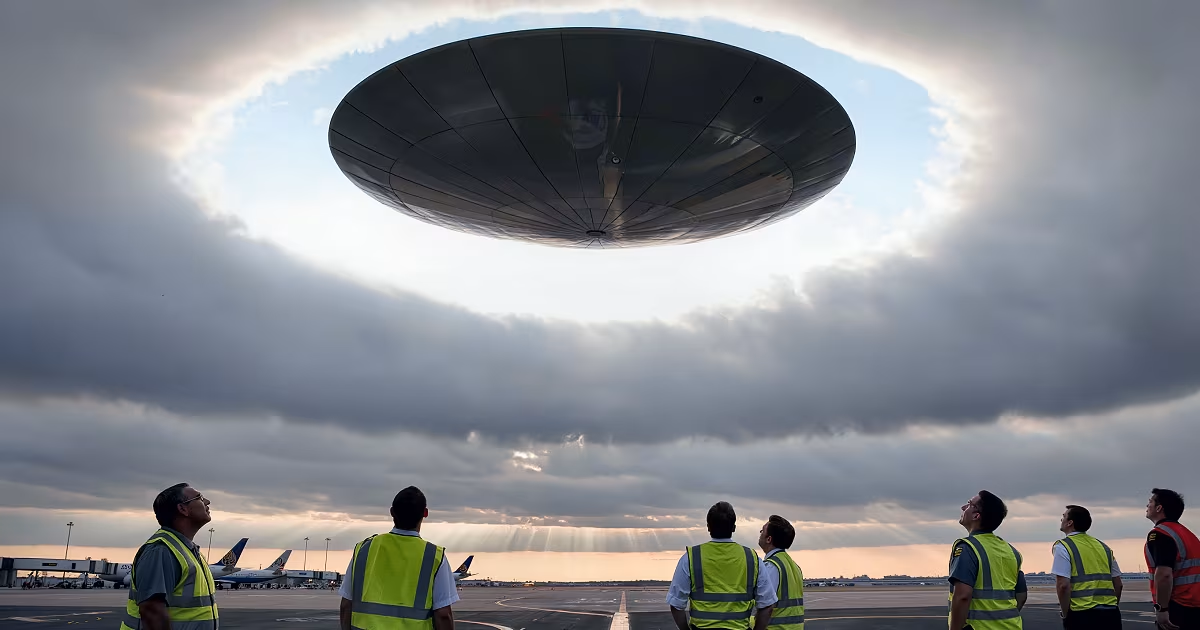
O'Hare gate apron late afternoon. Overcast, empty sky.
Illustration, not a period photograph.
Opening
On 7 November 2006, afternoon, United Airlines staff at Gate C17 at O'Hare watched a disc over the tarmac that then shot up and left a hole in the cloud. Pilots, mechanics and ramp people were among the names. The Chicago Tribune's Jon Hilkevitch printed it after the FAA first found no record and then found a call. United told employees not to talk. No radar track the FAA would own as the object was produced. The hole in the cloud is the detail the night crew kept.
O'Hare is a working airport in daylight. That is why the case travelled. It is also why a balloon or a military not-us sits in the competing drawer with more weight than it would over a farm.
The spine of the file is a gateful of aviation people and a cloud with a hole. O'Hare is 7 November 2006. It is not a wreck on a Chicago taxiway.
Timeline
7 November 2006, about 16:00, C17. Calls. United quiet. FAA first miss then a recorded call.
Hilkevitch's Tribune piece puts names on a national desk.
No official object. No radar close the witnesses would sign.
Later airport-UFO lists keep O'Hare. That list is later life. The gate is first.
7 November 2006 United staff at O'Hare Gate C17 reported a disc over the ramp and a hole punched in cloud after it left. Pilots and rampers sat in the telling. FAA first had little. Tribune copy made the gate public. No radar stamp both camps treat as the object. No wreck sat on the concrete.
A working international ramp is expensive weather. A hole in cloud is the cheap visual that kept the night from being only a light over a hangar.
Key figures
United ramp, mechanic and flight crew at C17 own the look.
Jon Hilkevitch owns the public names.
FAA and United own the quiet and the later call record.
The cloud owns the hole as a claimed remainder.
Physical and documentary trail
On the paper, 7 November 2006 gives you four hard objects and no wreck.
One: multiple aviation employees at a named gate.
Two: the Tribune investigation.
Three: FAA call record after a first miss.
Four: the absence of an official radar object. Chicago Tribune on the O'Hare C17 sighting, November 2006, is the originating public tray.
There is no widely accepted photograph from the gate. There is no taxiway debris. There is no United bulletin that names a known balloon.
Named gate staff and a cloud hole in the telling are the stay-behinds. Radar both camps accept as the object would finish the ramp. A close those workers would sign as a known type would finish the other door.
It went up through the cloud and left a hole.
Competing explanations
A disc over a live airport. This is the gate. It has aviation eyes. It has a cloud hole.
A balloon, a reflection, a not-us military. The mundane door. Has to carry why United told people to be quiet.
A story that grew in a break room. Weak against a Tribune list of job titles.
Hybrid caution. A gate pointed at the sky. Morning had no object on the tarmac.
Later life of the case
Later airport lists. I keep those on the later-life shelf. C17 stays first.
Finding
United staff at O'Hare Gate C17 watched a disc in daylight on 7 November 2006 that they said left a hole in the cloud, and the Tribune put their jobs on a page. Believe the gate. Ramp people do not invent a taxiway for a later clip.
What still will not resolve: a photograph from that minute, or a radar track the FAA would own. Either one would pin the disc. The proving object is still that hole in the cloud, held as weather or as path by more than a quiet airline memo.