DYFED ENIGMA
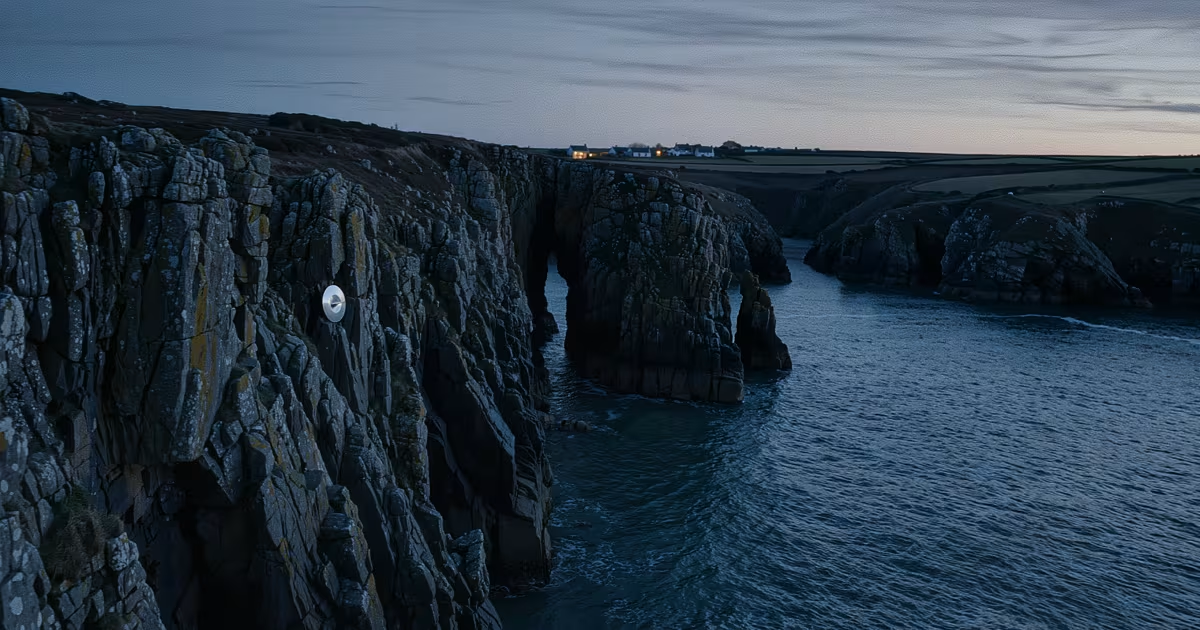
St Bride's Bay and Stack Rocks at dusk.
Illustration, not a period photograph.
Opening
On 4 February 1977, at lunch at Broad Haven Primary School in Pembrokeshire, boys on the wet field said a silver object sat in the trees beyond the pitch. Some said cigar, some said disc and dome, some said windows and a door. A few added a silver figure. The headmaster, Ralph Llewellyn, did not take them at their shout. On Monday he split the class and had them draw. The drawings clustered.
That winter the same stretch of Dyfed filled with other reports: lights, suits, and, at Ripperston Farm, the Coombs family describing figures at windows and objects over the fields. The papers named a triangle. Official interest reached the Ministry of Defence. A later businessman said he had walked the lanes in a silver suit as a joke. That joke is one later sentence. It is not the Monday drawings.
The spine of the file is a school that made children draw alone and got the same silver machine. Dyfed is a playground and a farm in one winter. It is not a tagged piece from the hedge.
Timeline
4 February 1977, lunch. Football in the wet. Shawn Garrison, David George, Michael Webb and others see something silver beyond the grounds. A boy runs in. The teacher does not come out. After the bell David Davies, who had not believed the talk, walks to the trees and sees a cigar with a dome for a couple of seconds.
7 February. Llewellyn interviews the children separately and collects drawings. Fifteen names sit in some counts, fourteen in others. He tells the press the stories match and that, sceptic as he is, he thinks they saw something.
17 February and after. Staff and other adults add lights. Ripperston Farm, the Coombs house, becomes the second pole of the winter: stacked nights, figures, animals reacting. Stacked nights are not the 4 February field. Keep the farm as the same-season neighbour, not as proof of the school object.
Ministry paper looks at Wales. Officials float pranksters. Glyn Edwards's silver-suit admission is 1996 speech about 1977. It can cover a figure on a lane. It cannot draw fifteen school pictures by itself.
Key figures
The Broad Haven pupils are the first layer. Ten-year-olds with wet shoes and pencils. Their Monday drawings are the exhibit to keep first. Later adult interviews lengthen the lunch.
Ralph Llewellyn is the adult who chose method. Separate rooms, same request. That choice is why the case is not only a playground shout.
The Coombs family at Ripperston are the farm pole. Rosa and Billy carry the stacked nights. They are not in the school field on the 4th. Do not weld them into one object.
Glyn Edwards is later life with a suit. Useful as a possible figure. Not a silver cigar behind a tree.
Physical and documentary trail
On the paper, February 1977 gives you four hard objects and no recovered cabin.
One: the 4 February lunchtime sighting on the Broad Haven field, timed to a school day, with named boys.
Two: Llewellyn's 7 February separate interviews and the clustered drawings of a silver craft.
Three: contemporaneous local press and the headmaster's statement that the stories stayed the same.
Four: the Ripperston Farm reports from the same winter, and later MOD notes that treat the Welsh cluster as worth a look and still lean toward prank. No soil tin from the hedge has a chain of custody.
There is no 1977 photograph of the object in the trees. There is no figure in a suit taken into a station. There is no Ministry identification that the school accepted.
Even at my age and normally sceptical, I have to admit I think they saw something.
Competing explanations
Landed craft and a figure. This reading takes the drawings and the farm nights as one class of visitor. It has pencils and no metal.
Prank in a suit plus playground contagion. Edwards can dress a lane. He cannot be the only source of a dome behind a tree if Davies walked out after the bell and still saw a machine. Contagion after the first shout is real work. It does not automatically write fifteen similar pages.
Misread tank, trailer, or aircraft in wet light. Possible for a glance. Harder for a lunch that produced windows and a door in more than one notebook.
Hybrid caution. Children drew a silver object. A man later said he wore silver. Those are different weights of paper.
Later life of the case
Fortieth-year pieces, Randall Jones Pugh's books, and the Coombs memoir stack keep Dyfed in the British first rank. I keep the suit confession and the later farm enlargements on the later-life shelf. The Monday drawings stay first.
Finding
Broad Haven children saw a silver object in the trees beyond the pitch, and Ralph Llewellyn split them up and made them draw. The drawings clustered. Some of them added a silver figure. Believe the playground. A headmaster does not collect fifteen similar pencils unless his school has been disturbed. Ripperston Farm had its own winter in the same fields. That winter happened to Wales.
What still will not resolve: a photograph from the hedge on 4 February, or a measured mark in that field taken before the press arrived. Edwards in a silver suit can dress a lane years later. He cannot be the cigar behind the tree unless someone filmed him there at lunch.