BRITISH SCARESHIPS
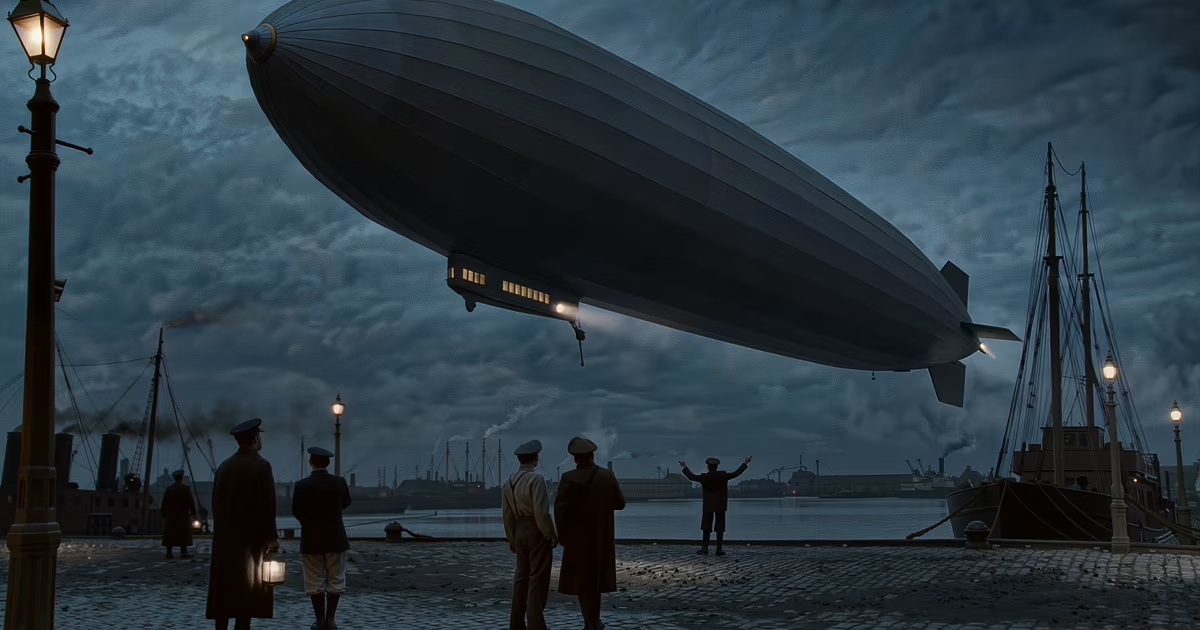
Cigar-shaped craft over Edwardian docks at night.
Illustration, not a period photograph.
Opening
In the spring of 1909 people across eastern England reported a powered airship at night: a cigar, a searchlight, an engine where no British machine of that kind was supposed to be. Police Constable Kettle at Peterborough, on 23 March, looked up from Cromwell Road toward a light he judged twelve hundred feet up after hearing a motor that was not on the street. The Daily Mail put him on the national desk. By May the papers had a wave.
The War Office and the Aeronautical Society said they could not name the ship. Germany was the fear that did the work. Real Zeppelins existed. A secret British inventor was offered and then receded. Lord Northcliffe, whose Mail had fed the scare, wrote from Berlin in May that England was looking like a nation of nerves, and that the real German problem was a navy, not a night light.
The spine of the file is a newspaper wave built on constables and dockers, with no wreck and no captured crew. The scareships are 1909 paper aircraft. They are not a hangar on the Wash.
Timeline
23 March 1909, 05:15. Kettle on duty in Peterborough hears a motor, finds no car, looks up, sees a powerful light. Local paper first, Mail after.
Late March into April. March, Wisbech, Ipswich. Isolated lights and cigars. The map is East Anglia and then wider.
May 1909. Volume peaks. Cardiff docks, Caerphilly Mountain, Market Harborough, King's Lynn. Signalmen and constables file. Twenty witnesses in a single Standard round-up. War Office enquiries go nowhere public.
21 May. Northcliffe tells Berlin readers the panic is un-English. Sightings thin in June. On 6 July a Daily News piece offers a secret inventor in a private park as the phantom. That inventor does not become an official aircraft on a list.
Key figures
Police Constable Kettle is the first national hinge. A named officer on a named road at a named minute. His light is why the Mail can run the story as police news rather than as a letter from a crank.
Dockers, signalmen, and other night workers supply the May surge. Robert Westlake at Cardiff docks is the sort of witness a company log can hold. Lethbridge on Caerphilly is the sort the papers loved and later readers distrust.
The War Office and the Aeronautical Society are the official empty tray. They ask. They do not produce a British ship that fits the nights.
Northcliffe is both accelerant and brake. The Mail wants German danger. Then the Mail wants the scare to stop stealing attention from the High Seas Fleet. That turn is 1909 politics, not a crash report.
Physical and documentary trail
On the paper, March-May 1909 give you four hard objects and no envelope of wreckage.
One: Kettle's 23 March statement, the first police-timed light of the wave.
Two: the May cluster of named night workers, including Cardiff dock reports logged in company time.
Three: War Office and Aeronautical Society statements that enquiries have not identified the machine.
Four: the newspaper file itself, Mail, Standard, Express, Chronicle. Daily Mail report of Police Constable Kettle's Peterborough sighting, March 1909, is the spark sheet. Northcliffe's 21 May Berlin column is the damper.
There is no 1909 airframe in a shed that the War Office will match to Kettle. There is no captured German crew. There is no official flight log for a British night trial that covers the whole map.
My eye was at once attracted by a powerful light, which I should judge to have been some 1,200 feet above the ground.
Competing explanations
German reconnaissance. This is the fear the papers sold. Real Zeppelin capability was rising. A fleet over Peterborough in March 1909 is a larger claim than a light. No wreck supports it.
Secret British inventor. The July story. Convenient. Not entered as a service aircraft. A private park does not cover every county on the list.
Stars, Venus, motor cars, and copy. Once Kettle is in the Mail, every night worker has a sentence to use. Constable 440C saying it was a bright star is in the same press stack as the cigars. Contagion does real work in a scare.
Hybrid caution. Some lights were objects in air. Some were print. The War Office named neither a guest nor a fraud for the whole wave.
Later life of the case
Charles Fort files the scare. Later UFO writers treat 1909 as a first British wave. Historians of the pre-war press treat it as Northcliffe weather. I keep the saucer sequel on the later-life shelf. Kettle and the May dockers stay first.
Finding
Constable Kettle looked up from Cromwell Road in Peterborough and a light that was not a motor car was running above the street. Dockers and signalmen added their own nights. Believe the officers who filed on duty. Some of those lights were metal in the air in a country that did not yet own a service airship it would admit to.
What still will not resolve: an airframe, a logbook, or a crew that will claim the March-to-May route. Northcliffe can scare a nation and still leave a constable looking at a real lamp. A hangar that matches Kettle's hour is the only close that would satisfy both the fear and the beat report.