CARL HIGDON
Wyoming forest at dusk. Pickup truck, pines, snow.
Illustration, not a period photograph.
Opening
On the afternoon of 25 October 1974, Carl Higdon, an oil-rig foreman and Air Force veteran, was hunting elk in the Medicine Bow National Forest in Wyoming. He raised his 7mm Magnum rifle at a group of elk and fired. He said the bullet left the barrel in slow motion, drifted through the air, and dropped to the ground about 50 feet away. Then he felt a tingle and saw a tall being with yellowish skin, no visible ears, and a rod where one hand should be. It called itself "Ausso One" and asked if he was hungry. That evening, searchers found Higdon in his truck three miles from where he'd parked, in rough terrain with no tracks leading to it, confused and frightened. He was missing about seven hours.
Timeline
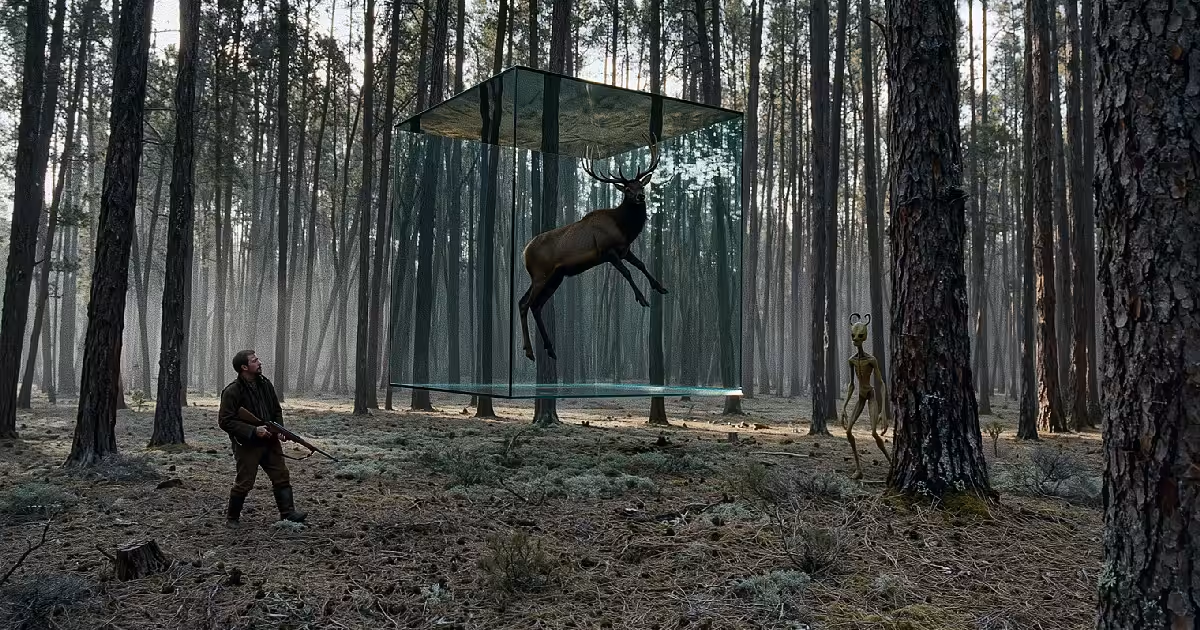
25 October 1974, afternoon. Higdon shoots at the elk. The bullet falls short. He meets Ausso One, who gives him pills to take, and finds himself in a transparent, cube-shaped craft with the being and the elk, unable to move.
During the missing hours. Higdon says he was taken to a planet with a tall tower and bright lights, examined, and told he wasn't suitable, then returned to the forest.
About 23:30. After Higdon radios for help, confused, searchers find him. His truck is miles from where he left it, in a place it seems it couldn't have been driven to.
Next days. Higdon is taken to hospital in Rawlins. He is disoriented and complains that his eyes hurt. Doctors reportedly find that tuberculosis scars on his lungs, seen in earlier X-rays, can no longer be seen, and that kidney stones he'd had are gone. His wife finds the spent bullet in his jacket pocket. It's said to be flattened in a way that ballistics experts couldn't explain.
1975 onward. Psychologist Leo Sprinkle of the University of Wyoming conducts hypnosis sessions. Higdon's account under hypnosis matches his earlier story and adds detail.
Later years. Higdon keeps telling the same story. He dies in January 2022.
Key figures
Carl Higdon was an oil-rig foreman and former Air Force serviceman. He took a polygraph, gave the same story for decades, and never sought money for it.
Leo Sprinkle, a University of Wyoming psychologist and pioneer of abduction research, carried out the hypnosis sessions.
The searchers and his wife were the witnesses to his condition that night, and to the truck's location.
Physical and documentary trail
On the paper: Higdon's statements, Sprinkle's hypnosis records, reports of the search, hospital accounts, and the bullet. The medical claims about the TB scars and kidney stones come from Higdon's side and haven't been published as medical records.
The bullet is the most unusual physical item. It hasn't been subjected to published independent testing.
It don't mean a hill of beans to me whether anybody believes it or not. I know what happened to me.
Competing explanations
A real abduction. A credible witness, a missing seven hours, a truck in an impossible place, and medical changes point to something extraordinary.
A medical or psychological event. A seizure, stroke, or dissociative episode in the cold and altitude could explain confusion, lost time, and a vivid experience, and he could have driven the truck while disoriented. It doesn't explain the bullet or the medical findings, if they're accurate.
Later life of the case
Higdon's case is one of the classic abduction accounts of the 1970s, known for its strange details: the slow bullet, the elk in the craft, and the being called Ausso One. It's also one of the few cases with a named researcher and a sincere witness who never changed his story.
Finding
A credible man with no motive told the same story for nearly fifty years, and some of what happened that night, the missing hours and the truck's position, was seen by others. The most extraordinary claims, the bullet and the medical changes, have never been tested independently. It's unexplained, and Higdon believed it to the end.
What still will not resolve: how his truck got where it was found, and what happened to the bullet.