SALEM WITCH TRIALS
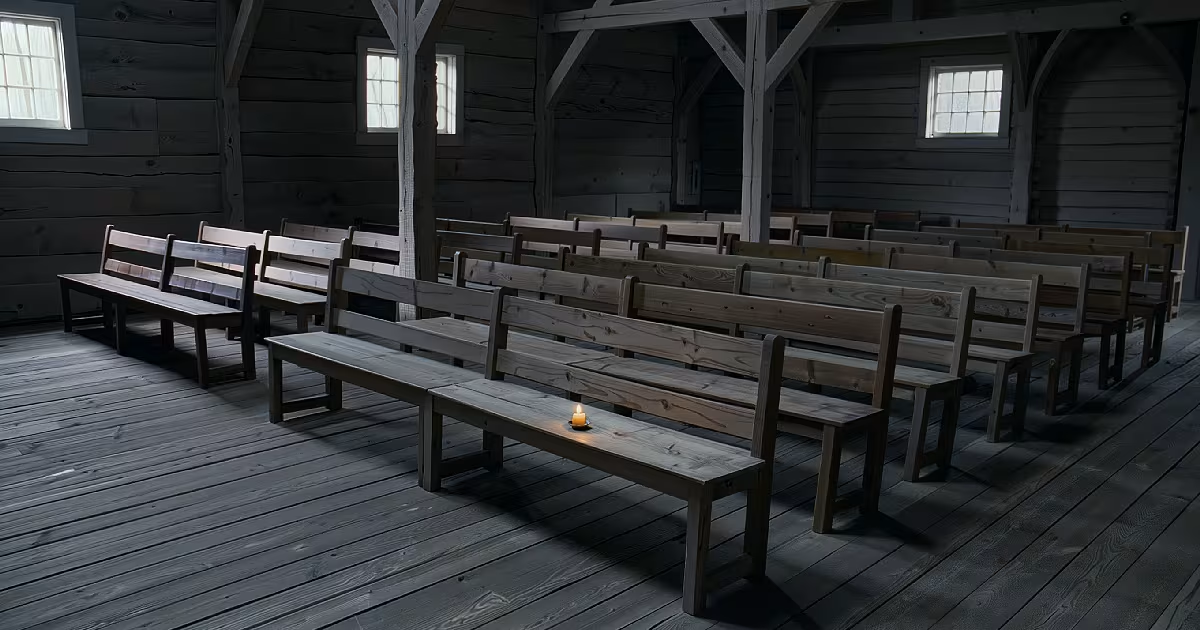
Rows of wooden benches in a bare meeting house, one small candle lit.
Illustration, not a photograph.

Archive / Paranormal / BOT313-0526
PAR-16921 MAR 1692ParanormalDOCUMENTED
SPECTRAL EVIDENCE AND TWENTY-FIVE DEATHS
Fig. 01 Rows of wooden benches in a bare meeting house, one small candle lit. Illustration, not a photograph.
Opening
In January 1692, in Salem Village, Massachusetts, two girls in the household of the minister Samuel Parris began having fits: nine-year-old Betty Parris and her eleven-year-old cousin Abigail Williams. A local doctor could find no natural cause and suggested an "evil hand". By the end of February the girls were naming the people who, they said, were tormenting them.
Over the next eight months more than 200 people were accused of witchcraft. Nineteen were hanged, one man was pressed to death under stones, and at least five more died in jail. Within twenty years the colony itself had admitted the trials were wrong. Why they happened is still argued over.
Timeline
February 1692To find the witch, a neighbour has a "witch cake" made from rye meal and the girls' urine and fed to a dog. On 29 February the first complaints are sworn.
1 March 1692Three women are examined: Sarah Good, Sarah Osborne and Tituba, an enslaved woman in the Parris household. Tituba confesses, describing the Devil and a book of names. The accusations spread.
27 May 1692Governor William Phips sets up a special Court of Oyer and Terminer, with William Stoughton as chief judge. It sits for the first time on 2 June.
10 June 1692Bridget Bishop is the first to be hanged. Judge Nathaniel Saltonstall resigns from the court around this time.
July to September 1692Eighteen more people are hanged in batches, the last eight on 22 September.
19 September 1692Giles Corey, in his eighties, refuses to enter a plea and is pressed to death with heavy stones over several days.
October 1692Ministers led by Increase Mather argue against convicting on "spectral evidence", testimony that the accused's spirit had appeared to the victim. Phips halts the court. Accusations had by then reached his own wife.
January to May 1693A new Superior Court refuses spectral evidence and convicts very few. Phips pardons the rest.
14 January 1697The colony holds a day of fasting for the trials. Judge Samuel Sewall has a statement read in his Boston church taking the "blame and shame" for his part.
1706Ann Putnam Jr., one of the most active accusers, apologises publicly in church.
1711The colony reverses the convictions of 22 named people and pays compensation to their families.
Key figures
The accusers were mainly girls and young women: Betty Parris, Abigail Williams, Ann Putnam Jr. and Elizabeth Hubbard among them. Tituba's confession gave the panic its shape. William Stoughton drove the prosecutions and accepted spectral evidence when other judges doubted it.
The accused ranged from Sarah Good, a poor and unpopular woman, to Rebecca Nurse, a respected church member in her seventies, and the Reverend George Burroughs, a former Salem Village minister who recited the Lord's Prayer perfectly on the gallows, something a witch was supposed to be unable to do. He was hanged anyway.
Physical and documentary trail
The record is one of the richest of any colonial event: hundreds of court papers, examinations, depositions and petitions survive, along with diaries, sermons and the books written afterwards by people on both sides. The execution site was lost for three centuries. In 2016 a team of researchers from Salem State University and the University of Virginia confirmed it as Proctor's Ledge, below Gallows Hill, and a memorial was dedicated there in 2017.
It were better that ten suspected witches should escape, than that one innocent person should be condemned.
Things you might not know
- Salem Village is not Salem. The village where it began is now the town of Danvers.
- A four-year-old was jailed. Sarah Good's daughter Dorothy was held in chains for months.
- The last exoneration was in 2022. Elizabeth Johnson Jr. was cleared 329 years after her conviction, after a campaign by a Massachusetts eighth-grade civics class.
- Some escaped. Mary Bradbury, 77, got away with help from family and friends.
- Confessing saved lives. Everyone hanged had denied being a witch, or, like Samuel Wardwell, had confessed and then taken it back.
- The governor's wife was named. Lady Mary Phips was reportedly "called out upon" shortly before her husband shut the court down.
Competing explanations
Village politics. Historians Paul Boyer and Stephen Nissenbaum (Salem Possessed, 1974) mapped the accusations onto a long feud inside Salem Village, between families tied to the Parris ministry and those against it.
Frontier war and fear. Mary Beth Norton (In the Devil's Snare, 2002) tied the panic to the brutal war with the Wabanaki on the Maine frontier, which had left refugees, grief and terror across the region.
Ergot poisoning. In 1976 Linnda Caporael argued in Science that the fits looked like poisoning from a fungus on rye. Nicholas Spanos and Jack Gottlieb replied in the same journal that December that ergotism would have hit whole households, not chosen individuals. Most historians side with them.
Fraud and suggestion. Some accusers may have performed their fits, and others were swept along. Ann Putnam Jr.'s own apology said she had been deceived by Satan, not that she had lied.
Real witchcraft. What the court believed at the time. No evidence from the trials would meet any later standard of proof, and the colony itself declared the proceedings unlawful in 1702.
Later life of the case
Arthur Miller's play The Crucible (1953) used Salem to attack McCarthyism and made "witch hunt" a political term. Salem the city now draws hundreds of thousands of visitors every October.
Finding
Twenty-five people died because a court accepted evidence that could not be tested, and the people who ran it admitted as much within a few years. That much is settled. The cause is not: politics, war, fear and suggestion all have good evidence behind them, and the ergot theory has the least.
What still will not resolve: what the first girls in the Parris house actually experienced in January 1692, before anyone had been named.
Evidence signature
6/9 Solid
- Witnesses
- trained, independent witnesses
- Instruments
- nothing on record
- Paper
- formal investigation, court or declassified file
How well documented the case is, not whether it's true. A strong record can still have an ordinary answer, and a thin one can still be real.
You decide · SALEM WITCH TRIALS
What do you think happened?
One vote per case, anonymous. You'll see how other readers voted once you've voted.