PENDLE WITCHES
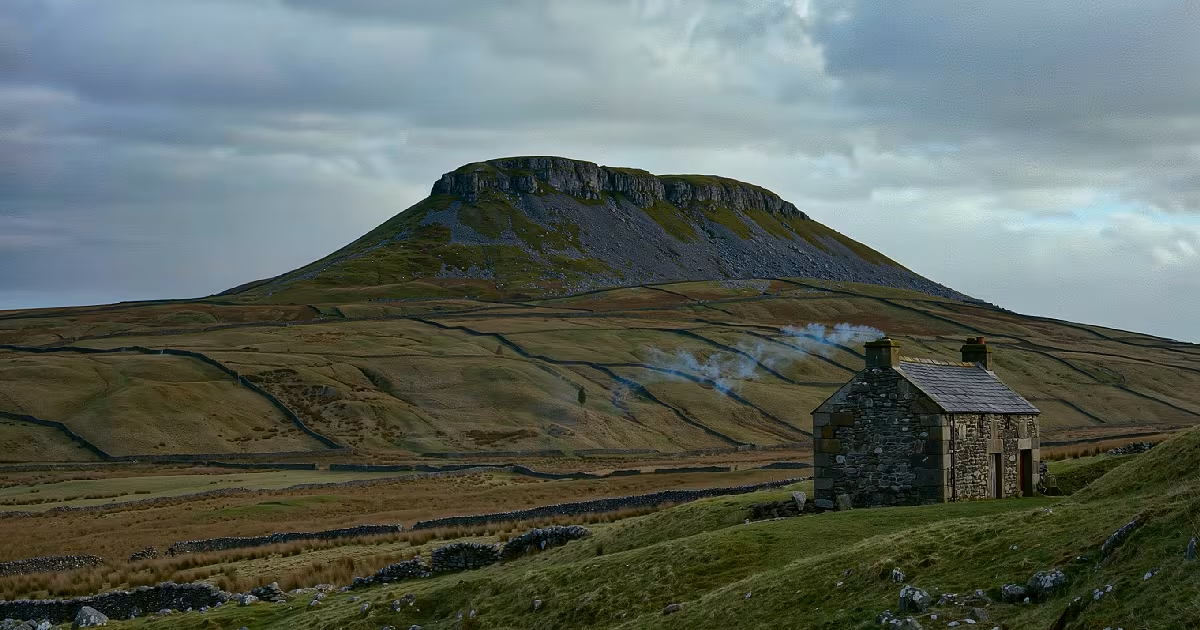
Pendle Hill under a low grey sky, a lone stone farmhouse below.
Illustration, not a photograph.

Archive / Paranormal / BOT313-0527
PAR-161220 AUG 1612ParanormalDOCUMENTED
THE CHILD WITNESS OF LANCASTER
Fig. 01 Pendle Hill under a low grey sky, a lone stone farmhouse below. Illustration, not a photograph.
Opening
On 21 March 1612, on the road near Colne in Lancashire, a young woman called Alizon Device asked a pedlar named John Law for some pins. He refused. Soon afterwards he collapsed, unable to move one side of his body, and Alizon came to believe, and later confessed, that she had caused it by witchcraft.
What followed was the best-documented witch trial in English history. Within five months ten people from the villages around Pendle Hill had been hanged, most of them on the evidence of a nine-year-old girl testifying against her own family.
Timeline
21 March 1612Alizon Device meets John Law. His son later brings her before the local magistrate, Roger Nowell.
30 March to early April 1612Nowell questions Alizon, her mother Elizabeth Device, her brother James, her grandmother Elizabeth Southerns, known as Old Demdike, and the head of a rival family, Anne Whittle, known as Old Chattox. Demdike, Chattox, Alizon and Chattox's daughter Anne Redferne are sent to Lancaster Castle to await trial.
10 April 1612, Good FridayFamily and friends meet at Malkin Tower, the Demdike home. A neighbour's sheep is stolen to feed them. When word reaches Nowell, the meeting is treated as a gathering of witches, and eight more people are sent for trial.
27 to 29 July 1612At York, Jennet Preston, one of those at Malkin Tower, is tried for the murder of a local gentleman and hanged.
Before August 1612Old Demdike dies in Lancaster Castle before she can be tried.
18 to 19 August 1612The Lancaster Assizes, before judges Sir James Altham and Sir Edward Bromley. Jennet Device, about nine, gives evidence against her mother, brother and sister. Her mother screams at her in court and has to be removed.
20 August 1612Nine of the Pendle accused are hanged at Lancaster. Alice Grey is acquitted.
1613Thomas Potts, clerk to the court, publishes The Wonderfull Discoverie of Witches in the Countie of Lancaster, revised by Judge Bromley.
Key figures
Old Demdike and Old Chattox were elderly women, Demdike said to be about eighty and blind, who lived by begging and by acting as local healers and cursers, and whose families had feuded for years. Both readily admitted to dealings with spirits, in the belief, it seems, that their reputation was a kind of power.
Roger Nowell was the magistrate who built the case. Alice Nutter was the outlier: a woman of some wealth from Roughlee, convicted on Jennet's word that she had been at Malkin Tower. She never confessed. Jennet Device was the child whose testimony hanged her family.
Physical and documentary trail
Almost everything comes from one book. Potts's Wonderfull Discoverie is unusually detailed, but it is an official account written to show the court in a good light, edited by one of the judges, and not a verbatim record. No independent trial transcript survives. Malkin Tower itself is lost. It is thought to have stood near Newchurch in Pendle or at Blacko, and a cottage found by water engineers in 2011 near Lower Black Moss, with a mummified cat sealed in its wall, was briefly thought to be it, though the evidence now points elsewhere.
Things you might not know
- A king's book shaped it. James I's Daemonologie (1597) argued that witchcraft cases needed looser rules of evidence, including the testimony of children.
- Another trial collapsed the same week. At the same assizes, three women from Samlesbury were acquitted after the girl accusing them admitted she had been coached.
- Jennet Device came back. A Jennet Device was accused in another Pendle witch scare in 1634, after a ten-year-old boy named Edmund Robinson accused local people. He later admitted he had made it up. A Jennet Device is listed as still in Lancaster gaol in 1636.
- A statue for Alice. A life-size statue of Alice Nutter was unveiled in Roughlee for the 400th anniversary in 2012.
- Pendle Hill wore 1612. For the anniversary the date was laid out in giant numbers on the hillside, and a record 482 people walked up it dressed as witches.
Competing explanations
Poverty, feuds and a magistrate's ambition. Two poor families with a reputation for cursing, a rivalry between them, a stroke suffered by a pedlar and a magistrate keen to please a king obsessed with witchcraft. Most historians read the case this way.
Belief on all sides. The accused themselves believed in the powers they confessed to, and so did their neighbours. In that sense the confessions were sincere, which is part of why they were so deadly.
Real witchcraft. The court's view. John Law's collapse was almost certainly a stroke, and nothing in the evidence would meet a later standard of proof.
Later life of the case
Pendle has made the witches its own: the Lancashire Witches Walk, opened for the anniversary, runs 51 miles from Barrowford to Lancaster Castle, marked by posts carrying lines by Carol Ann Duffy. Like Salem eighty years later, the case is now taught as a warning about evidence and fear.
Finding
Ten people were hanged in 1612 on confessions given under pressure and the evidence of a nine-year-old child, in a legal system told by its king to make witchcraft easier to prove. That is well documented, because the court wanted it remembered.
What still will not resolve: what happened to Jennet Device, and whether the woman held at Lancaster in 1636 was the child who had sent her family to the gallows.
Evidence signature
4/9 Solid
- Witnesses
- several people
- Instruments
- nothing on record
- Paper
- official records at the time
How well documented the case is, not whether it's true. A strong record can still have an ordinary answer, and a thin one can still be real.
You decide · PENDLE WITCHES
What do you think happened?
One vote per case, anonymous. You'll see how other readers voted once you've voted.