POPOBAWA
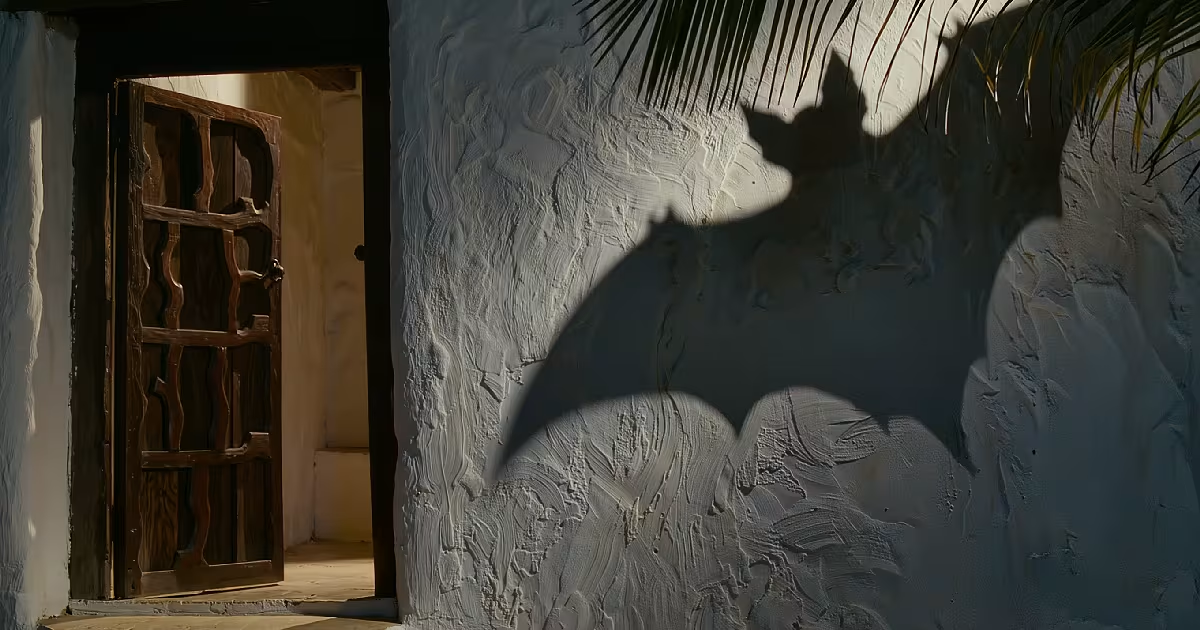
A dark bat-winged shadow on a whitewashed wall by a carved door.
Illustration, not a photograph.

Archive / Paranormal / BOT313-0555
PAR-1995ParanormalMASS PANIC
THE BAT-WING SPIRIT OF ZANZIBAR
Fig. 01 A dark bat-winged shadow on a whitewashed wall by a carved door. Illustration, not a photograph.
Opening
On the islands of Zanzibar, off the coast of Tanzania, people speak of the Popobawa: an evil spirit, a shetani, that comes at night. Its name is Swahili for "bat-wing", after the dark shadow it is said to cast. It can take the form of a man or an animal, and it attacks people in their beds, and most feared of all, it assaults them sexually.
Waves of Popobawa panic have swept Zanzibar since the 1960s. In 1995 the fear spread across the islands and to the mainland: families slept outside around fires and sat up in groups to guard their homes. Doctors at Zanzibar's main hospital said they never treated a victim. The fear was real all the same.
Timeline
1965The first reported attacks, on the island of Pemba, where the spirit is said to have first appeared.
1970Better-known sightings follow on Pemba. A popular origin story from this period says an angry sheikh released a jinn to take revenge on his neighbours, and lost control of it.
1971The Popobawa is said to speak to villagers on Pemba through a girl named Fatuma, who is believed to be possessed.
The 1980sThe spirit resurfaces from time to time in Zanzibar.
1995The largest panic. Reports spread from Pemba to Unguja, Zanzibar's main island, and reach mainland towns including Dar es Salaam and other cities on the coast. Many people stay awake outside their homes at night. The year is also the year of Zanzibar's first multi-party elections, a tense and disputed vote.
1996An article in the journal Tanzanian Affairs announces "Popobawa is Dead!" It isn't.
2000 and 2001After five quiet years the spirit returns briefly in 2000, another election year. In July 2001 the BBC reports a new wave of fear in Zanzibar.
February 2007A spate of attacks is reported in Dar es Salaam, on the mainland.
2008The American television series Destination Truth films an episode on the "bat demon", and Benjamin Radford writes up his own investigation for Fortean Times.
2017The scholar Katrina Daly Thompson publishes a book on the Popobawa, criticising outside writers for reducing a complex local belief to a simple psychological diagnosis. The book, Popobawa: Tanzanian Talk, Global Misreadings, sets off a public exchange with Joe Nickell and Radford in 2018.
Key figures
The people of Zanzibar and Pemba who report the attacks are the witnesses, and many of them describe experiences that frightened them badly. The anthropologist David Parkin, the investigators Joe Nickell and Benjamin Radford, and Katrina Daly Thompson are among the outsiders who have tried to understand it, and who disagree with each other. The anthropologist Martin Walsh has also studied the spirit and its place in Swahili belief over many years.
Physical and documentary trail
The record: press reports of the waves, especially 1995; studies by anthropologists and investigators; and interviews with people who say they were attacked. What is missing is any physical evidence of the attacks themselves: doctors at the main hospital in Zanzibar told Radford they had never treated a Popobawa victim.
The belief leaves its own traces. During the waves people have placed charms at the foot of fig trees, sacrificed goats and called on exorcists, the ordinary ways of dealing with a shetani in the islands.
Things you might not know
- The name describes a shadow. "Bat-wing" refers to the shape of the shadow it casts, not to what it looks like, since it can take many forms.
- It started on the smaller island. The spirit is said to have first appeared on Pemba, north of Zanzibar's main island, in 1965.
- It reached the mainland. In 1995 the fear crossed the water to towns including Dar es Salaam.
- People slept outdoors. During the waves many families kept watch around fires all night rather than sleep in their beds.
- It follows the ballot box. Reports have tended to rise around Zanzibar's elections, and some local people link the spirit to politics.
- Some say it's a president's ghost. One local explanation makes it the vengeful spirit of Abeid Karume, Zanzibar's first president, assassinated in 1972. Another says it was summoned by the ruling party.
- It has an origin story. A tale popular since the 1970s says a sheikh released a jinn to punish his neighbours and could not call it back.
- It came back after being declared dead. A 1996 article announced the end of the Popobawa. It returned in 2000, 2001 and 2007.
Competing explanations
Sleep paralysis. Joe Nickell compared the attacks to sleep paralysis, in which a person wakes unable to move and senses a presence, often pressing on the chest. It fits the night-time attacks in bed and is found in many cultures.
Social panic and politics. The waves rise and fall with periods of political tension, and the fear spreads from household to household. David Parkin read the legend as carrying memories of slavery in Zanzibar's history. The first reports on Pemba came shortly after the island's 1964 revolution, another time of upheaval.
A real spirit. The belief of many in Zanzibar. Katrina Daly Thompson argues that outsiders should take seriously what the belief means locally, rather than explaining it away.
Later life of the case
The Popobawa remains part of life in Zanzibar and a regular subject of folklorists. For a modern figure that also appears in sleep paralysis, see the Hat Man; for another outbreak of fear that spread through a community, see the Tanganyika laughter epidemic, which began on the Tanzanian mainland.
Finding
The Popobawa panics are real events: thousands of people in Zanzibar have been frightened enough to change how they sleep. No physical trace of the spirit has ever been found, and sleep paralysis together with social and political tension explains much of what has been reported, though not what the belief means to the people who hold it.
What still will not resolve: why the waves come when they do, since the link with elections is clear in the reports but has never been studied in detail.
Evidence signature
3/9 Thin
- Witnesses
- several people
- Instruments
- nothing on record
- Paper
- press and later accounts
How well documented the case is, not whether it's true. A strong record can still have an ordinary answer, and a thin one can still be real.
You decide · POPOBAWA
What do you think happened?
One vote per case, anonymous. You'll see how other readers voted once you've voted.