ESTHER COX
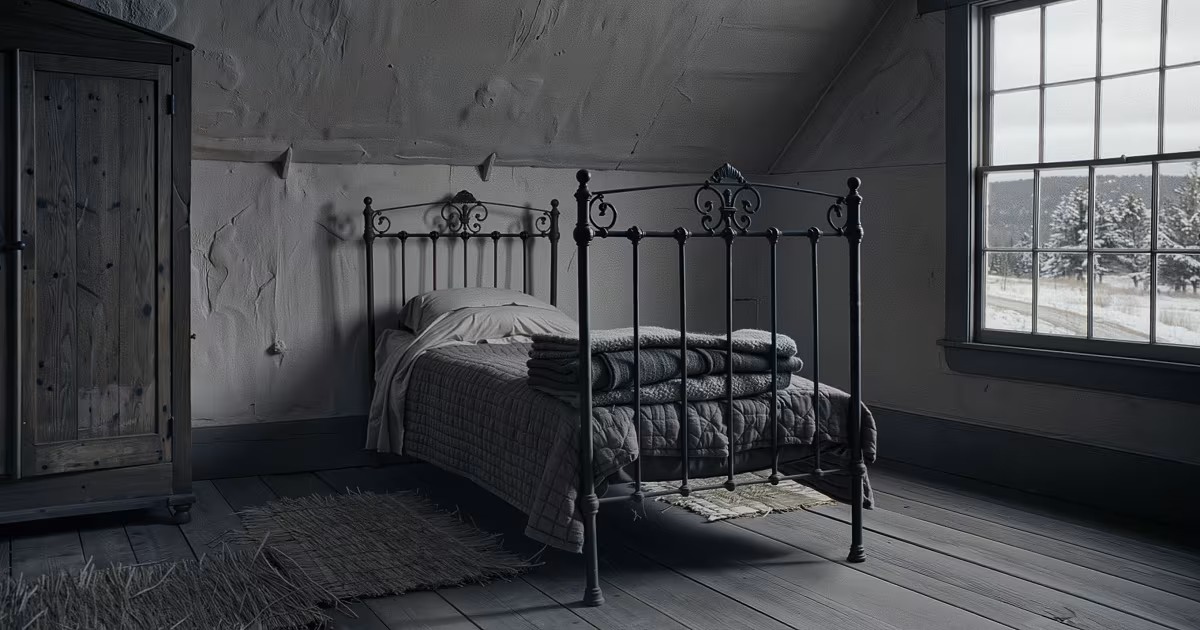
Nova Scotia cottage bedroom. Plaster wall and iron bed.
Illustration, not a period photograph.
Opening
In late August 1878 Esther Cox, eighteen, was living in the Teed cottage on Princess Street, Amherst, Nova Scotia, with her sister Olive, Olive's husband Daniel, their children, and other kin. After an attempted assault at gunpoint by a man named Bob MacNeil, the house changed. Bedclothes moved. Raps. Esther swelled, in the telling, and wrote in pain. On the plaster above her bed: Esther Cox, you are mine to kill. Dr. Carritte came, gave sedatives, and watched more objects move. The voice that knocked called itself Bob Nickle, a dead shoemaker, and would, Daniel said, run through the sounds of making a shoe.
Papers across the continent picked it up. Walter Hubbell, an American actor who had meant to expose it, boarded in March 1879 and left a book, The Great Amherst Mystery. Esther was taken on a short, unhappy tour. In November 1879 she was jailed four months for a barn fire at a house where she was staying, and released after one month under public pressure. The phenomena stopped. She later married and left the town's front page.
The spine of the file is a plaster sentence and a girl in a cottage. Esther Cox is Amherst in 1878. It is not a shoemaker in a county grave the file can open.
Timeline
Late August 1878. The assault. Then the cottage: raps, bedclothes, swelling, the plaster line. Carritte watches objects move and writes like a doctor, not like a showman.
Autumn into winter the papers take Amherst. March 1879 Hubbell boards. His book is later life that still carries 1878 scenes.
November 1879 a barn fire and a short jail term. Public pressure cuts the sentence. The house goes quiet. Esther leaves the front page by marriage.
Every North American poltergeist list keeps the plaster. That list is later. Princess Street is first.
Key figures
Esther Cox is the girl in the bed and on the tour. Eighteen, already hurt before the raps.
Daniel and Olive Teed own the cottage that had to live with it.
Dr. Carritte owns the first professional look.
Walter Hubbell owns the book. Bob MacNeil owns the gun in the first night. Bob Nickle is a name on knocks.
Physical and documentary trail
On the paper, 1878-79 give you four hard objects and no shoemaker.
One: the household account of raps, moving bedclothes, and Esther in pain after the assault.
Two: the plaster sentence over the bed.
Three: Carritte's attendance.
Four: continental press and Hubbell's later book. Amherst press and Teed household accounts, 1878, are the originating tray.
There is no photograph of the plaster in a chain. There is no recording of Nickle. There is no body of a shoemaker tied to the knocks.
Esther Cox, you are mine to kill.
Competing explanations
A haunting that named itself after an assault. This is the cottage. It has plaster. It has no grave.
A girl acting out after trauma, with a household that could not stop watching. Possible. Has to carry Carritte and objects he said he saw.
A hoax that Hubbell then sold. The first weeks sit before the actor boarded.
Hybrid caution. A cottage spoke after a gun. A sentence appeared on plaster. Morning had no shoemaker in the street.
Later life of the case
Hubbell's book and anthology reprints. I keep those on the later-life shelf. The plaster stays first.
Finding
Esther Cox's Amherst cottage spent the autumn of 1878 with raps, a doctor in the room, and a sentence on the plaster that named her to be killed. Believe the household. A family on Princess Street does not invent a doctor for a touring actor who had not yet arrived.
What still will not resolve: a photograph of that plaster in a chain, or a named living hand on the knocks. Either one would pin the sentence. The proving object is still the thing that wrote on the wall, held by someone who was not selling Amherst.