DRUMMER OF TEDWORTH
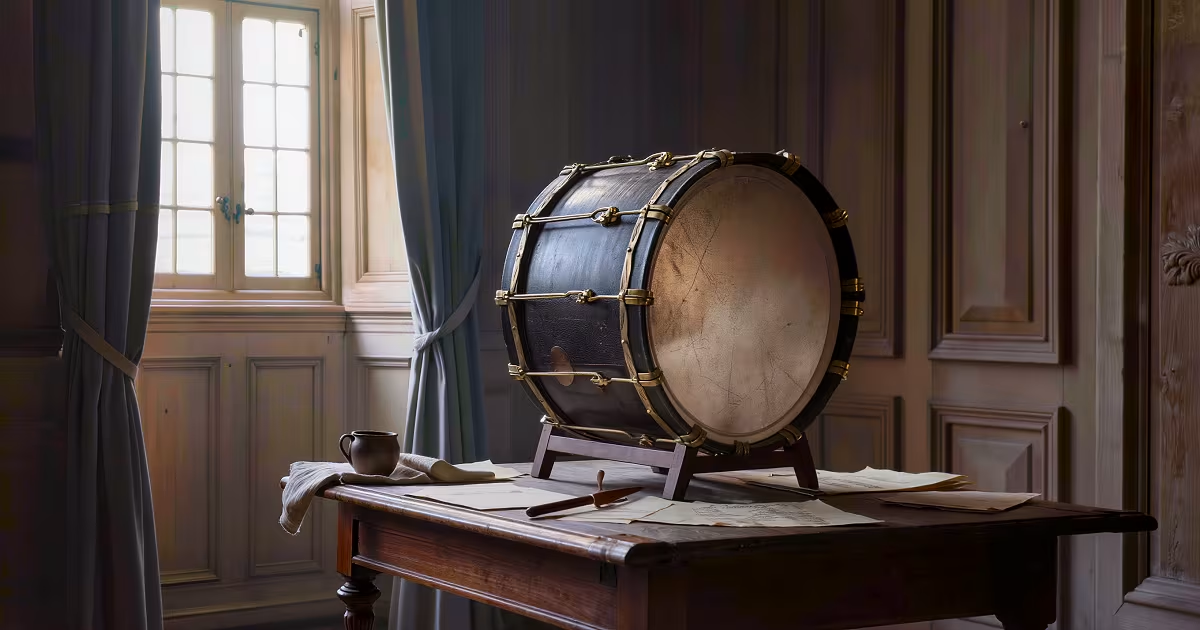
17th-century English hall. Drum at rest, no people.
Illustration, not a period photograph.
Opening
In April 1661 a vagrant drummer, William Drury, was hauled before a magistrate at Ludgershall and then before John Mompesson at Tidworth in Wiltshire. Mompesson took the drum. Drury went to Gloucester gaol on other trouble. In the months after, Mompesson's house filled with drumming in the air, raps, sulphur talk, and a boarded children's room that would not stay quiet. Joseph Glanvill came, sat, and put the nights into Saducismus Triumphatus. The drummer, in the telling, said he had plagued the house for the seized drum.
Tedworth became the English type-case for a knocked house after the Restoration. Sceptics then and later called it servants and a credulous squire. Glanvill called it a fact against Sadducees. No drum from those rooms sits in a museum chain. The book is why the file still has nights.
The spine of the file is a seized drum and a house that then tattooed. Tedworth is Glanvill's sittings. It is not a conviction that names every rap.
Timeline
April 1661 the drum is taken. Drury is moved on. Summer and autumn the house sounds.
Glanvill visits in the following years and writes. The book goes through editions after Glanvill's death with More's hand on it.
Drury is later punished as a cheat in some tellings. The house story does not wait for that dock.
Every later English poltergeist list starts here. That list is later life. The seized drum is first.
Key figures
John Mompesson owns the house and the decision to take the drum.
William Drury owns the drum and the later boast that he had paid the house back.
Joseph Glanvill owns the sittings and the book.
The children in the boarded room own the nights they could not sleep.
Physical and documentary trail
On the paper, 1661 onward gives you four hard objects and no kept drum.
One: the seizure of Drury's drum at Tidworth.
Two: household accounts of drumming and raps after.
Three: Glanvill's visits and Saducismus Triumphatus.
Four: later cheat proceedings against Drury. Joseph Glanvill, Saducismus Triumphatus, on the Drummer of Tedworth, is the originating literary tray.
There is no 1661 instrument log. There is no drum in a labelled case. There is no second magistrate's book that undoes the first months.
I have plagued him, and he shall never hear the last of the drum.
Competing explanations
A revenge haunting tied to a seized drum. This is Glanvill. It has nights. It has no object in a case.
Servants and a squire who wanted a wonder. The mundane door. Has to carry Glanvill sitting in the rooms.
Drury's confederates still in the house. Possible. Not proved as a roster.
Hybrid caution. A drum was taken. A house sounded. A book made it a type.
Later life of the case
Every later knocked-house preface. I keep those on the later-life shelf. The 1661 seizure stays first.
Finding
John Mompesson took William Drury's drum in 1661 and the Tidworth house then filled with drumming Glanvill sat through and wrote down. Believe the household for the noise. A magistrate does not invent months of broken sleep for a later chapter on witches.
What still will not resolve: the drum itself in a chain, or a named living hand on every rap. Either one would pin the nights. The proving object is still that drum, held as a tool or as a trophy, not only as a sentence in Glanvill.