COCK LANE
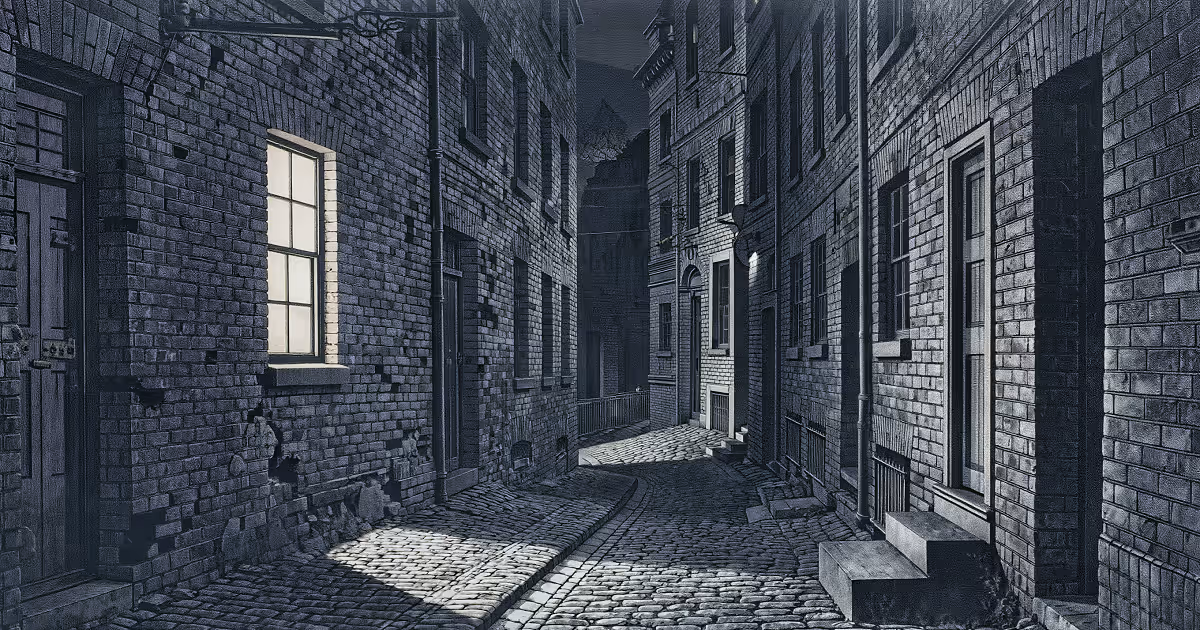
Narrow Georgian London lane at night. No crowd added.
Illustration, not a period photograph.
Opening
In January 1762 a house in Cock Lane, Smithfield, began to knock. Elizabeth Parsons, about twelve, daughter of Richard Parsons, took the worst of the raps. The story attached itself to Fanny Lynes, who had died the year before after lodging in the house, and to William Kent, who had lived with Fanny and was now accused, by the knocks, of having poisoned her. London came to listen. Methodists and fashionable people sat in the dark. The girl was carried to other rooms. The knocks sometimes followed.
On 21 February a committee that included Samuel Johnson watched at the Guildhall and at a house in Clerkenwell. The expected knocks failed when the girl could be watched. Parsons and others were later convicted of conspiracy. Cock Lane became a joke the century used against credulity. The first weeks of raps in a real house remain the paper before the joke.
The spine of the file is a child, a dead woman, and a Guildhall close. Cock Lane is scratching Fanny. It is not a conviction that the first knocks never happened.
Timeline
1760-61 Fanny and Kent in the Parsons house, then Fanny's death at another lodging. January 1762 raps begin. Public sittings through January and February.
21 February 1762 the watched test. Silence when the girl is held in view. Press turns. Trial and conviction follow.
Johnson's account is why the close sits in English letters and not only in a parish row. Methodist interest is part of the first crowd, not a later add-on.
Every later English poltergeist list keeps Cock Lane as a warning. That warning is later life. January 1762 is first.
Key figures
Elizabeth Parsons owns the bed and the raps that made a city walk to Smithfield.
Richard Parsons owns the house and the later dock.
William Kent owns the accusation the knocks made.
Samuel Johnson and the 21 February committee own the watched close.
Physical and documentary trail
On the paper, 1762 gives you four hard objects and no poison cup.
One: the January raps in Cock Lane and the public sittings.
Two: the story that named Fanny and accused Kent.
Three: the 21 February watched test and the silence.
Four: the conspiracy convictions. Contemporary London press and the Guildhall-week accounts of Cock Lane, 1762, are the originating tray.
There is no 1762 recording. There is no inquest that proved Fanny poisoned. There is no proof the first January nights were empty of sound.
The child was watched, and the expected sounds were not heard.
Competing explanations
A genuine knock that a family then dressed as murder. Possible for January. The February silence is against a continuing spirit.
A fraud from the first night. This is the conviction. It has a dock. It has to carry why a city sat in the dark for weeks before the test.
Methodist enthusiasm plus a parish feud. Also in the mix. Kent and Parsons had already quarrelled about money.
Hybrid caution. A house knocked. A committee watched. A court convicted. January and February are not the same paper.
Later life of the case
Johnson reprints and credulity sermons. I keep those on the later-life shelf. The January rooms stay first.
Finding
Cock Lane knocked in January 1762 hard enough that London sat in the dark, and on 21 February a watched child did not produce the sounds a committee had come to hear. Believe both weeks. A city does not invent a queue for Smithfield, and a committee does not invent silence.
What still will not resolve: a January night logged by someone with no stake in Kent, or a cup that ties Fanny's death to poison. Either one would pin the first raps. The proving object is still those January knocks, held as fraud or as fright by more than a later joke.