SVERDLOVSK 1979
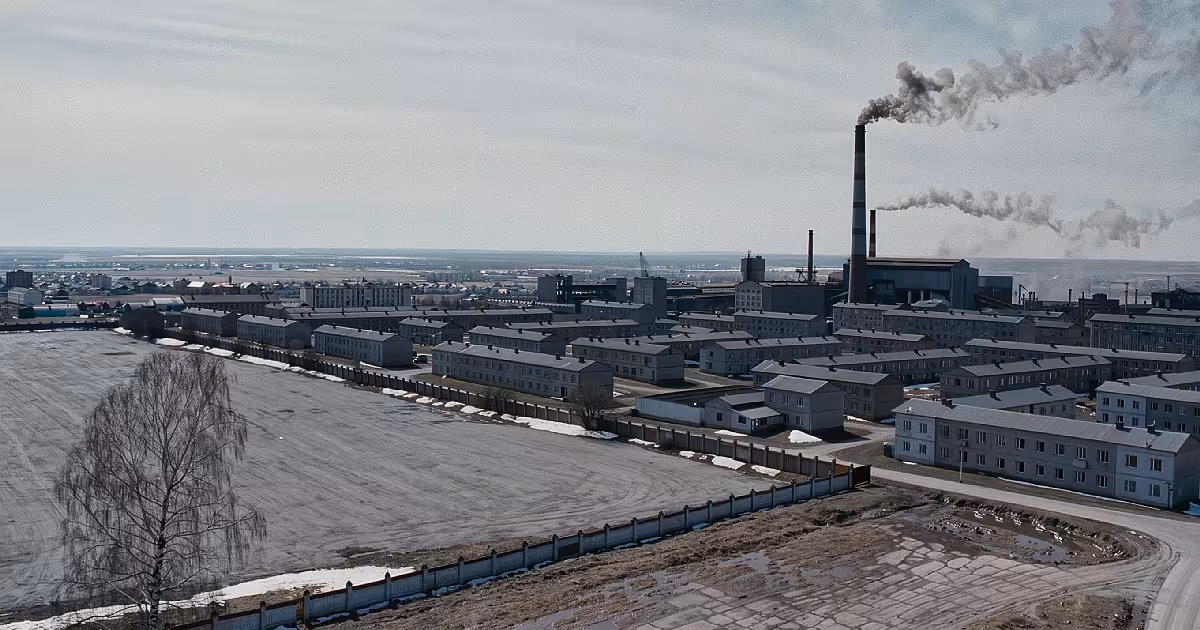
A grey Soviet industrial district, smoke drifting from chimneys.
Illustration, not a photograph.

Archive / Conspiracy / BOT313-0458
CON-19792 APR 1979ConspiracyDOCUMENTED
THE ANTHRAX LEAK BLAMED ON BAD MEAT
Fig. 01 A grey Soviet industrial district, smoke drifting from chimneys. Illustration, not a photograph.
Opening
In early April 1979, anthrax spores escaped from a secret Soviet military facility known as Compound 19 in the closed city of Sverdlovsk, now Yekaterinburg, in the Urals. Over the following weeks at least 68 people died of inhalational anthrax, most of them workers at a ceramics factory downwind, and livestock died in villages further along the same line. The Soviet government said the deaths came from contaminated meat sold on the black market.
That explanation stood for thirteen years. In 1992, after the Soviet Union collapsed, a team of Western scientists led by the Harvard biologist Matthew Meselson went to Sverdlovsk, mapped where the victims had been on the day of the release, and showed that they fell along a narrow plume running south-east from the military compound. It is one of the deadliest documented leaks from a biological weapons facility.
Timeline
1947 to 1949A biological warfare facility is built in Sverdlovsk on the site of a former infantry academy and becomes operational in July 1949. Over the following decades it works on anthrax among other agents.
2 or 3 April 1979Spores escape from a building in the facility's special zone that reportedly produced dried anthrax for weapons. Russian accounts later blame a fault in the air-handling system that exhausted a spray dryer. Meselson's team, using victims' movements and weather records, concludes the release most likely happened during the day on 2 April.
Within daysPeople begin falling ill with fever and breathing problems. The ceramics factory, with more than 2,000 workers and ventilation that drew in outside air, is hit hardest. At least 18 of its workers die.
April 1979Authorities blame infected meat, distribute tetracycline, collect clothing and bedding, and from 22 April wash down buildings with chlorine. About 59,000 residents of the Chkalovskii district are offered anthrax vaccine.
January 1980The first Western report appears, in the émigré magazine Possev, describing an explosion at a military settlement and an anthrax outbreak. US intelligence suspects a weapons leak.
1986Meselson visits Moscow and, after briefings from Soviet health officials, judges the meat explanation plausible.
October 1991Peter Gumbel of the Wall Street Journal investigates in Sverdlovsk and finds the official account full of contradictions.
1992Boris Yeltsin, who was the regional party chief in Sverdlovsk in 1979, is reported as acknowledging that military work was the cause. In April Yeltsin issues a decree on meeting Russia's international biological weapons commitments.
June 1992Meselson's team visits Sverdlovsk, interviews families and compiles a list of 68 victims. Their homes show no clear pattern, but their daytime locations on 2 April all lie in a narrow zone downwind of Compound 19.
November 1994The team publishes "The Sverdlovsk Anthrax Outbreak of 1979" in Science.
1999Jeanne Guillemin, a member of the team, publishes Anthrax: The Investigation of a Deadly Outbreak.
2016Geneticists sequence anthrax DNA from preserved victim tissue and find an ordinary strain, with no sign of genetic engineering or antibiotic resistance.
Key figures
Matthew Meselson led the 1992 investigation and changed his view on the evidence, which is part of what makes his conclusion credible. Jeanne Guillemin, an anthropologist, conducted many of the family interviews. Peter Gumbel's 1991 reporting broke the official story open. Boris Yeltsin was the party chief in Sverdlovsk at the time. The Soviet officials and military officers responsible for the facility have not been publicly identified as having faced any consequences.
Physical and documentary trail
The 1994 Science paper, with its map of victims and wind data, is the central document. Pathology samples preserved by local doctors allowed later confirmation of inhalational anthrax and, in 2016, genetic analysis. Many Soviet records were reportedly destroyed or withheld, and the Russian government officially maintains the contaminated-meat explanation. The full military records of the release have never been published.
riddled with inconsistencies, half-truths and plain falsehoods
Things you might not know
- The plume line was the giveaway. The victims' workplaces and the dead livestock in villages fell along one straight line from the compound.
- The lead investigator first believed the official story. Meselson accepted the meat explanation in 1986 and reversed it after visiting the city.
- Local doctors kept the evidence. Pathologists preserved tissue samples that later confirmed the cause.
- Russia still officially blames the meat. The post-Soviet government did not adopt Yeltsin's reported admission as its position.
- The institute is still active. Now the 48th Central Scientific Research Institute branch in Yekaterinburg, it was placed under US sanctions in 2020 and 2021.
Competing explanations
A military release from Compound 19. The geographic pattern of human and animal cases along the wind line, the inhalational form of the disease and the 2016 genetics all support this. It is the conclusion of the only detailed independent investigation.
Contaminated meat. The Soviet and current Russian explanation. Meat would produce gastrointestinal and skin anthrax spread according to where people bought food, not inhalational anthrax concentrated along a downwind line.
Sabotage. Some Russian accounts have suggested a deliberate foreign release. No evidence has been offered for it, and it does not fit the plume's origin at the compound.
Later life of the case
Sverdlovsk became evidence in the debate over Soviet compliance with the 1972 Biological Weapons Convention and is a reference case for modern biosafety. It also shapes how investigators think about the origins of outbreaks near laboratories.
Finding
At least 68 people died after anthrax spores escaped from a Soviet military facility in April 1979, and the government covered it up with a story about bad meat. The independent investigation, the victims' locations, the livestock deaths and the genetics all point to Compound 19. What remains unknown is exactly what failed, how much was released, and who decided on the cover-up.
What still will not resolve: the Soviet military's own records of the release and the investigation, which Russia has never published.
Evidence signature
9/9 Strong
- Witnesses
- trained, independent witnesses
- Instruments
- more than one sensor agrees
- Paper
- formal investigation, court or declassified file
How well documented the case is, not whether it's true. A strong record can still have an ordinary answer, and a thin one can still be real.
You decide · SVERDLOVSK 1979
What do you think happened?
One vote per case, anonymous. You'll see how other readers voted once you've voted.