OPERATION MINCEMEAT
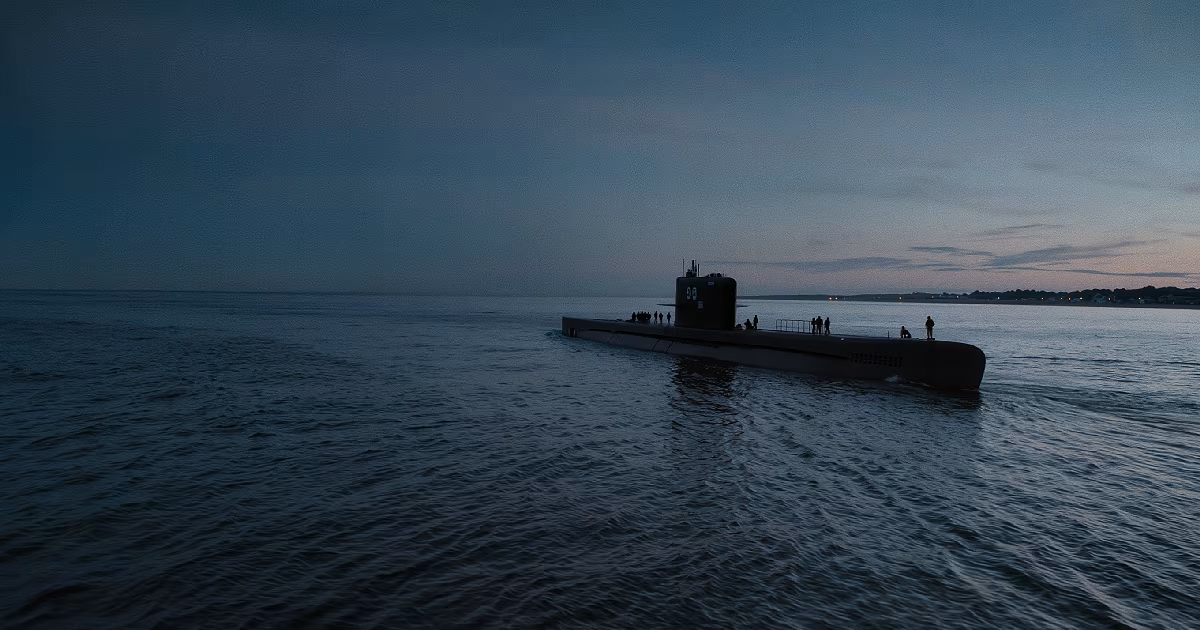
A submarine on a dark sea at first light, a coastline beyond.
Illustration, not a photograph.

Archive / Conspiracy / BOT313-0471
CON-194330 APR 1943ConspiracyDOCUMENTED
THE MAN WHO NEVER WAS
Fig. 01 A submarine on a dark sea at first light, a coastline beyond. Illustration, not a photograph.
Opening
At about 4:15 in the morning of 30 April 1943, the British submarine HMS Seraph surfaced off the coast of Huelva in neutral Spain, and her officers slid a body in a life jacket into the sea. A few hours later a Spanish fisherman found it washed up near the shore. The dead man was Captain William Martin of the Royal Marines, an officer on the staff of Combined Operations, apparently drowned after a plane crash. Chained to his coat was a briefcase of letters between senior British generals.
The letters revealed that the Allies' next invasion would come in Greece and Sardinia, and that Sicily, the obvious target, was only a cover. None of it was true. William Martin did not exist. The body belonged to a homeless Welshman who had died of rat poison in London, and the whole thing, the officer, his fiancée, his overdraft and his secret papers, had been invented by two British intelligence officers. The Germans believed it. It is one of the most successful deceptions in the history of war, and it is the rare conspiracy theory that turned out to be completely true.
Timeline
29 September 1939A memo from Rear Admiral John Godfrey, head of naval intelligence, lists ideas for deceiving the enemy. Idea number 28, "a suggestion (not a very nice one)", is to plant false papers on a corpse. Historians see the hand of Godfrey's assistant, Ian Fleming, later the creator of James Bond.
28 January 1943The London coroner Bentley Purchase reports the death of Glyndwr Michael, a homeless man who had eaten rat poison containing phosphorus. His body becomes available, with no family to claim it.
February 1943Ewen Montagu and Charles Cholmondeley, members of the Twenty Committee that ran British double agents, rework Cholmondeley's earlier "Trojan Horse" plan into Operation Mincemeat.
Spring 1943They build Major Martin's life: identity papers, love letters and a photograph of his fiancée "Pam", a receipt for an engagement ring from a Bond Street jeweller, theatre ticket stubs, and a demand from Lloyds Bank about his overdraft. The key document is a personal letter from Lieutenant General Sir Archibald Nye to General Sir Harold Alexander.
19 April 1943HMS Seraph, under Lieutenant Bill Jewell, sails from Scotland with the body packed in dry ice in a steel canister.
30 April 1943The body is released off Huelva and found by a local fisherman around 9:30 a.m.
May 1943Spanish officials, many friendly to Germany, let the papers be copied by German agents, including the Abwehr officer Adolf Clauss in Huelva, before returning them apparently untouched. The copies reach Berlin.
14 May 1943Decoded German messages confirm the deception has worked. Churchill is sent the message: "Mincemeat swallowed rod, line and sinker."
9 to 10 July 1943The Allies invade Sicily. Hitler had sent forces to Greece and Sardinia, including the 1st Panzer Division from France to Greece, and even after the landings he still expected a Balkan invasion.
1953 and 1956Montagu publishes the story as The Man Who Never Was, and it becomes a film, without naming the dead man.
1996The historian Roger Morgan finds evidence in the official records that the body was Glyndwr Michael.
Key figures
Glyndwr Michael was a poor, homeless man from Wales who died alone in London in early 1943. He never knew his body would be used, and for over fifty years his name was kept secret. He is the one person in the story who had no say in it.
Ewen Montagu was a barrister and naval intelligence officer who later told the story himself, in his own way. Charles Cholmondeley was an RAF officer in MI5 who first proposed the idea. Together they wrote Major Martin's life down to his overdraft.
Lieutenant Bill Jewell commanded the submarine and read a burial service over the body before it was put into the sea.
Physical and documentary trail
What exists: the planning files, now at the UK National Archives; the Ultra decrypts that showed the Germans had taken the bait; German intelligence assessments captured after the war; the submarine's records; Spanish reports of the body's discovery; and the grave in Huelva. It is one of the most fully documented intelligence operations of the war.
What took longest to come out was the dead man's name. Montagu kept it secret in his book and for the rest of his life. Morgan's 1996 discovery led to an addition on the gravestone in Huelva. Other claims about whose body it was, including that it came from the wreck of the aircraft carrier HMS Dasher, have been dismissed by historians.
Mincemeat swallowed rod, line and sinker.
Things you might not know
- The fiancée was a real MI5 clerk. The photograph of "Pam" was of Jean Leslie, who worked in the intelligence office, posing as the girlfriend of a man who never existed.
- The grave carries two names. In 1997 the Commonwealth War Graves Commission added a line to Major William Martin's headstone in Huelva: "Glyndwr Michael served as Major William Martin RM".
- A novel nearly gave it away. In 1950 the former cabinet minister Duff Cooper published Operation Heartbreak, a novel with a very similar plot, which helped push the government into letting Montagu tell a version of the real story.
- The overdraft was a stroke of genius. Small, dull details such as a bank's demand for payment and used theatre tickets were meant to make a dead stranger feel like a real, careless young officer.
- It became a film twice. The Man Who Never Was came out in 1956, and Operation Mincemeat, with Colin Firth as Montagu, in 2021.
- It was not the only reason Sicily went well. Historians credit Mincemeat as part of a wider deception plan, Operation Barclay, and Allied losses in Sicily were far lower than predicted.
Competing explanations
A planned deception that worked. This is not in dispute. The planning papers, the decrypts and the German records all show the plan and its effect.
A different body. Some writers have argued that the corpse was a sailor from HMS Dasher, which exploded in March 1943, or another man. Morgan's evidence for Glyndwr Michael is accepted by most historians.
A smaller effect than claimed. Some historians argue the Germans already expected an attack on Sicily and that Mincemeat's real effect was to make Hitler spread his forces more thinly. The records show he did move troops away, whatever else he believed.
Later life of the case
Operation Mincemeat has become the model of wartime deception, studied by intelligence services and retold in books, films and a hit stage musical. It also shows how a conspiracy can be real, detailed and successful, and still stay hidden for years, here because the people who ran it kept the secret and the man at its centre could not speak.
Finding
Operation Mincemeat was a real conspiracy, carefully planned and fully documented. British intelligence used the body of a homeless Welshman, dressed as an invented officer with forged papers, to persuade Germany that the Allies would land in Greece and Sardinia rather than Sicily. The Germans believed it and moved troops accordingly.
What still will not resolve: what Glyndwr Michael's life was like before he died in London, and how much of the success at Sicily belongs to Mincemeat alone rather than the wider deception around it.
Evidence signature
6/9 Solid
- Witnesses
- several people
- Instruments
- photo, film or physical traces
- Paper
- formal investigation, court or declassified file
How well documented the case is, not whether it's true. A strong record can still have an ordinary answer, and a thin one can still be real.
You decide · OPERATION MINCEMEAT
What do you think happened?
One vote per case, anonymous. You'll see how other readers voted once you've voted.