GULF OF TONKIN
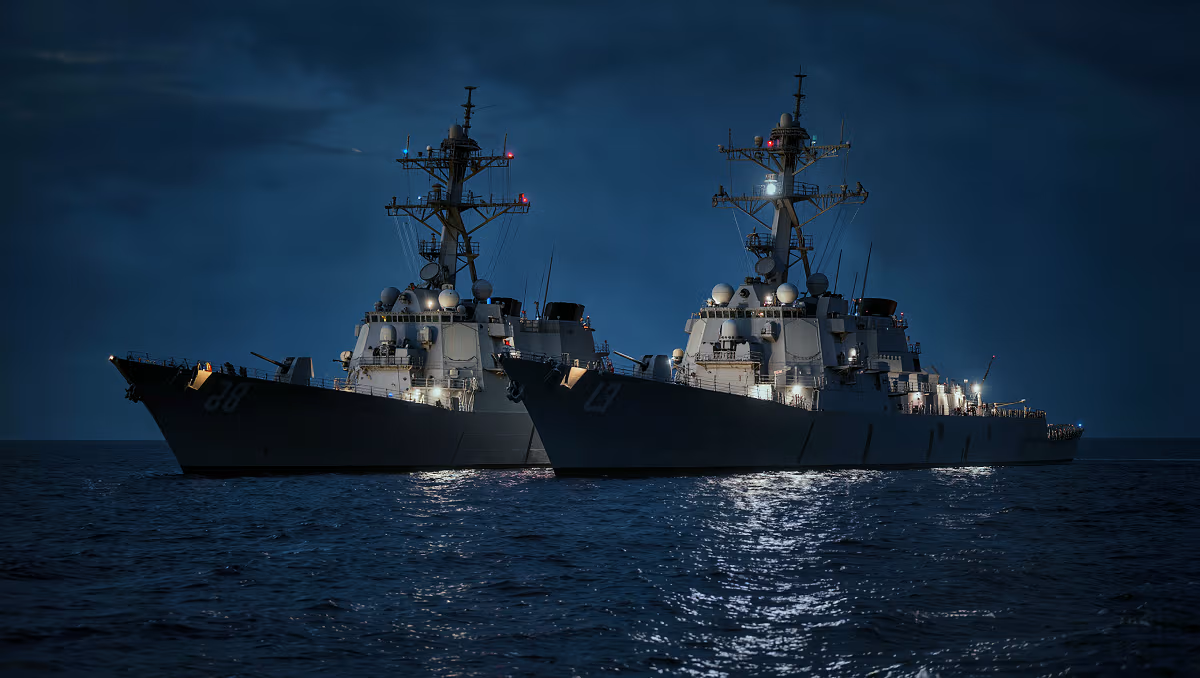
Destroyer on a dark gulf. No boats visible.
Illustration, not a period photograph.
Opening
On 2 August 1964 USS Maddox, on a DESOTO patrol off North Vietnam, engaged North Vietnamese boats. That engagement is not in serious dispute. Washington warned Hanoi. Turner Joy joined. On the night of the 4th both destroyers reported a second attack: radar contacts, torpedoes, gunfire, aircraft off Ticonderoga. Lyndon Johnson went on television. Congress passed the Gulf of Tonkin Resolution on 7 August. The air war widened.
Even that night the ships were unsure. Captain John J. Herrick cabled that many contacts were doubtful and that freak weather and an over-eager sonar man might be the whole of it. McNamara briefed otherwise. NSA historian Robert Hanyok, in a study declassified in the 2000s, concluded the 4 August attack did not happen and that some SIGINT had been selected to support the one that did. Johnson, later: those sailors had been shooting at flying fish. The first night stands. The second night is the file that started a larger war on a thinner sea.
The spine of the file is a 4 August report and a later official doubt. Tonkin is two nights. It is not a single clean battle that Congress was shown.
Timeline
2 August 1964. Maddox and North Vietnamese boats. Real fire. Warning to Hanoi. Turner Joy comes up.
4 August, night. Both ships report a second attack. Aircraft from Ticonderoga. Herrick's doubtful cable the same night. Johnson on television. 7 August the Resolution.
Later briefings treat the second night as solid. Hanyok's NSA history, released years after, does not. Flying-fish talk from Johnson is later candour, not 4 August paper.
The war that followed is later life for this card. The two nights are first.
DESOTO patrols were already a known posture. 2 August is a fight with boats that left metal in the water. That night does not need the Resolution to have happened. 4 August is radar and sonar in weather Herrick himself did not trust by morning.
McNamara's briefing and Johnson's television set the public board. Hanyok's later NSA study is why the second night will not sit still. Flying-fish talk from Johnson is candour after the vote, not a 4 August log.
Key figures
The Maddox and Turner Joy crews own the radars and the guns of both nights.
Captain Herrick owns the cable that already doubted the second fight.
Robert McNamara and Lyndon Johnson own the briefing and the Resolution.
Robert Hanyok owns the later NSA sentence that the 4 August attack did not happen.
Physical and documentary trail
On the paper, August 1964 gives you four hard objects and no second wreck.
One: the 2 August engagement that is not seriously disputed.
Two: the 4 August action reports of contacts, torpedoes, and gunfire.
Three: Herrick's same-night cable calling many contacts doubtful.
Four: the Resolution of 7 August and Hanyok's later NSA study. Captain John J. Herrick cable, 4 August 1964, is the originating doubt on the second night.
There is no North Vietnamese wreck from the 4th that the Navy put on a pier. There is no SIGINT page everyone now reads as a clean second attack.
Two nights must stay two nights. A wreck from the 4th would restore the briefing. Herrick's cable already sits against that wreck. SIGINT selected to support an attack is Hanyok's wound, not a newspaper guess.
Review of action makes many reported contacts and torpedoes fired appear doubtful. Freak weather effects on radar and overeager sonarmen may have accounted for many reports.
Competing explanations
A second attack as briefed. This is what Congress voted on. It has action reports. It has Herrick against it the same night.
No second attack, weather and sonar and selected SIGINT. Hanyok's door. The first night still stands.
A planned pretext. Larger than this card. The 2 August fight does not need a plan to have happened.
Hybrid caution. One night was a fight. The next night was a report that even the ship already doubted.
Later life of the case
War histories and the NSA release. I keep those on the later-life shelf. Herrick's cable stays first.
Finding
Maddox fought on 2 August 1964, and on the night of the 4th both destroyers reported a second attack that Captain Herrick already called doubtful in the same dark. Believe the first night. Believe Herrick's cable about the second. A skipper does not invent weather on his own radar for a historian forty years later.
What still will not resolve: a wreck from the 4th, or a SIGINT page that restores a clean second attack. Either one would pin that night. The proving object is still the second fight, held as boats or as flying fish by more than a television address.