MARFA LIGHTS
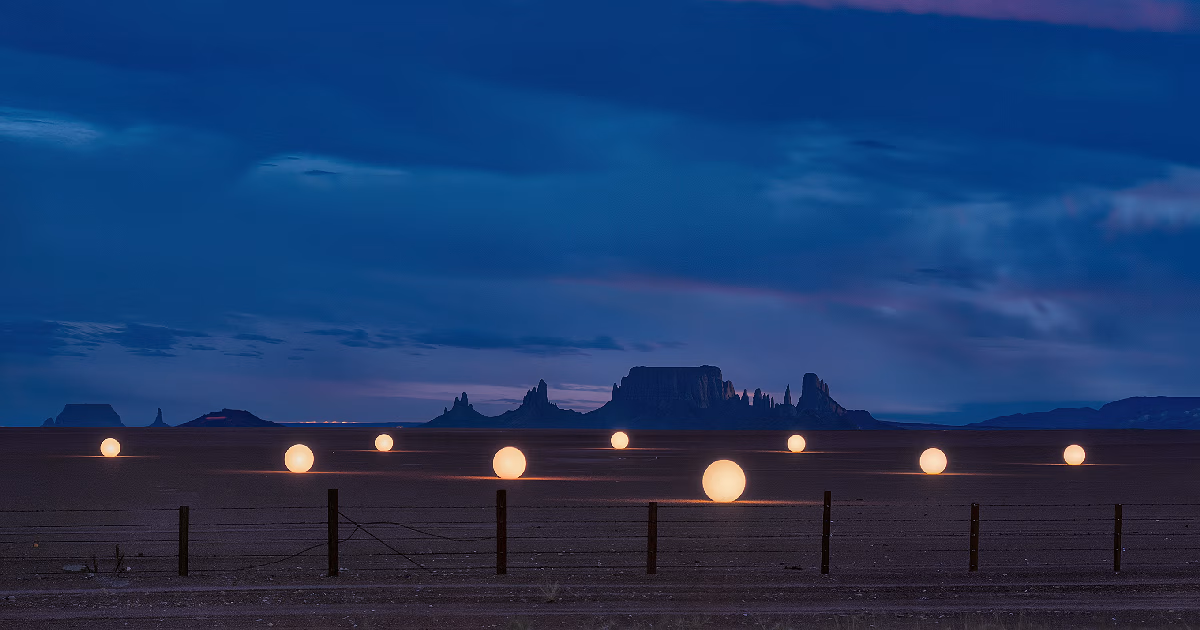
A row of glowing orbs hanging low over the dark desert of Mitchell Flat at dusk, behind a wire fence, with mesas on the horizon.
Illustration, not a period photograph.
Opening
On clear nights on Mitchell Flat, east of Marfa in the high desert of West Texas, people see lights on the horizon toward the Chinati Mountains. They glow, drift, split, merge, fade and come back. Nobody fixes when they will appear. For more than sixty years the Marfa Lights have drawn visitors to a stretch of roadside off US 90, where Texas has built them their own viewing area.
Timeline
1883. The traditional first sighting. A young cowhand, Robert Reed Ellison, is said to have seen a flickering light while driving cattle through Paisano Pass. Settlers who went looking for a campfire found no ashes. This story comes from later retellings, not a record made at the time.
1942 to 1947. Marfa Army Airfield trains pilots on Mitchell Flat, putting tens of thousands of personnel in the area.
July 1957. The first published account appears: Paul Moran’s “The Mystery of the Texas Ghost Light” in Coronet magazine.
1980s onward. Marfa holds an annual Marfa Lights Festival, and the lights become part of the town’s identity.
2003. Monitoring stations are set up to record the lights.
May 2004. A team from the Society of Physics Students at the University of Texas at Dallas spends four nights watching and concludes that every light they saw southwest of the viewing area could be matched to car headlights on US 67.
Key figures
Robert Reed Ellison, the cowhand of the first story. Paul Moran, who brought the lights to a national readership. Generations of ranchers, locals and visitors who have reported them. The UT Dallas students, who did the most careful published count.
Physical and documentary trail
On the paper: the 1957 magazine article, local histories, decades of visitor accounts and photographs, and the 2004 student study. What is missing is a well-documented report from before cars and roads crossed the area in numbers. The 1883 story is the only early claim, and it arrived in print long after 1883.
Competing explanations
Headlights. US 67 runs across the flat toward Presidio, and the viewing area looks straight along it. The 2004 study could explain every light it saw this way. It fits the most common sightings well, the ones that appear low on the horizon in the same direction night after night.
Mirages. Cold and warm layers of air over the desert can bend light over long distances, so a car, a ranch light or even a star can appear to float, split and dance. This explains the strange movement that headlights alone do not.
Something natural and unexplained. Some locals report lights in places no road runs, close up, or long before the highway was busy. Ideas range from electrical discharges to gases, none of them demonstrated.
Later life of the case
Marfa has made the lights part of its welcome. The viewing area on US 90 has restrooms, telescopes and a sign, and people gather there most clear nights. The lights have been used in films and songs, and have outlived every attempt to explain them away.
Finding
The data points to most Marfa Lights being distant headlights and ranch lights, bent and magnified by desert air. That explanation is strong for what most visitors see from the viewing area. It can’t cover every account, especially the older ones and those from people who say they saw lights up close, and nobody has recorded one of those well enough to test.
What still will not resolve: what Robert Ellison saw in 1883, if the story is true, before there were headlights to see.