TOWER OF LONDON
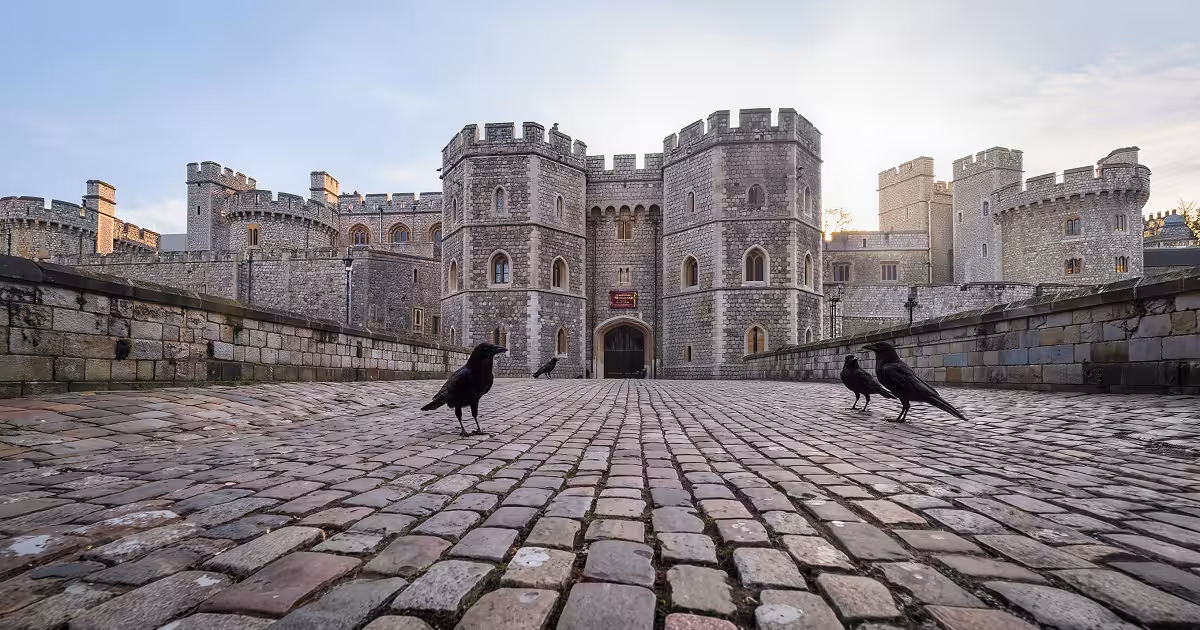
Ravens on the cobbles before the gatehouse of the Tower of London.
Illustration, not a period photograph.

Archive / Paranormal / BOT313-0272
PAR-153619 MAY 1536ParanormalSCAFFOLD HERE
THE HEADLESS QUEEN AND THE RAVENS
Fig. 01 Ravens on the cobbles before the gatehouse of the Tower of London. Illustration, not a period photograph.
Opening
The Tower of London, a nearly thousand-year-old fortress on the Thames, has genuine documented executions, torture, and imprisonment across its working history as a royal stronghold, and its own official ravens, kept on the grounds under a real, paid keeper's role, remain one of the more delightfully bureaucratic details in British royal tradition.
Anne Boleyn, second wife of Henry VIII, was beheaded within its walls on 19 May 1536, a documented historical fact. The claim that her ghost has since walked the Tower's green carrying her own head, repeated in tour narration for generations, has no comparable documentary support at all, and rests entirely on later oral tradition rather than any contemporary or even reasonably early written account.
Timeline
1078 onwardWilliam the Conqueror begins construction of the White Tower, the fortress's original core, beginning the site's near-millennium of continuous use as a royal residence, garrison, treasury, and prison.
Medieval and Tudor periods. The Tower serves as the site of numerous documented executions and imprisonments of politically significant figures, establishing the historical reputation for violence the site carries into its modern tourist identity.
19 May 1536Anne Boleyn is executed by beheading on Tower Green, having been convicted, on charges modern historians generally regard as fabricated for political convenience, of adultery, incest, and treason against Henry VIII. Her death is documented through multiple contemporary accounts, making the execution itself one of the best-attested events in the Tower's history.
17th century, per the tradition's own account, though undated with any precision. The Tower's ravens, already a presence on the grounds, become associated with a legend holding that the kingdom and the Tower itself will fall if the ravens ever leave, a story some historians suspect may itself be a later Victorian-era invention rather than a genuinely ancient royal decree, though the ravens' actual, practical care by a dedicated Yeoman Warder Ravenmaster is entirely real and continues to the present day.
Charles II's reign, per one popular but historically unverified account. The king is said to have specifically ordered the ravens protected by royal decree after court astronomer John Flamsteed complained they interfered with his observations, a colorful story that, like much of the Tower's oral tradition, lacks confirmed contemporary documentation.
19th and 20th centuriesGhost stories involving numerous historical figures executed or imprisoned at the Tower, Anne Boleyn chief among them, but also including Lady Jane Grey, the "Princes in the Tower," and others, accumulate and circulate through popular writing, guidebooks, and eventually organized tour narration, generally without traceable primary sourcing predating the accounts themselves by more than a generation or two.
Ongoing, modern tourismThe Tower's Yeoman Warders, who live on-site and lead public tours, incorporate ghost stories including Boleyn's reported apparition into their standard narration, a tradition now decades old in its current commercial form, presenting the ghost material alongside the site's genuine, extensively documented historical record.
Key figures
Boleyn is the case's central historical figure, and the specific gap in this case is worth being precise about: her execution is exhaustively documented, while her claimed post-execution apparition on the Tower green has no comparable documentary trail connecting it back to anything closer to 1536 than considerably later oral tradition.
The Yeoman Warders, and specifically the dedicated Ravenmaster role, are the case's key living institutional figures, responsible both for the genuine, ongoing practical care of the Tower's ravens and for the continued oral transmission of its ghost stories to visitors.
Flamsteed, the royal astronomer supposedly responsible for the raven-protection decree story, represents one of the Tower's more specific but unverified oral traditions, a colorful anecdote without confirmed contemporary documentation behind it.
Physical and documentary trail
The case has an extraordinarily well-documented historical record for the Tower's genuine executions and imprisonments, including multiple contemporary accounts of Boleyn's specific 1536 death, alongside a continuously maintained, genuinely real raven-keeping tradition under an official Yeoman Warder role.
What it lacks is any comparable documentary trail for the ghost sightings themselves; no contemporary 16th or 17th-century account describes Boleyn's apparition, and the specific raven-protection legend involving Charles II and Flamsteed lacks confirmed period sourcing despite its frequent retelling as established history.
Things you might not know
- The raven legend may be Victorian. The earliest known reference is an 1883 illustration, and the Tower's own historian has called the story likely "a Victorian flight of fantasy".
- At least six must stay. The Tower keeps a minimum of six ravens, with spares; there were eight in 2025.
- Their wings are trimmed every three weeks. Feathers on one wing are clipped so they can only fly short distances.
- They eat well. Daily raw meat, plus boiled eggs and blood-soaked biscuits every other day.
- Only three survived the Blitz. All but three ravens died during the Second World War bombing.
- One was sacked. Raven George was retired to a Welsh zoo in 1986 for attacking television aerials.
Competing explanations
A genuine historical execution site whose real, well-documented violence naturally accumulated ghost folklore over subsequent centuries, a pattern common to many sites with genuine violent histories, without requiring any specific traceable origin point for when the Boleyn apparition story first entered circulation.
A tourism-era narrative addition, with ghost stories formalized and standardized specifically as part of the Yeoman Warders' developing tour tradition once the Tower became a major public visitor attraction, layered onto genuine history to enhance the visitor experience rather than reflecting older, organically developed folk belief.
A case where the raven legend specifically may be a Victorian-era invention rather than genuine older royal tradition, a reading some historians have specifically proposed given the absence of confirmed period documentation for the Charles II decree story despite its confident modern retelling as established fact.
Later life of the case
The Tower of London remains one of the world's most visited historic sites, and its combination of exhaustively documented genuine historical violence with considerably less documented ghost tradition makes it a useful illustration of how a location's real history and its accumulated folklore can become presented with equal apparent confidence in standard tour narration, despite carrying very different evidentiary weight.
Finding
Anne Boleyn's 1536 execution at the Tower of London is one of the best-documented events in the fortress's history, confirmed through multiple contemporary sources. Her claimed continued presence on the Tower green has no comparable documentation, and the popular raven-protection legend involving Charles II lacks confirmed period sourcing despite its frequent retelling as settled historical fact.
What still will not resolve: any documentary trail connecting the Boleyn ghost story to a period meaningfully close to her actual 1536 death, and confirmation or refutation of the specific Charles II raven decree story. Until either surfaces, this report treats the execution as documented history and the ghost tradition as folklore of undetermined but likely much later origin.
Evidence signature
3/9 Thin
- Witnesses
- one person, or a tradition
- Instruments
- nothing on record
- Paper
- official records at the time
How well documented the case is, not whether it's true. A strong record can still have an ordinary answer, and a thin one can still be real.
You decide · TOWER OF LONDON
What do you think happened?
One vote per case, anonymous. You'll see how other readers voted once you've voted.