BLACK MONK
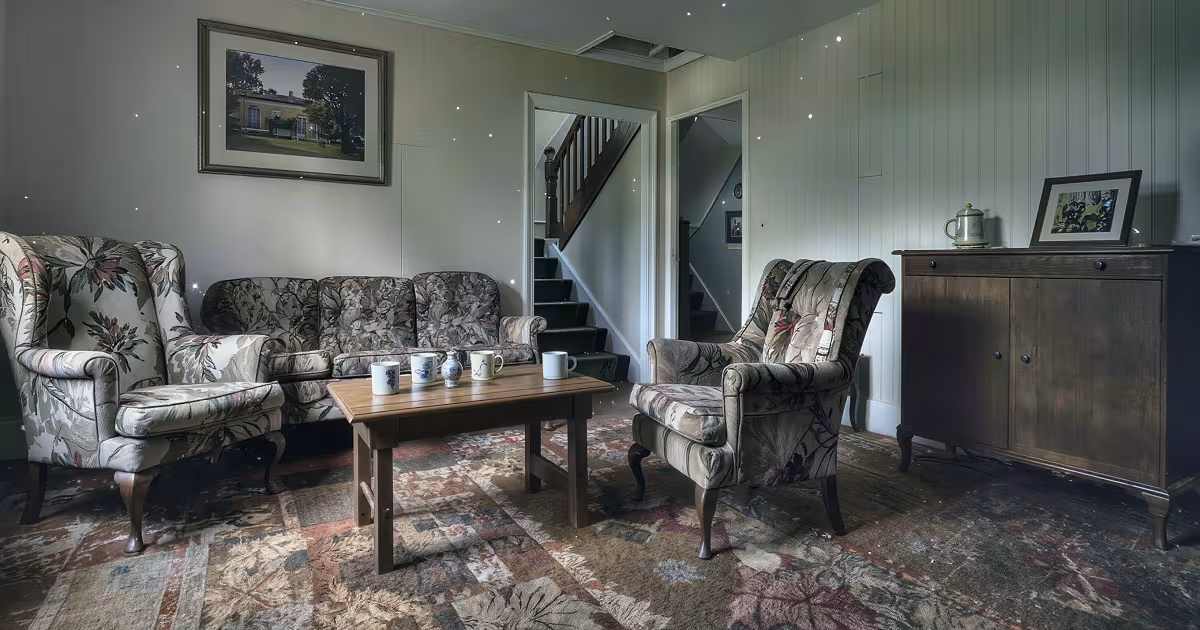
Yorkshire council semi. Stairs at a night window.
Illustration, not a period photograph.
Opening
From 1966 into the late 1960s the Pritchard family at 30 East Drive, Pontefract, lived with a house that threw things, left footprints in powder, and showed a tall dark figure they called the Black Monk. Jean and Joe Pritchard, their son Phillip, daughter Diane, and grandmother. Neighbours heard knocks. A photographer and local investigators walked through. The figure in a black habit is the image the case kept. The thrown furniture is the part that does not need a habit.
East Drive is a council house, not a priory. Pontefract had a real priory once. The name Monk is a local reach. What the family had was a house that would not sit still and a shape on the stairs.
The spine of the file is a Pontefract terrace and a figure in black. The Black Monk is 30 East Drive. It is not a robe in a Wakefield locker.
Timeline
August 1966. First knocks and thrown objects while some of the family are out. Powder on the floor takes footprints. Green foam, scratches, a crucifix turned, in the early tellings.
Through 1966-68 the figure appears: tall, dark, habit-like. Diane is pulled and frightened. Joe tries to treat it as a house problem. Investigators sit overnight. Some leave impressed. Some leave with a mundane read.
The family stays in the house for years. Later owners and television crews keep the address famous. That fame is later life. The first thrown week is first.
Colin Wilson and others write it as a poltergeist with a costume. The costume is the argument. The week the crockery flew is the paper.
Key figures
Jean and Joe Pritchard own the house and the decision not to run at once.
Phillip and Diane are the children in the rooms that moved.
The grandmother is the extra adult who had to sleep there.
Local investigators and the photographer own the nights they sat through.
Physical and documentary trail
On the paper, 1966-68 give you four hard objects and no robe.
One: the family's account of knocks, thrown objects, and footprints in powder.
Two: the tall dark figure on the stairs and in rooms.
Three: neighbour knocks and investigator nights.
Four: contemporary notes and later published interviews. Pritchard family and local investigator notes on 30 East Drive, 1966, are the originating tray.
There is no photograph of the monk that a lab will stand on. There is no habit recovered. There is no instrument log from a clean night that everyone accepts.
It was tall and black like a monk on the stairs.
Competing explanations
A haunting with a figure. This is the family's years. It has thrown rooms. It has no robe.
A poltergeist without a monk, children and stress doing the throws, a shadow becoming a habit. Possible. Has to carry adult neighbours.
A hoax for attention. Poor fit for a council house that still had to be lived in.
Hybrid caution. A terrace threw its furniture. A dark figure entered the telling. Morning had no monk in the alley.
Later life of the case
Television nights and later tenants. I keep those on the later-life shelf. The first powder footprints stay first.
Finding
The Pritchards at 30 East Drive spent 1966 watching their house throw things and seeing a tall dark figure they called a monk. Believe the family. A council terrace does not invent footprints in powder for a film crew.
What still will not resolve: a photograph of that figure on the stairs, or an instrument log from a night no child could have thrown the thing that moved. Either one would pin the habit. The proving object is still the figure on the stairs, held by someone who was not selling Pontefract.