THYLACINE
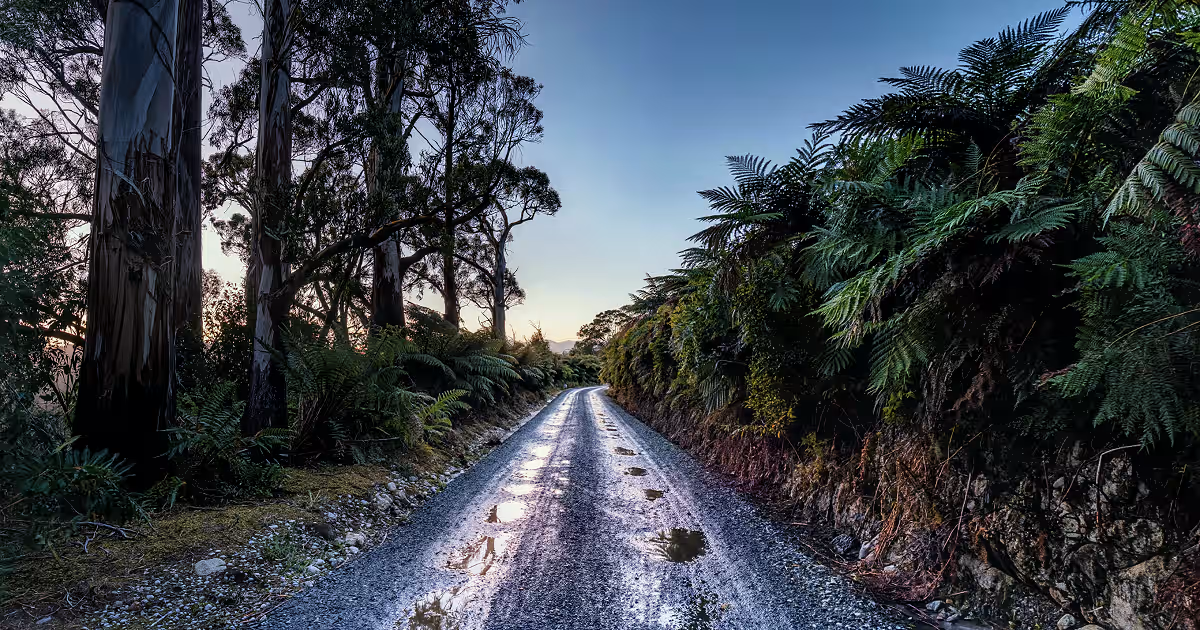
Tasmanian wet road dusk. Empty bush, no animal.
Illustration, not a period photograph.
Opening
On 7 September 1936 the last captive thylacine died at Beaumaris Zoo in Hobart. The wild Tasmanian tiger was already a thin animal. Official extinction followed. Sightings did not stop. Wet-road reports, a 2017 camera-talk season, and later mainland claims sit in an open popular file. No specimen after 1936 has been accepted as a living tiger by the desks that would have to sign a species back into the book. The Hobart death is first. The wet road is the gap.
Thylacine is a zoo date and an unofficial afterlife. Keep later blurry stills on the shelf unless a chain holds.
The spine of the file is a 1936 cage and an open road. The thylacine is a closed captive and an unclosed wild. It is not a signed hide after Hobart.
Timeline
Bounty years thin the wild animal. 1933 the last well-known captive intake. 7 September 1936 the Hobart death.
Official extinction later. Sightings continue on Tasmanian roads.
Camera and hair claims do not found a living type.
Those claims are later life. The zoo date is first.
A bounty that ended in a cage is why 1936 is not only a zoo anecdote. Roads that would not go quiet are why extinction language and a living file have to sit on one page.
Key figures
The Hobart animal owns the last captive date.
Tasmanian road witnesses own the afterlife.
Museums own the closed type as extinct.
Later camera people own stills that have not signed a species back.
Physical and documentary trail
On the paper, 1936 onward gives you four hard objects and no accepted post-zoo hide.
One: the 7 September 1936 Hobart death.
Two: official extinction language.
Three: continued road sightings.
Four: camera and hair claims that did not close as living. Beaumaris Zoo record of the last captive thylacine, 7 September 1936, is the originating tray.
There is no accepted post-1936 specimen. There is no doubt of the zoo date. There is no later type series.
A Hobart date and unofficial roads are the stay-behinds. A signed post-1936 hide would finish the tiger. A close that makes every road a dog would finish the other door.
The last captive died in Hobart. The roads did not go quiet.
Competing explanations
A species that lived past the zoo. This is the road. It has sightings. It has no signed hide.
Extinct in 1936, then dogs and wishes. The official door. Has to carry why people still stop on wet roads.
A mainland relic. Offered. Not signed.
Hybrid caution. A zoo closed a life. Roads kept a shape. Morning had no hide on a Hobart bench after.
Later life of the case
Later camera seasons. I keep those on the later-life shelf. The 1936 date stays first.
Finding
The last captive thylacine died in Hobart on 7 September 1936, and Tasmanian roads kept reporting the shape anyway. Believe the zoo date. Believe the people who still stop. A keep does not invent a death for a later blurry still.
What still will not resolve: a hide with a post-1936 chain the desks would sign, or a close that makes every wet road a dog. Either one would pin the tiger. The proving object is still that animal on a bench, held as extinct or as living by more than a camera season.