BROSNO DRAGON
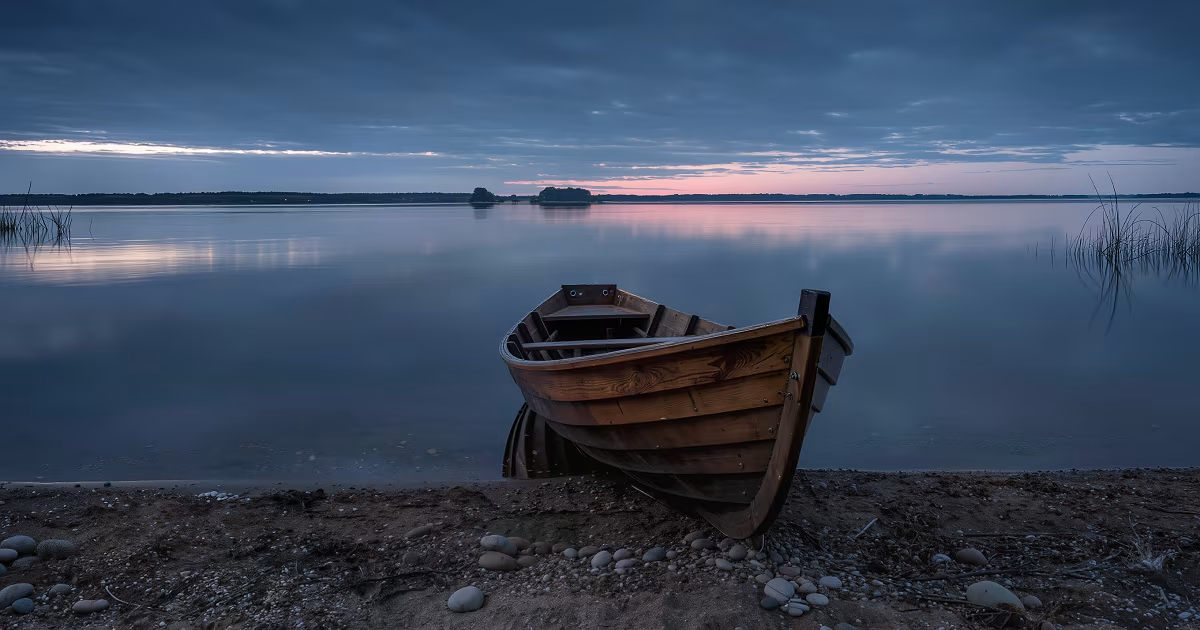
A wooden rowing boat drawn up on the shore of Lake Brosno at dusk.
Illustration, not a period photograph.

Opening
Lake Brosno lies near the town of Andreapol in Russia's Tver region, about 43 metres deep at its deepest point. Local tradition says it is home to a dragon-like creature, sometimes called Brosnya. The best-known legend claims the animal drove off the army of the Mongol leader Batu Khan in 1238, swallowing soldiers and horses as they camped on the shore.
Modern reports describe something large surfacing and diving, or boats being shaken by sudden upheavals of water. Expeditions in the early 2000s scanned the whole lake bottom with sonar and watched the shoreline, and found no animal. Their preferred explanation was gas rising from the lake floor.
Timeline
1238 (legendary)Batu Khan's army is said to have been driven off by the creature. No contemporary chronicle records it.
18th and 19th centuriesRumours describe a creature that rises in the evening and sinks when people approach.
1940s (legendary)A wartime story claims the creature swallowed a German aircraft.
1990sRussian media take up the legend, and reports of surface disturbances multiply.
2002 and 2003The Russian research group Kosmopoisk runs expeditions, scanning the lake bottom with sonar and watching the shoreline. It concludes the sightings were probably caused by large gas eruptions from the lake bed.
Key figures
Local residents and fishermen made most of the reports.
Kosmopoisk carried out the most thorough search and reached the gas explanation.
Russian television brought the lake national attention and keeps returning to it.
Physical and documentary trail
The record: local legend, press reports from the 1990s onwards, and expedition claims, including sonar readings sometimes reported as large objects. There is no specimen and no clear photograph. The 1238 story does not appear in contemporary sources, and the German aircraft story has no wartime record attached to it.
Things you might not know
- There is a church in the lake. A sunken church is said to lie in its western part, the subject of its own legend.
- The real fish are modest. The lake's known residents include perch and burbot.
- The monster swallowed a plane. At least in the wartime legend, which no record supports.
- Sceptics suggest a beaver. A beaver or a very large pike are the commonest mundane suggestions for a dark shape near the surface.
Competing explanations
A large unknown animal. Believers point to the consistency of reports of something large moving in the water. The lake, though, is too small to support a breeding population of large animals.
Gas releases. Methane and other gases from decaying material on the bottom can rise in large bursts, disturbing the surface and rocking boats. This fits the reports of sudden upheavals and was the conclusion of the sonar expeditions.
Large fish, beavers and folklore. Big pike, swimming animals and a legend that grew around them may account for the sightings of a shape or a head.
Later life of the case
Brosno is Russia's best-known lake monster and a regular subject of Russian television documentaries, which has kept the legend alive and the reports coming.
Finding
The legends are old in form but have no historical record behind them, and the modern reports describe things gas eruptions and known animals can explain. The data points to gas, which is what the sonar search concluded. The individual sightings can't be tested after the fact.
What still will not resolve: published sonar data from the 2002 and 2003 expeditions, which would let others check the conclusion.
Evidence signature
3/9 Thin
- Witnesses
- one person, or a tradition
- Instruments
- nothing on record
- Paper
- official records at the time
How well documented the case is, not whether it's true. A strong record can still have an ordinary answer, and a thin one can still be real.
You decide · BROSNO DRAGON
What do you think happened?
One vote per case, anonymous. You'll see how other readers voted once you've voted.