PRIORY OF SION
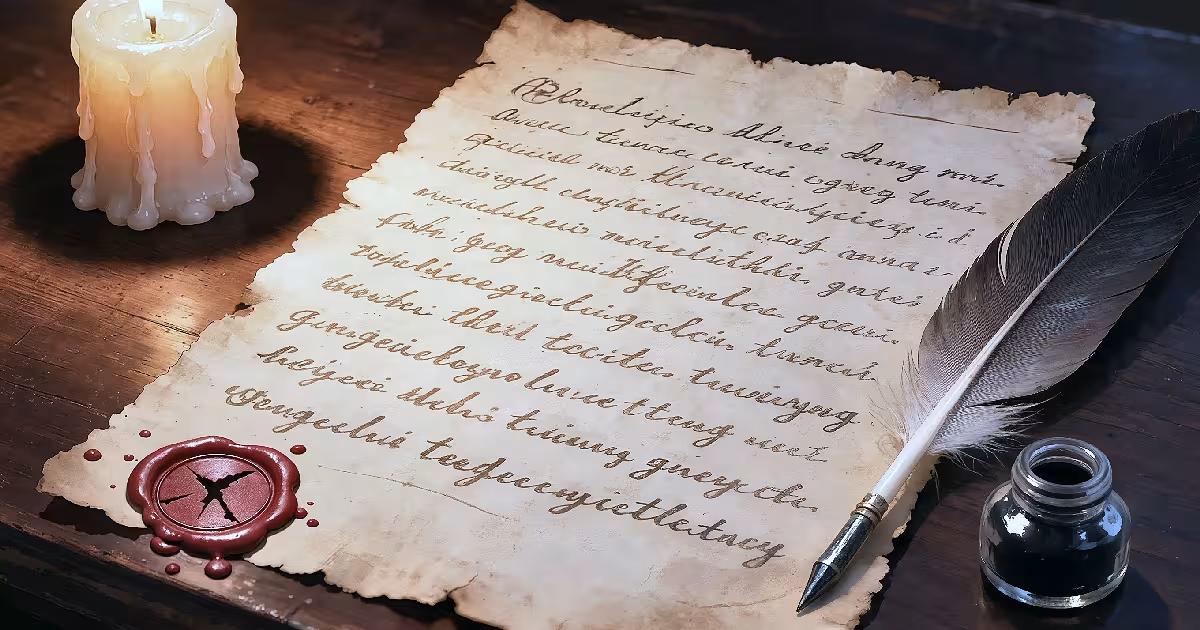
Old handwritten parchment, a broken wax seal, a quill and inkpot.
Illustration, not a photograph.

Archive / Conspiracy / BOT313-0542
CON-195625 JUN 1956ConspiracyADMITTED
THE SECRET SOCIETY THAT BEGAN IN 1956
Fig. 01 Old handwritten parchment, a broken wax seal, a quill and inkpot. Illustration, not a photograph.
Opening
On 25 June 1956, in the small town of Annemasse in eastern France near the Swiss border, a man named Pierre Plantard and three friends registered a club with the local authorities. They called it the Priory of Sion, after a nearby hill, Mont Sion. Its newsletter campaigned for affordable housing. It lasted a few months.
Over the next decade Plantard turned it into something else: on paper, a secret society founded in the Middle Ages, guardian of the bloodline of Jesus and Mary Magdalene, whose past Grand Masters included Leonardo da Vinci, Isaac Newton and Victor Hugo. The story reached millions through The Holy Blood and the Holy Grail and The Da Vinci Code. In 1993, questioned under oath by a French judge, Plantard admitted he had made it all up.
Timeline
1953According to a later letter from the mayor of Annemasse, Plantard receives a six-month prison sentence for fraud.
7 May 1956Plantard and André Bonhomme sign the statutes of the Priory of Sion, with Bonhomme as president and Plantard as secretary general. The name refers to Mont Sion, a hill just south of the town.
27 May 1956The first issue of its bulletin, Circuit, appears. It presents itself as a newsletter for tenants' and housing rights. Twelve issues are published.
25 June and 20 July 1956The association is registered at the sub-prefecture of Saint-Julien-en-Genevois, and the notice appears in the official gazette, the Journal Officiel. Within months it is dormant.
The 1960sPlantard and his friend Philippe de Chérisey produce a set of forged papers, the Dossiers Secrets d'Henri Lobineau, and deposit them at the Bibliothèque nationale in Paris, where anyone can later "discover" them. They include a list of the Priory's supposed Grand Masters. Plantard also has de Chérisey forge two "medieval" parchments with hidden coded messages, said to have been found by a priest at Rennes-le-Château in southern France.
1967The writer Gérard de Sède publishes L'Or de Rennes, presenting the parchments and the mystery of the priest Bérenger Saunière's wealth. A paperback edition follows in 1968.
1969 to 1979The British writer Henry Lincoln reads de Sède's book and makes three BBC documentaries about Rennes-le-Château.
1982Michael Baigent, Richard Leigh and Henry Lincoln publish The Holy Blood and the Holy Grail, presenting the Dossiers Secrets as genuine and arguing that the Priory protects Jesus's descendants. It becomes an international bestseller.
1989Plantard revives the Priory on paper with a new history, now claiming it was founded at Rennes-le-Château in 1681.
September 1993Investigating a financial scandal, judge Thierry Jean-Pierre has Plantard's home searched, because Plantard had named a dead businessman, Roger-Patrice Pelat, as a Grand Master. Investigators find more forged documents. Under oath, Plantard admits he invented everything.
3 February 2000Plantard dies in Paris.
2003Dan Brown's The Da Vinci Code opens with a page headed "FACT" stating that the Priory of Sion is a real secret society founded in 1099. The novel sells tens of millions of copies.
2006Baigent and Leigh sue Brown's publisher in London, claiming he copied their book. They lose: the judge rules that Brown drew on it but did not copy it. They are ordered to pay most of the publisher's costs.
Key figures
Pierre Plantard invented the Priory, gave himself the codename "Chyren", and spent decades presenting himself as a hidden heir of the Merovingian kings. Philippe de Chérisey, an actor and humorist, forged the parchments. André Bonhomme was the co-founder who left in 1973 when he learned his name was being used for something he had never signed up to.
Gérard de Sède, Henry Lincoln, Michael Baigent and Richard Leigh carried the story to a mass audience. Judge Thierry Jean-Pierre is the man who ended it, at least in court.
Physical and documentary trail
The record is unusually complete for a secret society, because it was never secret: the 1956 statutes and registration, the gazette notice, the issues of Circuit, the Dossiers Secrets themselves in the national library, the forged parchments as published, Plantard's later revisions, the 1993 search and his sworn admission, and the 2006 London judgment. What has never appeared is any trace of a Priory of Sion before 1956: no medieval charter, no letters from Leonardo or Newton, nothing in any archive except what Plantard and his friends put there.
À Dagobert II Roi et à Sion est ce trésor, et il est là mort.
Things you might not know
- Sion is a hill in Annemasse. Not Jerusalem. Mont Sion is just south of the town where the club was registered.
- Its newsletter was about housing. Circuit, the Priory's only real publication in 1956, campaigned for affordable homes.
- The Grand Masters were a who's who. The forged list named Leonardo da Vinci, Isaac Newton, Victor Hugo, Claude Debussy and Jean Cocteau.
- Cocteau's "term" ended when he died. The list, written after his death, had him as Grand Master until 1963, the year he died.
- The priest's money had a dull explanation. Bérenger Saunière's wealth at Rennes-le-Château is generally put down to his selling masses by post, for which his bishop suspended him.
- The novel's "fact" page was the hoax. The Da Vinci Code's opening claim that the Priory was founded in 1099 repeats Plantard's invention.
Competing explanations
A hoax by Plantard and friends. The documented reading: a small housing association, revived as a fantasy that let a man with a conviction for fraud claim royal blood. The forgeries, the gazette, Bonhomme's resignation and Plantard's own sworn admission all point the same way.
A real ancient society hiding behind a hoax. Some believers argue that Plantard was a front, or was planting truth inside fiction. No document from before 1956 supports it, and the "evidence" for an older Priory is the material Plantard himself deposited.
Later life of the case
The Priory of Sion is now the textbook example of a modern conspiracy theory with a known author, and it still pulls tourists to Rennes-le-Château. It borrowed much of its romance from the real medieval order destroyed in 1307; see the Knights Templar.
Finding
The Priory of Sion was founded in 1956 and expanded on paper by its founder, who admitted the fabrication under oath in 1993. Its medieval history, its Grand Masters and its holy bloodline exist only in documents he and his friends wrote. This is one of the few conspiracies where the hoaxer confessed in court.
What still will not resolve: why Plantard kept the story going for thirty years and what he hoped to gain from it, since he never fully explained himself before he died.
Evidence signature
6/9 Solid
- Witnesses
- several people
- Instruments
- photo, film or physical traces
- Paper
- formal investigation, court or declassified file
How well documented the case is, not whether it's true. A strong record can still have an ordinary answer, and a thin one can still be real.
You decide · PRIORY OF SION
What do you think happened?
One vote per case, anonymous. You'll see how other readers voted once you've voted.