MH370
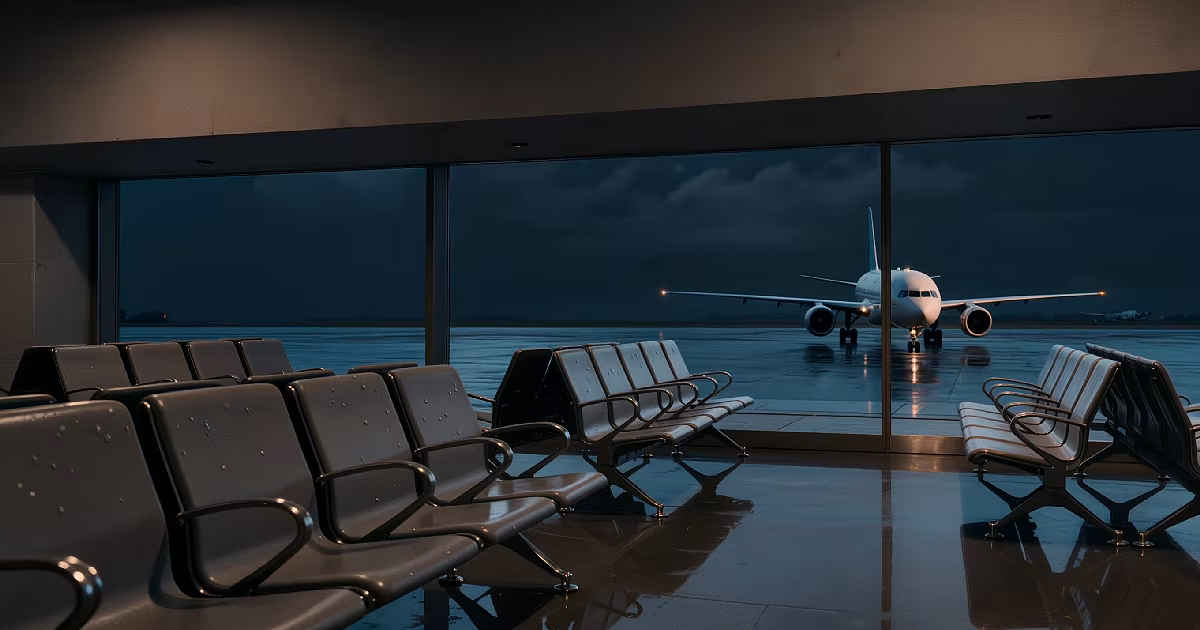
An empty airport departure gate at night, a plane on the runway.
Illustration, not a photograph.

Archive / Conspiracy / BOT313-0552
CON-20148 MAR 2014ConspiracyWRECK NOT FOUND
THE PLANE THAT TURNED BACK
Fig. 01 An empty airport departure gate at night, a plane on the runway. Illustration, not a photograph.
Opening
Shortly after midnight on 8 March 2014, Malaysia Airlines Flight 370, a Boeing 777 with 227 passengers and 12 crew, took off from Kuala Lumpur for Beijing. Forty minutes later, as it passed from Malaysian to Vietnamese air traffic control, the captain said "Good night. Malaysian three seven zero." Within two minutes its transponder went dark. Military radar watched an unidentified plane turn back across the Malay Peninsula and head out over the Andaman Sea. Then that, too, was gone.
For the next six hours the aircraft kept up faint automatic contact with a satellite, and those signals are the reason investigators believe it flew south until it ran out of fuel over the remote southern Indian Ocean. The largest search in aviation history found nothing on the seabed. Pieces of the plane have since washed up on African shores. The aircraft, and the answer to why it turned, have never been found.
Timeline
8 March 2014, 00:42 MYTMH370 takes off from Kuala Lumpur, scheduled for Beijing. On board are 239 people, among them 153 Chinese citizens. All twelve crew are Malaysian.
01:06The last automated position report is sent, showing about 43,800 kilograms of fuel on board.
01:19Captain Zaharie Ahmad Shah acknowledges the handover to Ho Chi Minh control: "Good night. Malaysian three seven zero." No call to Vietnam is ever made.
About 01:21The aircraft disappears from civilian secondary radar.
01:21 to 02:22Military primary radar tracks an aircraft turning back west, crossing the Malay Peninsula and heading up the Strait of Malacca. It is last seen at 02:22, at about 29,500 feet, northwest of Penang.
02:25The plane's satellite data unit logs back on to an Inmarsat satellite after a power interruption. Over the next six hours it answers a series of automatic hourly "handshakes".
08:19The last log-on. A status check at 09:15 goes unanswered. Investigators conclude the aircraft ran out of fuel and came down in the southern Indian Ocean in between.
17 March 2014Australia takes charge of the southern search. Ships and planes search 315,000 square kilometres of ocean surface in the first weeks.
6 October 2014The underwater search begins, eventually covering 120,000 square kilometres of seafloor.
29 July 2015A flaperon from the plane's wing washes up on Réunion, the first confirmed piece of MH370. By October 2017 some 20 pieces have been recovered from beaches around the western Indian Ocean, 18 of them judged very likely or almost certainly from the aircraft.
17 January 2017The official search is suspended. Australia's final report follows in October.
January to June 2018The marine robotics company Ocean Infinity searches more than 112,000 square kilometres on a "no find, no fee" basis. It ends on 9 June without success.
July 2018Malaysia's final safety investigation report is inconclusive.
March 2025 to January 2026Ocean Infinity returns under a new "no find, no fee" deal, worth US$70 million if it finds the main wreckage. On 8 March 2026, the twelfth anniversary, it announces it has not found the aircraft.
2026Malaysia extends the agreement to June 2027 to scan the last 7,400 square kilometres of the target area.
Key figures
The 239 people on board, from many countries, are the heart of this case, and their families have spent more than a decade campaigning for the search to go on.
Captain Zaharie Ahmad Shah, 52, with more than 18,000 flight hours, and First Officer Fariq Abdul Hamid, 26, were at the controls. Investigators have named no one as responsible. The Australian Transport Safety Bureau ran the long underwater search. Ocean Infinity led the later private searches.
Physical and documentary trail
The record: the air traffic control recordings, the last automated reports, military radar data, the Inmarsat satellite handshakes that set the "seventh arc" along which the plane is thought to have ended its flight, the confirmed debris from Réunion, Mozambique and elsewhere, and the Australian and Malaysian investigation reports. Drift modelling of the debris supports an end point in the southern Indian Ocean.
What is missing is the aircraft itself, its flight data and cockpit voice recorders, and any evidence that would show who turned the plane, and why.
Things you might not know
- The search cost a fortune. Australia's bureau reported costs of US$155 million by mid-2017.
- The plane talked to a satellite for hours. Nobody aboard sent a message, but the satellite unit kept answering hourly automatic checks until after 08:00.
- The first find was on a tropical island. The flaperon was found by a cleaning crew on a beach on Réunion, more than 4,000 kilometres from the search area.
- The search found other wrecks. The seabed survey mapped previously unknown shipwrecks from the nineteenth century.
- It changed aviation rules. New standards now require aircraft over remote oceans to report their position more often, and cockpit voice recorders to record for longer.
Competing explanations
A deliberate diversion. The turn, the transponder going off and the long flight south suggest someone on board flew the plane away from its route. Investigators have not been able to say who or why, and Malaysia's report could not rule it out or confirm it.
An emergency and a "ghost flight". The Australian bureau's early working idea: a crisis such as loss of cabin pressure left the crew unconscious, and the plane flew on until its fuel ran out. It struggles to explain the turn and the route over the peninsula, and investigators have not reached a consensus.
A cover-up. Theories that the plane was shot down, landed somewhere secret or was hidden by governments have circulated since 2014. The debris on African beaches and the satellite data contradict a landing; the rest has no evidence behind it.
Later life of the case
MH370 is still the greatest mystery of modern aviation, and the search may resume after November 2026. For another aircraft that vanished over open water, see Flight 19.
Finding
MH370 turned back from its route, flew for hours with its transponder off, and most likely ended its flight in the southern Indian Ocean, where its debris drifted to Africa. That much the radar, the satellite data and the wreckage support. Why it turned is not known, and no explanation fits all of the evidence.
What still will not resolve: where the main wreckage lies and what its recorders hold, since the seabed search has not yet found them. Rest in peace to all 239 people aboard. 🕯️
Evidence signature
7/9 Strong
- Witnesses
- one person, or a tradition
- Instruments
- more than one sensor agrees
- Paper
- formal investigation, court or declassified file
How well documented the case is, not whether it's true. A strong record can still have an ordinary answer, and a thin one can still be real.
You decide · MH370
What do you think happened?
One vote per case, anonymous. You'll see how other readers voted once you've voted.