WOLF MEMORIAL
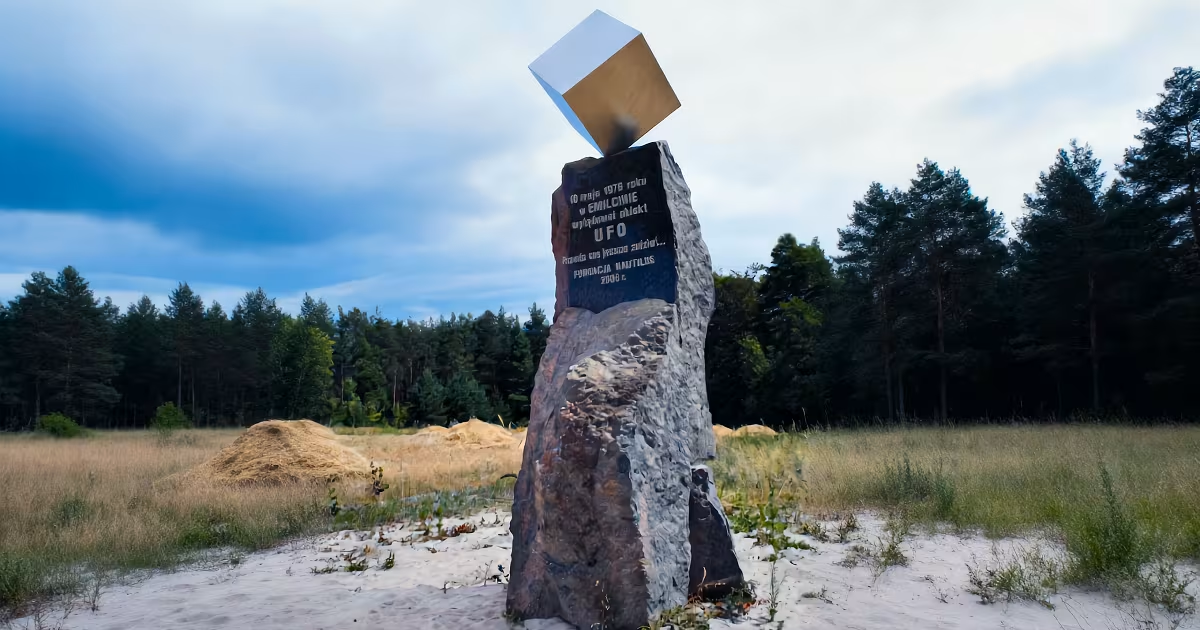
Polish village field. Small memorial stone and horse absent.
Illustration, not a period photograph.
Opening
On 10 May 1978 Jan Wolski, a farmer near Emilcin in eastern Poland, told of a craft in a clearing, small figures, and an examination while his horses waited. A memorial stone later went up on the ground. The cart is first. The stone is later life that still points at the cart. No wreck sat in a Lublin shed. Keep the farmer's morning and the later monument on two trays.
Wolf Memorial is a Polish farm night with a later stone. The stone does not become the night.
The spine of the file is a farmer, a cart, and a later carved rock. Emilcin is 10 May 1978. It is not a stored craft in a Polish barn.
Timeline
10 May 1978 Wolski's clearing and cart.
Local talk. Later investigators. A stone goes up.
No wreck. No official object.
The stone is later life. The cart is first.
Jan Wolski near Emilcin on 10 May 1978 told of a craft, small figures, and horses waiting with a cart. A memorial stone went up later. The stone is later life. The cart is first.
A farmer morning and a later carved rock are two trays. Both need length so the monument does not eat the horses.
Key figures
Jan Wolski owns the cart and the morning.
Horses in the telling own the wait.
Later monument people own the stone.
The clearing owns the lack of a wreck.
Physical and documentary trail
On the paper, 10 May 1978 gives you four hard objects and no wreck.
One: Wolski's account of a craft and figures near Emilcin.
Two: a cart and horses in the telling.
Three: a later memorial stone on the ground.
Four: the absence of a recovered object. Jan Wolski account, Emilcin, 10 May 1978, and the later stone, are the two trays. Keep them apart.
There is no wreck. There is no photograph from that morning a lab will sign. There is no second farm required.
A dated cart morning and a later stone are the stay-behinds. A frame from that clearing would finish the figures. An object from the ground would finish the other door.
The horses waited and the cart was still the cart.
Competing explanations
A landing on a Polish farm. This is Wolski. It has a cart. It has no wreck.
A dream, a story, a later monument that hardened talk. The mundane door. Has to carry a farmer who kept the morning.
A later myth hung on Emilcin. Weak against a dated name and a stone that came after.
Hybrid caution. A farmer told a clearing. Morning had no craft in the barn.
Later life of the case
The memorial stone and later Polish lists. I keep those on the later-life shelf. The cart stays first.
Finding
Jan Wolski told of a craft and figures near Emilcin on 10 May 1978 while his cart waited, and a stone went up later. Believe the farmer as a man with a cart. A farm morning does not invent horses for a later monument.
What still will not resolve: a frame from that clearing, or an object from the ground. Either one would pin the figures. The proving object is still that morning in the trees, held as story or as event by more than a carved rock.