PETER DAY
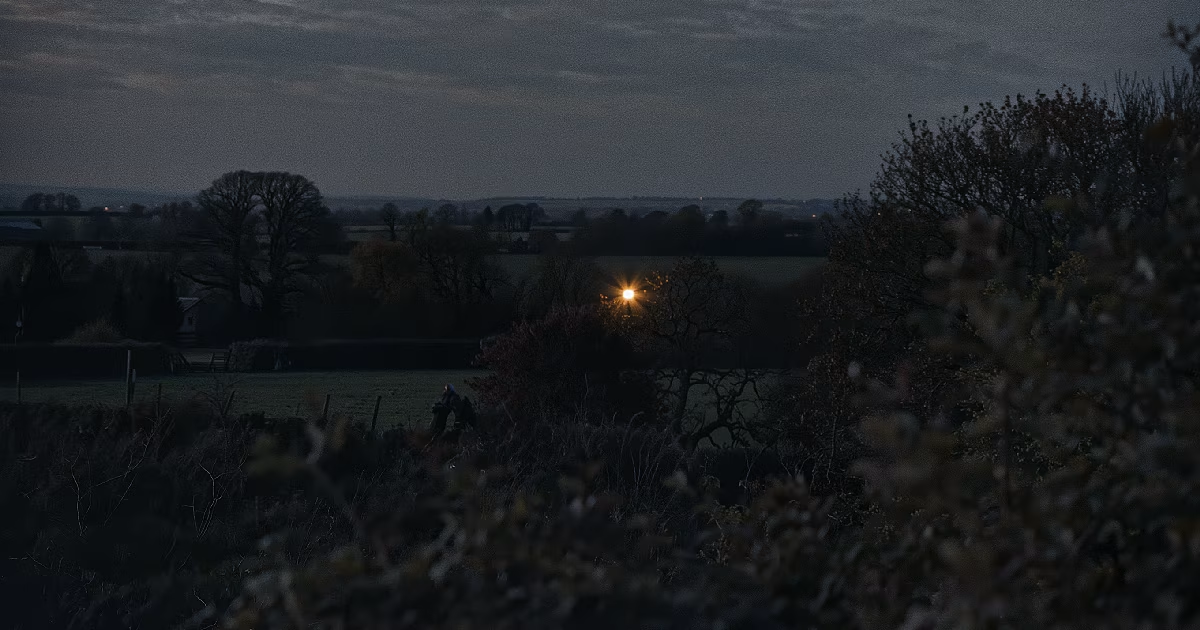
Warwickshire winter lane from a car window. Empty field.
Illustration, not a period photograph.
Opening
On 11 January 1973, a man named Peter Day, working as a surveyor, was driving near Aylesbury, Buckinghamshire, when he saw a pulsating amber light near some treetops roughly a mile off. He had a camera with him and photographed it. Kodak later examined the film and found no evidence of manipulation. That is the entire case as it survives in public record: one witness, one still photograph, one lab finding of no tampering.
This file exists to be honest about its own size. There is no second witness statement, no landing site, no radar correlation, and no BUFORA or Flying Saucer Review case writeup that this search has been able to locate independently of a single recurring capsule summary repeated, word for word, across a handful of UK folklore and paranormal listicle sites.
Timeline
11 January 1973. Day is driving toward Aylesbury and sees the light. He photographs it with a film camera he had on hand.
Date unrecorded, 1973. The film is sent to Kodak for examination. Kodak's finding, as reported, is that the image is genuine, meaning unaltered, not that the object photographed is identified or non-terrestrial.
No later date is attached to this case anywhere in the record this search located. There is no known follow-up investigation, retraction, reinterview, or identification of the light source.
Key figures
Day is the sole named witness and the sole source for every detail of the sighting itself. Nothing about his background beyond his stated profession, surveyor, is recorded in the surviving summaries.
Kodak's role is narrow and often overstated in retellings: a film lab examining a negative for signs of double exposure or physical tampering is not the same as an investigative body ruling out a mundane explanation for the light itself. "Passed as genuine" describes the film, not the object.
No named UFO investigator, organization, or journalist is attached to this case's original documentation in any source this search found, which is unusual for a British case from this period and part of why so little detail survives.
Physical and documentary trail
On the paper, this file has exactly one object: Peter Day's photograph, evaluated by Kodak as an unaltered exposure. There is no site the photograph can be checked against, no distance or size calculation from a second angle, and no contemporary newspaper account this search located.
There is also a discrepancy worth stating plainly rather than resolving by picking a side. This archive's own prior cataloguing of the case describes it differently: a Warwickshire location, a cine film shot from a moving car, additional ground witnesses, and no object found in the field afterward. No public source located in this pass supports that version, and no public source explains where it came from. Both versions cannot be fully correct as stated, and this file does not have enough material to say which, if either, is closer to whatever actually happened in January 1973.
Competing explanations
A genuine unidentified light, photographed honestly by an uninvolved witness. The Kodak finding supports the photograph's integrity but does nothing to establish what the light was.
A conventional light source, aircraft, a star or planet low on the horizon, a ground light seen through trees, misjudged for distance and behavior by a single moving observer. This remains the ordinary default for an uncorroborated single-witness light sighting and cannot be ruled out from the material available.
A deliberate hoax using a manufactured light source. Kodak's exam addresses whether the film itself was altered after exposure, not whether the scene in front of the camera was staged. Nothing in the surviving record speaks to this either way.
Later life of the case
This case does not appear to have had one. It shows up as a brief entry in general-interest British UFO roundups and has not, as far as this search located, been the subject of a dedicated investigation, book chapter, or documentary. That absence is itself the most notable feature of the file.
Finding
What is solid here is small and stays small: a single witness, a single photograph, and a film-lab finding that the photograph was not doctored. Everything else, the sighting's exact nature, the object's identity, and even the county it happened in, is either unestablished or contradicted between this archive's own prior summary and every other public source.
What still will not resolve: which location and evidence description is correct, Aylesbury or Warwickshire, still photograph or cine film, and where the second version originated. Until a primary document surfaces, this stays one of the thinnest files in the archive, and it should read that way rather than borrow confidence from cases with an actual paper trail.